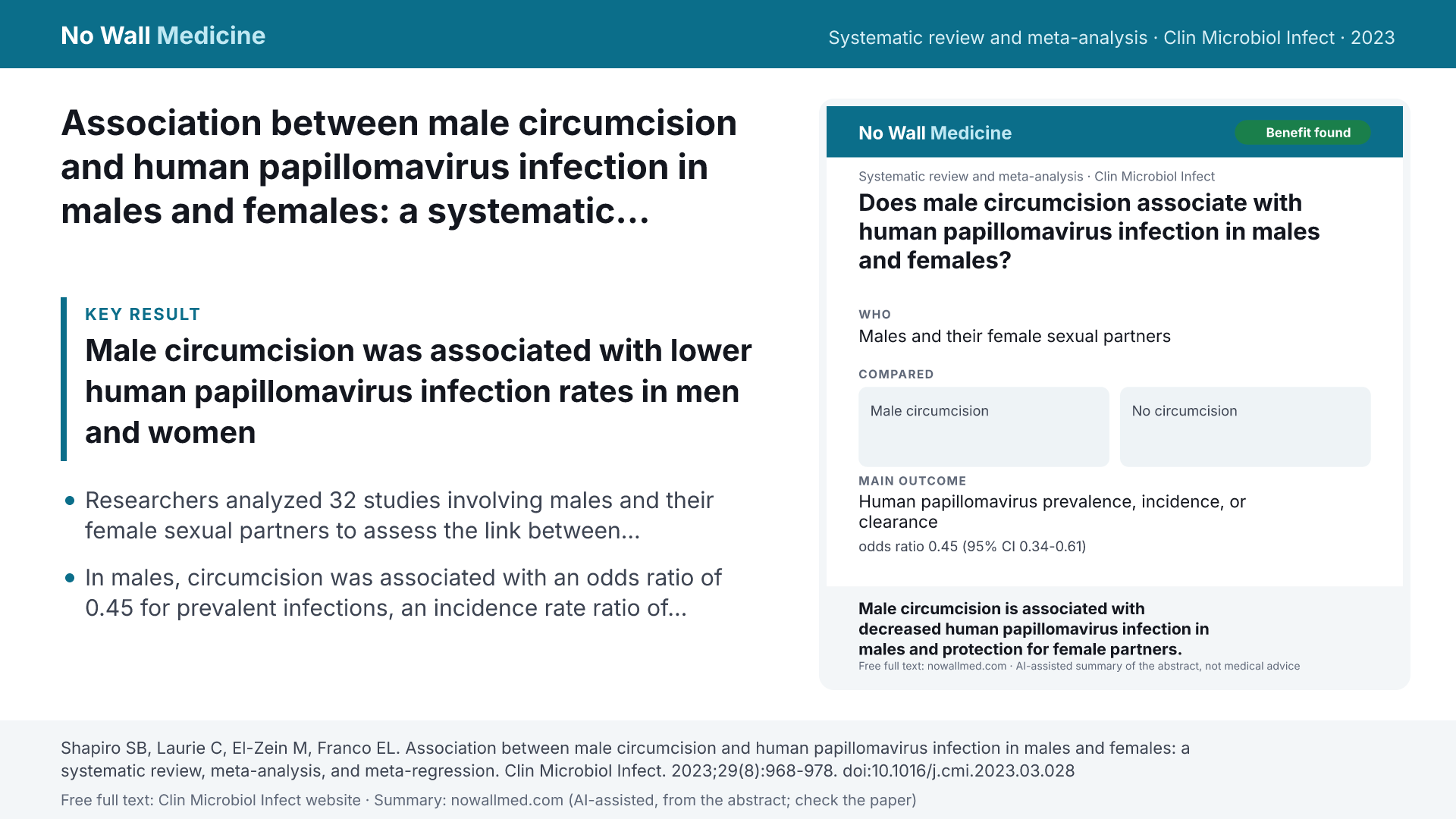
Male circumcision was associated with lower human papillomavirus infection rates in men and women
Association between male circumcision and human papillomavirus infection in males and females: a systematic review, meta-analysis, and meta-regression
Systematic review and meta-analysisBenefit found
Does male circumcision associate with human papillomavirus infection in males and females?
Who
32
Males and their female sexual partners
Compared
Male circumcision
No circumcision
Main outcome
Human papillomavirus prevalence, incidence, or clearance
Result: odds ratio 0.45 (95% CI 0.34-0.61)
Bottom line: Male circumcision is associated with decreased human papillomavirus infection in males and protection for female partners.
Clin Microbiol Infect · 2023-04-01Download image
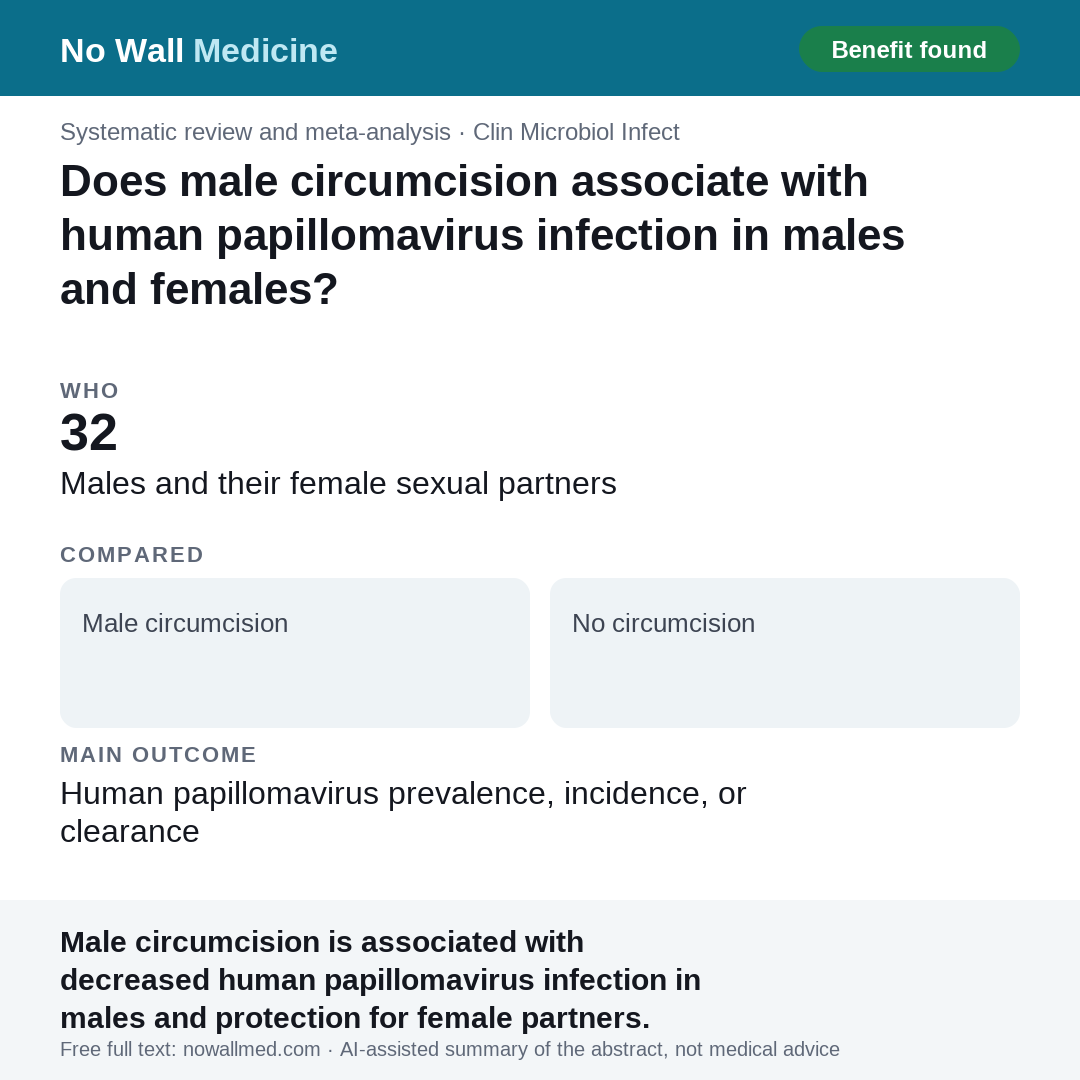
Clinical question: Does male circumcision associate with human papillomavirus infection in males and females?
Why it matters: It was unclear how male circumcision affects the prevalence, incidence, and clearance of human papillomavirus in both males and their female sexual partners.
Key points
- Researchers analyzed 32 studies involving males and their female sexual partners to assess the link between circumcision and human papillomavirus, a common virus that can cause genital warts and cancer.
- In males, circumcision was associated with an odds ratio of 0.45 for prevalent infections, an incidence rate ratio of 0.69, and a risk ratio of 1.44 for clearing infections at the glans penis.
- The association between circumcision and lower infection rates at the glans penis was stronger than the association found at the penile shaft, with an odds ratio of 0.68.
Headline and key points written with AI from the paper’s abstract, with every number checked against it. Read the paper before relying on them.
Was this summary helpful?
Subject terms
Cite this article
Shapiro SB, Laurie C, El-Zein M, Franco EL. Association between male circumcision and human papillomavirus infection in males and females: a systematic review, meta-analysis, and meta-regression. Clin Microbiol Infect. 2023. doi:10.1016/j.cmi.2023.03.028
Spotted a mistake? Suggest a correction