Association of Germline BRCA Pathogenic Variants With Diminished Ovarian Reserve: A Meta-Analysis of Individual Patient-Level Data
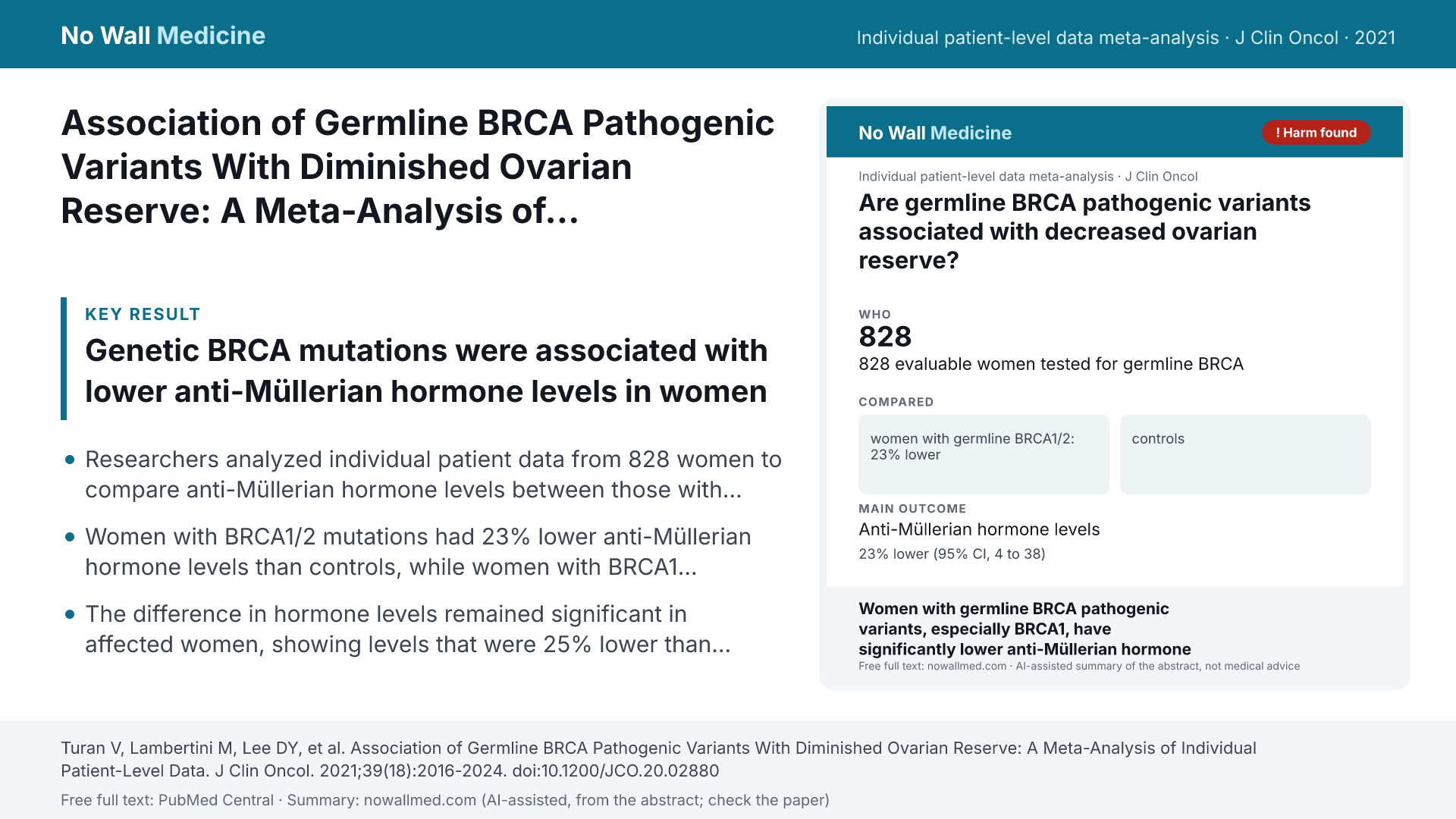
Key result: Genetic BRCA mutations were associated with lower anti-Müllerian hormone levels in women
Individual patient-level data meta-analysisHarm found
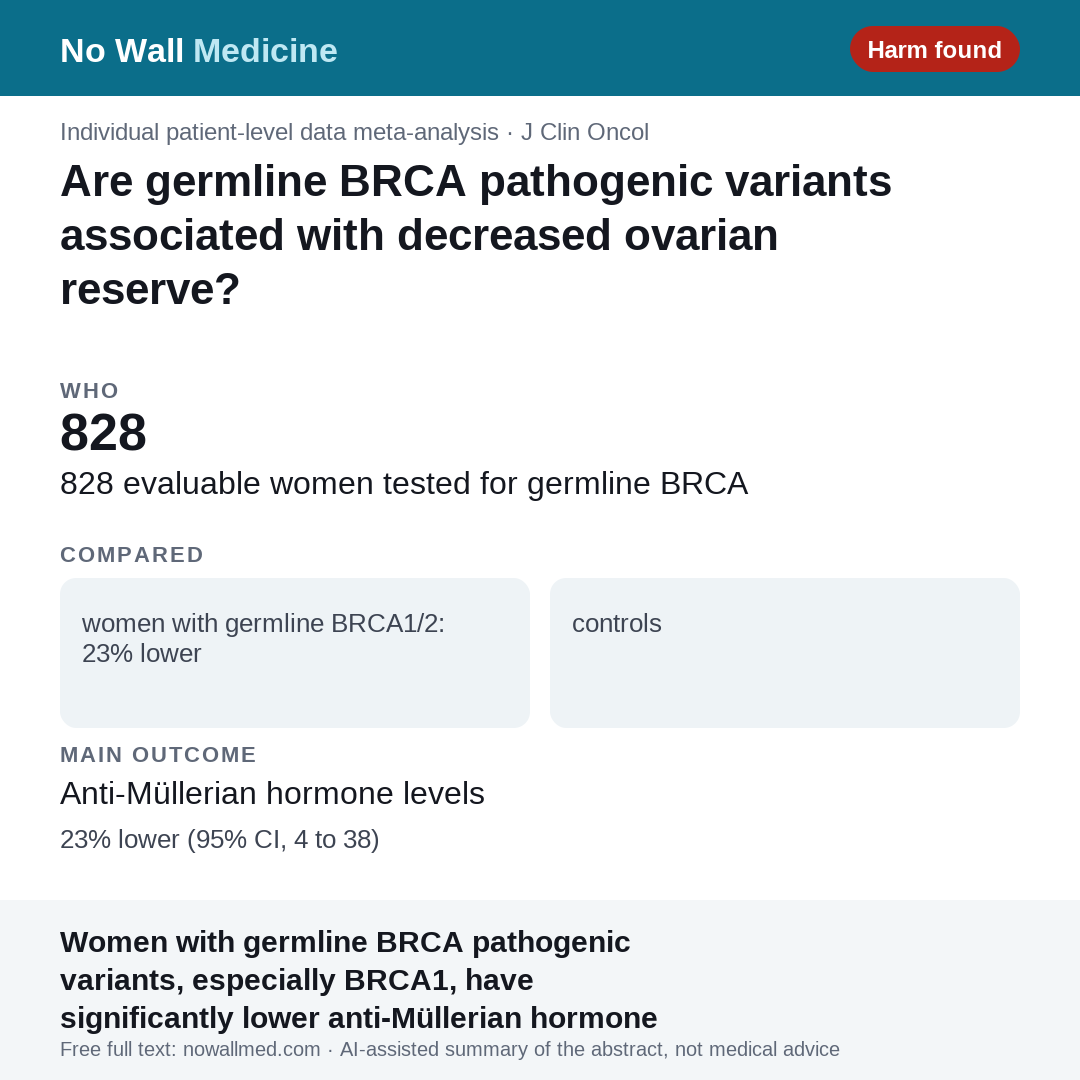
Are germline BRCA pathogenic variants associated with decreased ovarian reserve?
Who
828
828 evaluable women tested for germline BRCA
Compared
women with germline BRCA1/2: 23% lower
controls
Main outcome
Anti-Müllerian hormone levels
Result: 23% lower (95% CI, 4 to 38)
Bottom line: Women with germline BRCA pathogenic variants, especially BRCA1, have significantly lower anti-Müllerian hormone levels.
J Clin Oncol · 2021-04-23Download image
Key points
- Researchers analyzed individual patient data from 828 women to compare anti-Müllerian hormone levels between those with BRCA mutations and those without.
- Women with BRCA1/2 mutations had 23% lower anti-Müllerian hormone levels than controls, while women with BRCA1 mutations specifically had 33% lower levels.
- The difference in hormone levels remained significant in affected women, showing levels that were 25% lower than those without the mutations.
Discussion prompts
- Would these patients look like yours? Who was left out?
- Is the main outcome one that matters to patients?
- Is the difference large enough to change what you do?
Cite: Turan V, Lambertini M, Lee DY, et al. Association of Germline BRCA Pathogenic Variants With Diminished Ovarian Reserve: A Meta-Analysis of Individual Patient-Level Data. J Clin Oncol. 2021. doi:10.1200/JCO.20.02880
Free full text: PubMed Central · Summary and visual abstract: nowallmed.com/a/association-of-germline-brca-pathogenic-variants-with-diminished-15x5iti/ (AI-assisted from the abstract; check the paper before relying on it).