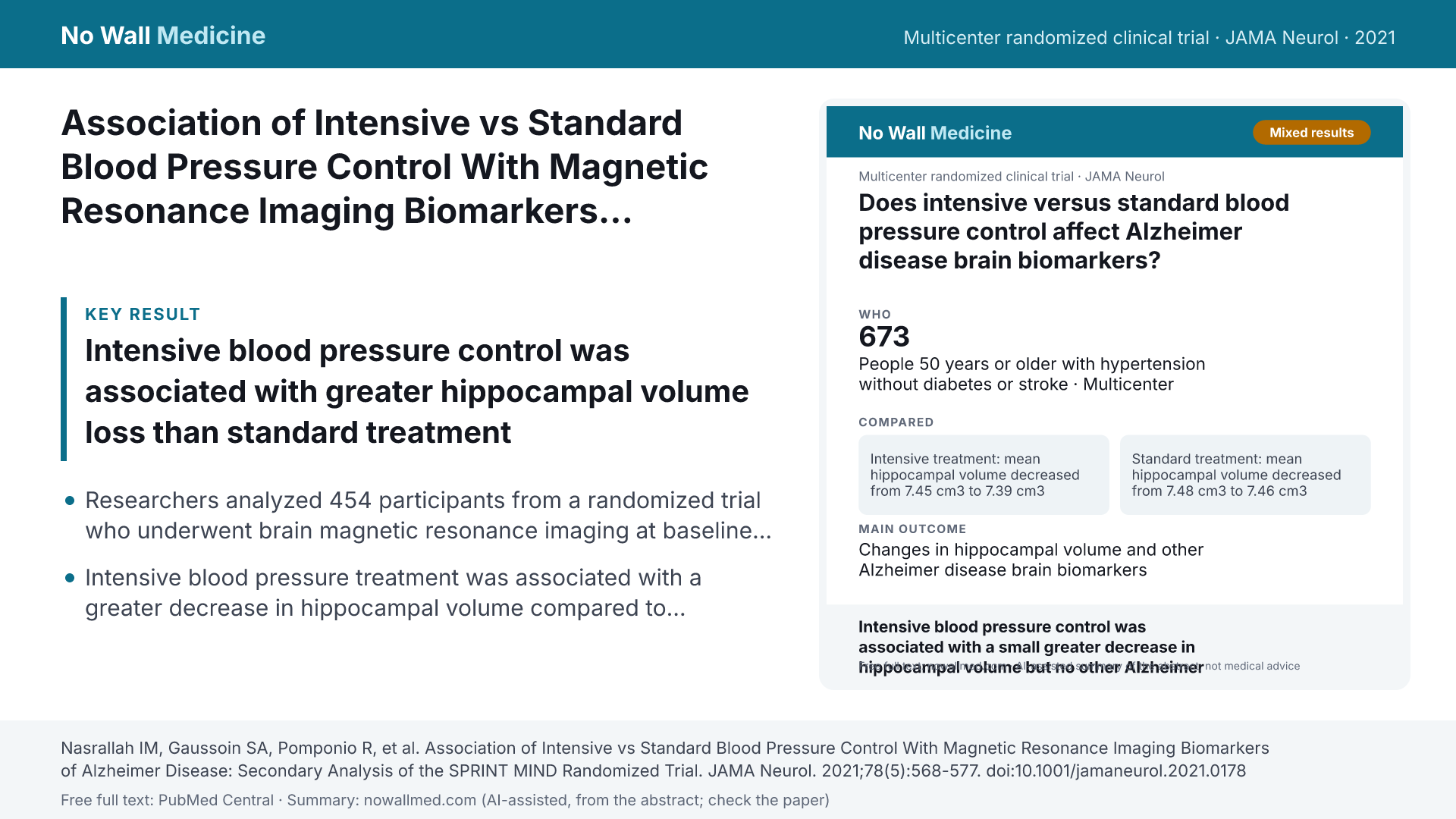
Association of Intensive vs Standard Blood Pressure Control With Magnetic Resonance Imaging Biomarkers of Alzheimer Disease: Secondary Analysis of the SPRINT MIND Randomized Trial
Key result: Intensive blood pressure control was associated with greater hippocampal volume loss than standard treatment
Key points
- Researchers analyzed 454 participants from a randomized trial who underwent brain magnetic resonance imaging at baseline and after a median of 3.98 years.
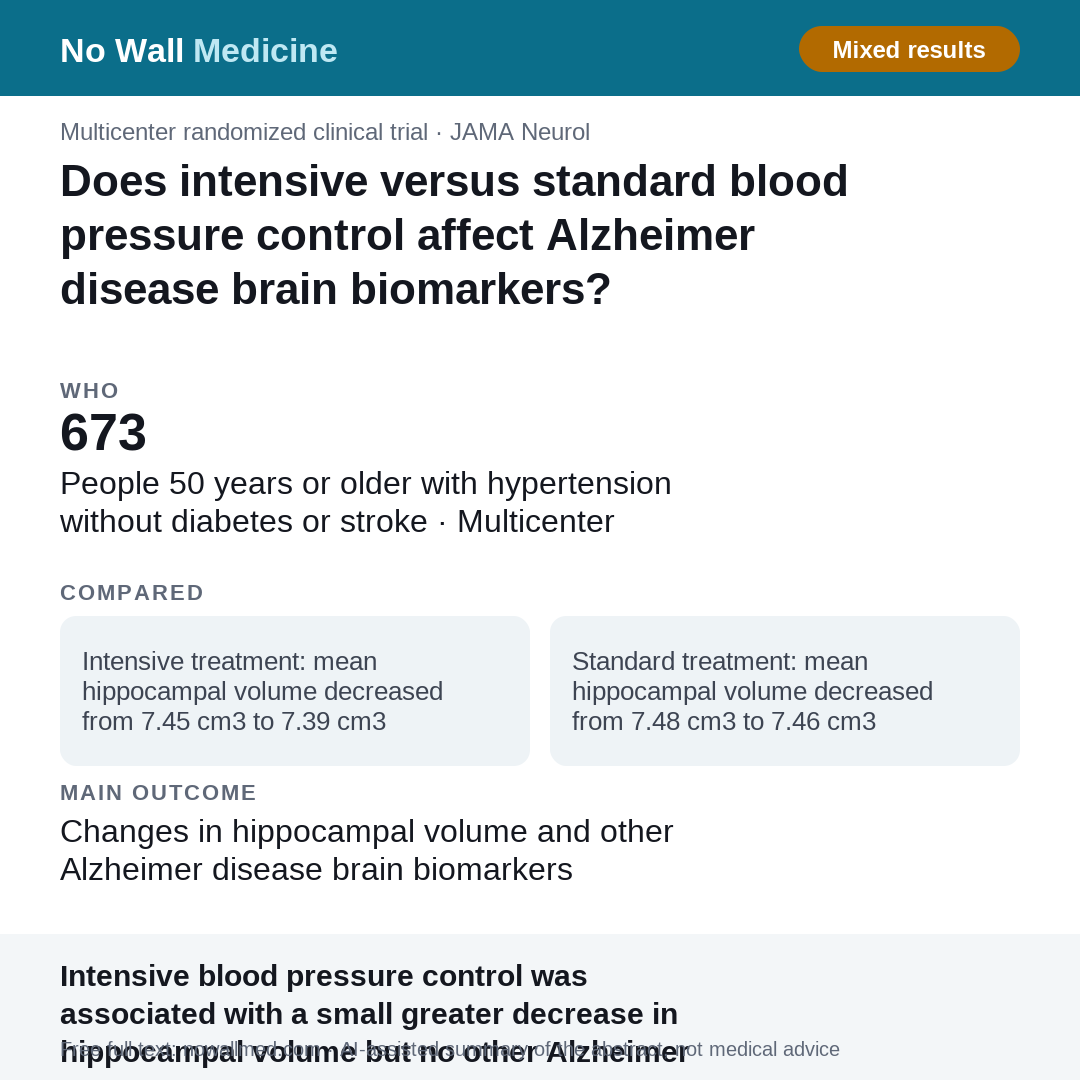
- Intensive blood pressure treatment was associated with a greater decrease in hippocampal volume compared to standard treatment, with a between-group difference in change of -0.033 cm3.
- No significant differences were found between the two treatment groups for measures of regional brain atrophy, cerebral blood flow, or white matter integrity.
Why it matters: It is unclear how much blood pressure control affects specific brain pathways related to Alzheimer disease pathology.
Discussion prompts
- Would these patients look like yours? Who was left out?
- Is the main outcome one that matters to patients?
- Is the difference large enough to change what you do?
Cite: Nasrallah IM, Gaussoin SA, Pomponio R, et al. Association of Intensive vs Standard Blood Pressure Control With Magnetic Resonance Imaging Biomarkers of Alzheimer Disease: Secondary Analysis of the SPRINT MIND Randomized Trial. JAMA Neurol. 2021. doi:10.1001/jamaneurol.2021.0178
Free full text: PubMed Central · Summary and visual abstract: nowallmed.com/a/association-of-intensive-vs-standard-blood-pressure-control-with-981fty/ (AI-assisted from the abstract; check the paper before relying on it).