Molecular subtypes were associated with different responses to apalutamide in nonmetastatic castration-resistant prostate cancer
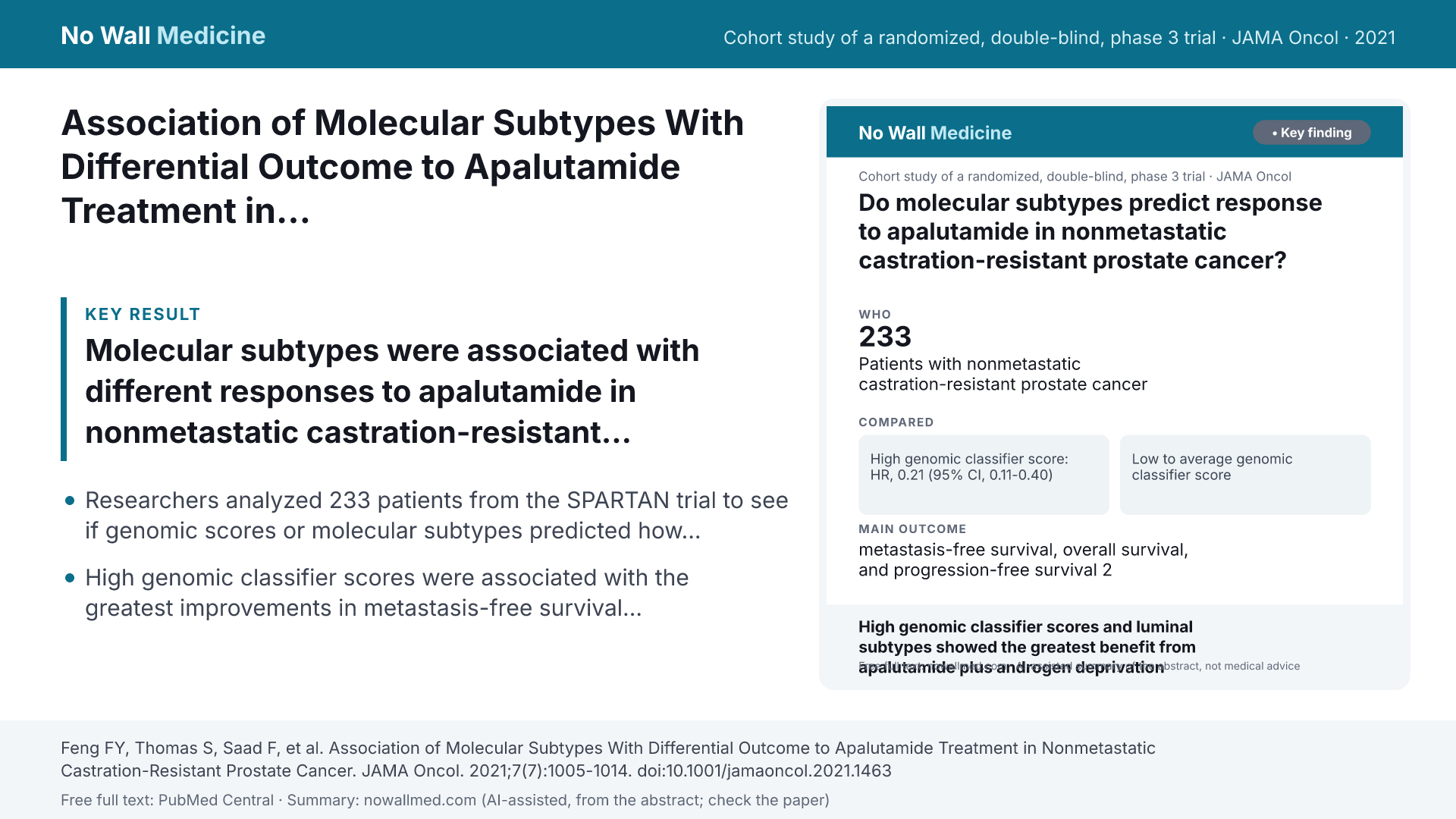
Association of Molecular Subtypes With Differential Outcome to Apalutamide Treatment in Nonmetastatic Castration-Resistant Prostate Cancer
Cohort study of a randomized, double-blind, phase 3 trialBenefit found
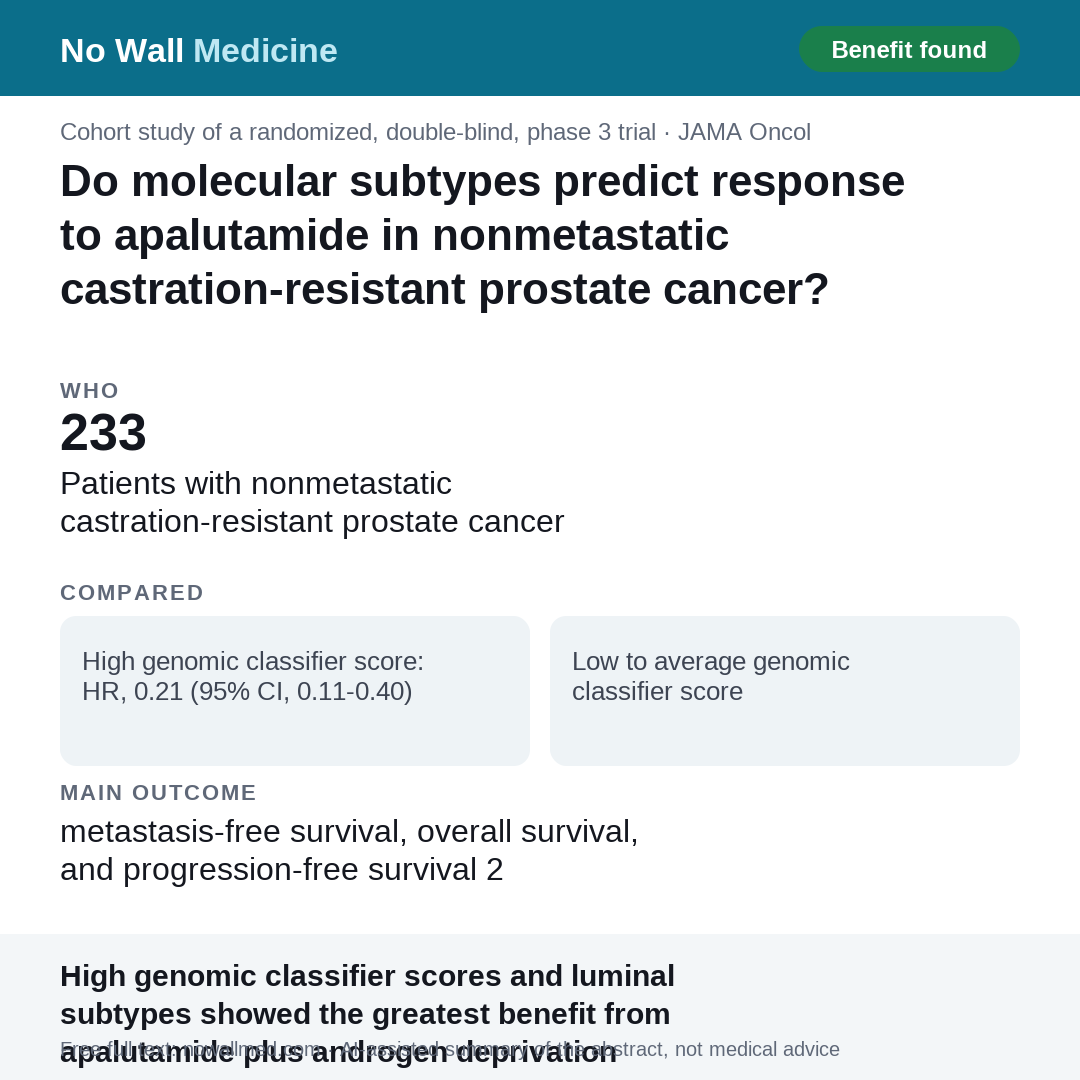
Do molecular subtypes predict response to apalutamide in nonmetastatic castration-resistant prostate cancer?
Who
233
Patients with nonmetastatic castration-resistant prostate cancer
Compared
High genomic classifier score: HR, 0.21 (95% CI, 0.11-0.40)
Low to average genomic classifier score
Main outcome
metastasis-free survival, overall survival, and progression-free survival 2
Result: hazard ratio 0.21 (95% CI 0.11-0.40)
Bottom line: High genomic classifier scores and luminal subtypes showed the greatest benefit from apalutamide plus androgen deprivation therapy.
JAMA Oncol · 2021-06-04Download image
Clinical question: Do molecular subtypes predict response to apalutamide in nonmetastatic castration-resistant prostate cancer?
Why it matters: It is unknown whether specific molecular subtypes or genomic scores can serve as biomarkers to guide treatment intensification for patients with nonmetastatic castration-resistant prostate cancer.
Key points
- Researchers analyzed 233 patients from the SPARTAN trial to see if genomic scores or molecular subtypes predicted how patients responded to apalutamide plus androgen deprivation therapy.
- High genomic classifier scores were associated with the greatest improvements in metastasis-free survival (hazard ratio, 0.21), overall survival (hazard ratio, 0.52), and progression-free survival 2 (hazard ratio, 0.39).
- In the apalutamide plus androgen deprivation therapy group, the luminal subtype was associated with significantly longer metastasis-free survival compared to the basal subtype.
Headline and key points written with AI from the paper’s abstract, with every number checked against it. Read the paper before relying on them.
Was this summary helpful?
Subject terms
Cite this article
Feng FY, Thomas S, Saad F, et al. Association of Molecular Subtypes With Differential Outcome to Apalutamide Treatment in Nonmetastatic Castration-Resistant Prostate Cancer. JAMA Oncol. 2021. doi:10.1001/jamaoncol.2021.1463
Spotted a mistake? Suggest a correction