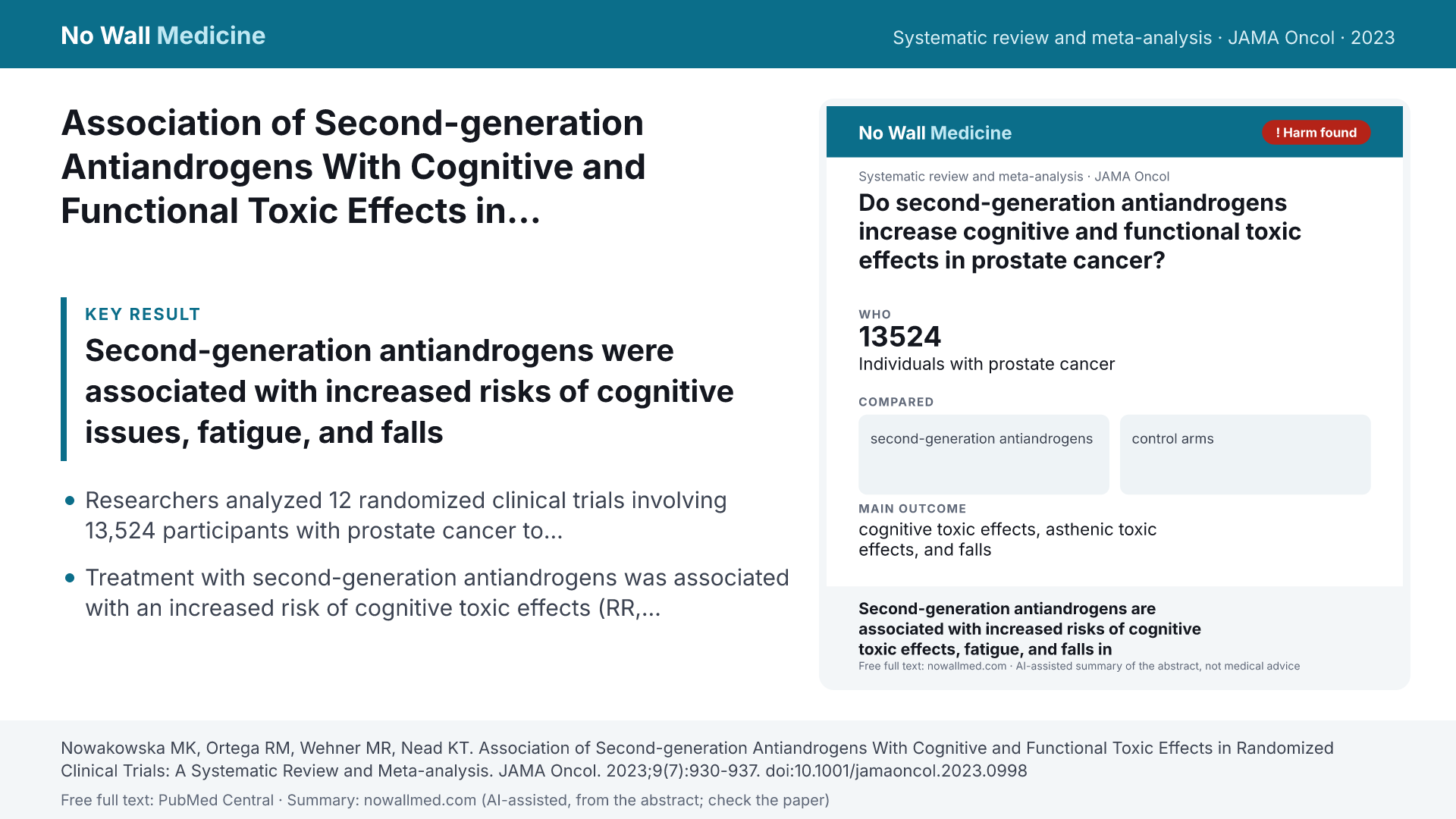
Second-generation antiandrogens were associated with increased risks of cognitive issues, fatigue, and falls
Association of Second-generation Antiandrogens With Cognitive and Functional Toxic Effects in Randomized Clinical Trials: A Systematic Review and Meta-analysis
Systematic review and meta-analysisHarm found
Do second-generation antiandrogens increase cognitive and functional toxic effects in prostate cancer?
Who
13524
Individuals with prostate cancer
Compared
second-generation antiandrogens
control arms
Main outcome
cognitive toxic effects, asthenic toxic effects, and falls
Result: cognitive toxic effects RR 2.10 (95% CI 1.30-3.38); fatigue RR 1.34 (95% CI 1.16-1.54); falls RR 1.87 (95% CI 1.27-2.75)
Bottom line: Second-generation antiandrogens are associated with increased risks of cognitive toxic effects, fatigue, and falls in prostate cancer patients.
JAMA Oncol · 2023-05-25Download image
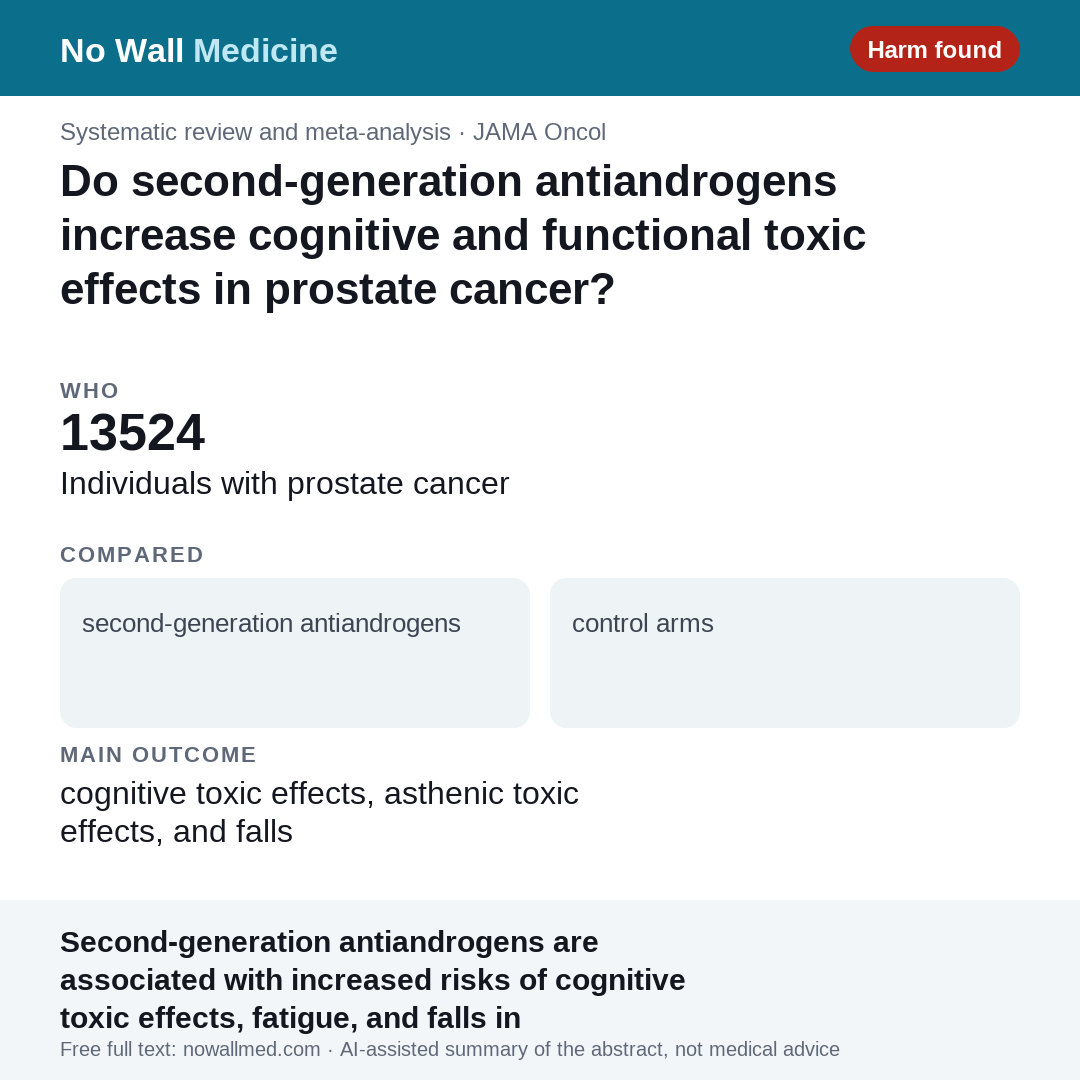
Clinical question: Do second-generation antiandrogens increase cognitive and functional toxic effects in prostate cancer?
Why it matters: It was unknown if evidence from prospective randomized clinical trials supports an association between second-generation antiandrogens and cognitive or functional toxic effects.
Key points
- Researchers analyzed 12 randomized clinical trials involving 13,524 participants with prostate cancer to compare second-generation antiandrogens against control groups.
- Treatment with second-generation antiandrogens was associated with an increased risk of cognitive toxic effects (RR, 2.10; 95% CI, 1.30-3.38) and fatigue (RR, 1.34; 95% CI, 1.16-1.54).
- The use of these medications was also associated with an increased risk of falls (RR, 1.87; 95% CI, 1.27-2.75).
Headline and key points written with AI from the paper’s abstract, with every number checked against it. Read the paper before relying on them.
Was this summary helpful?
Subject terms
Cite this article
Nowakowska MK, Ortega RM, Wehner MR, Nead KT. Association of Second-generation Antiandrogens With Cognitive and Functional Toxic Effects in Randomized Clinical Trials: A Systematic Review and Meta-analysis. JAMA Oncol. 2023. doi:10.1001/jamaoncol.2023.0998
Spotted a mistake? Suggest a correction