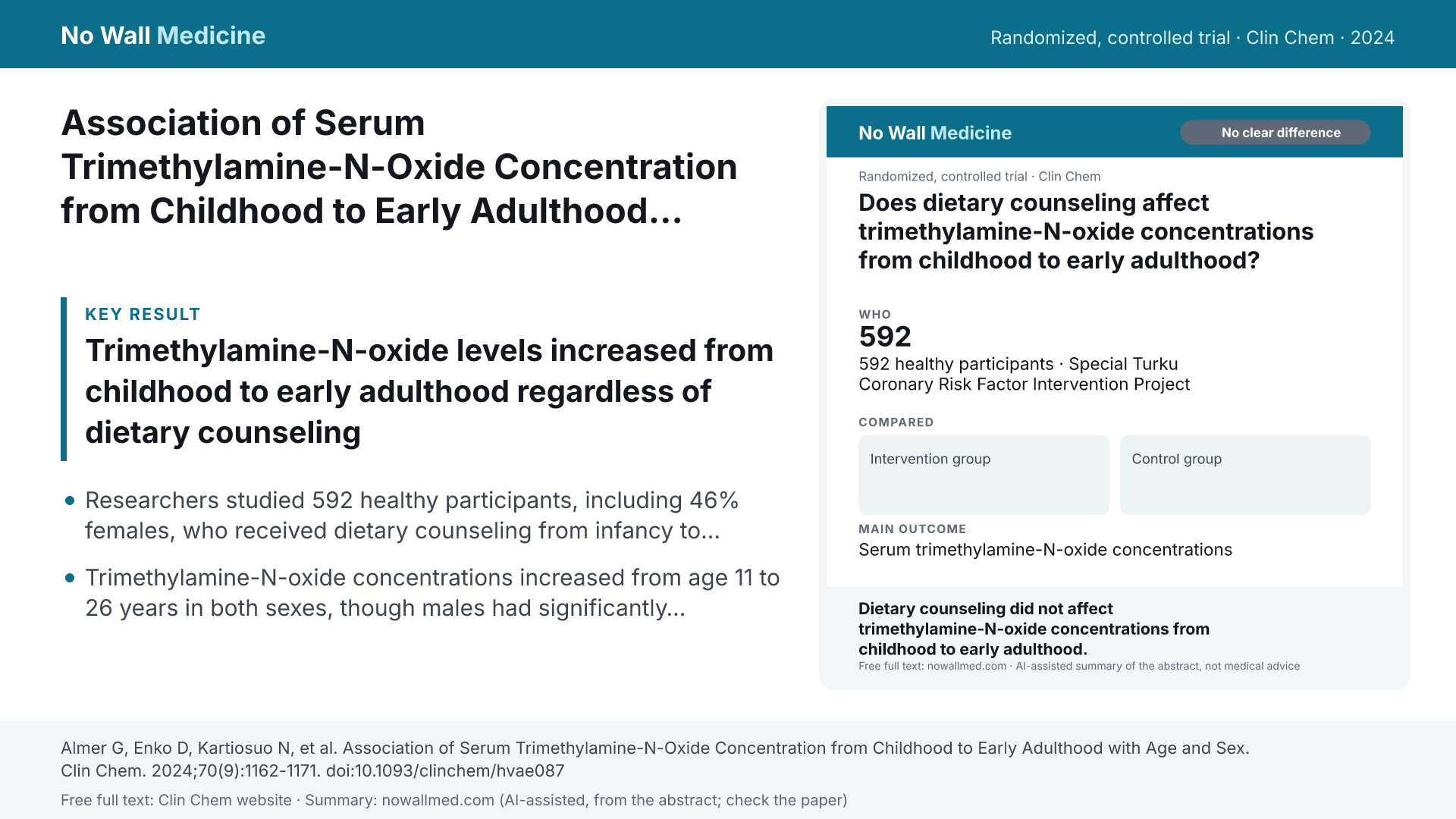
Trimethylamine-N-oxide levels increased from childhood to early adulthood regardless of dietary counseling
Association of Serum Trimethylamine-N-Oxide Concentration from Childhood to Early Adulthood with Age and Sex
Randomized, controlled trialNo clear difference
Does dietary counseling affect trimethylamine-N-oxide concentrations from childhood to early adulthood?
Who
592
592 healthy participants · Special Turku Coronary Risk Factor Intervention Project
Compared
Intervention group
Control group
Main outcome
Serum trimethylamine-N-oxide concentrations
Bottom line: Dietary counseling did not affect trimethylamine-N-oxide concentrations from childhood to early adulthood.
Clin Chem · 2024-06-22 · Save PNG
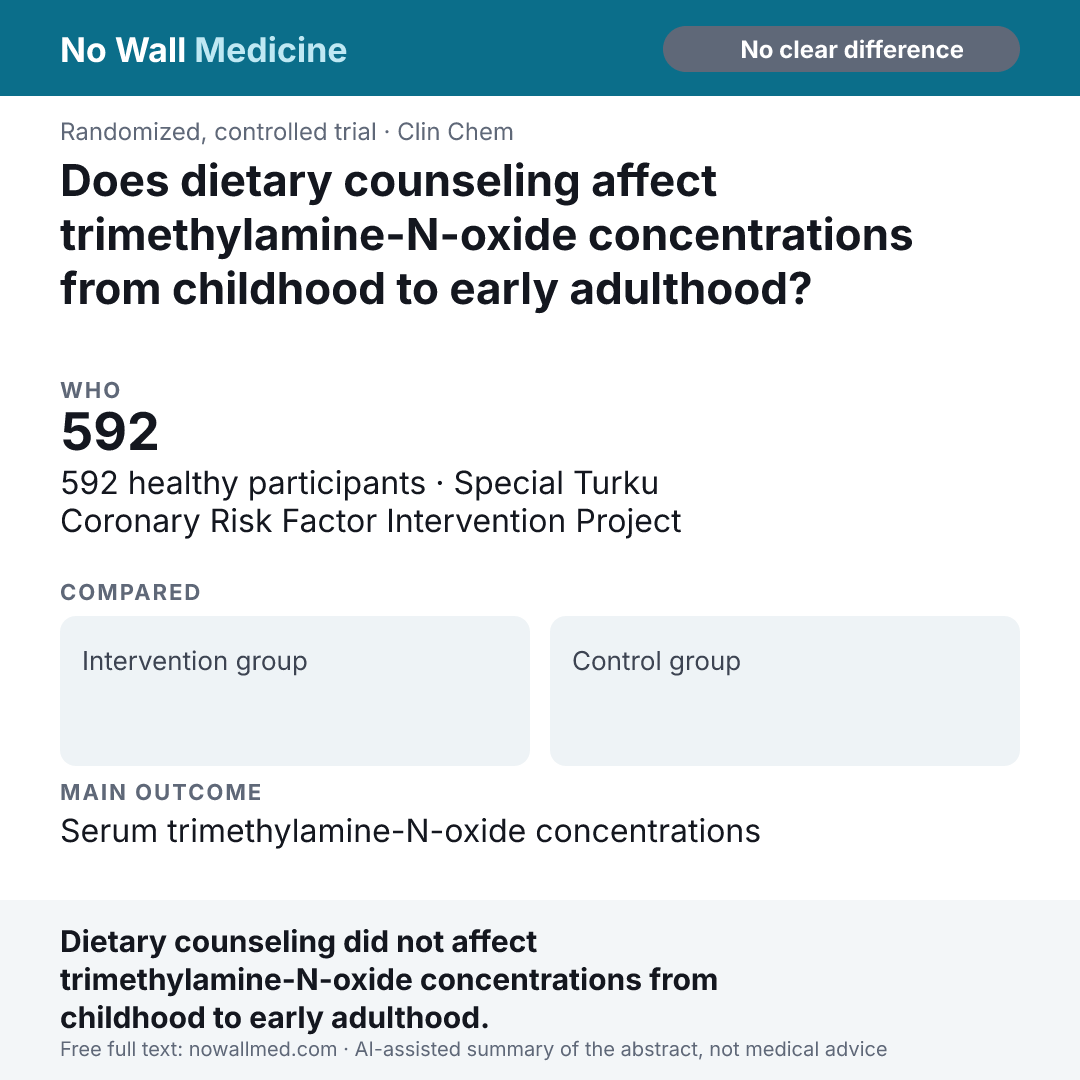
Clinical question: Does dietary counseling affect trimethylamine-N-oxide concentrations from childhood to early adulthood?
Key points
- Researchers studied 592 healthy participants, including 46% females, who received dietary counseling from infancy to age 20.
- Trimethylamine-N-oxide concentrations increased from age 11 to 26 years in both sexes, though males had significantly higher levels than females.
- In females, trimethylamine-N-oxide concentrations were associated with higher fiber intake, but the dietary intervention did not affect concentrations.
Headline and key points written with AI from the paper’s abstract, with every number checked against it. Read the paper before relying on them.
Was this summary helpful?
Subject terms
Headline, design, result, key points, caveat and citation as plain text.
Cite this article
Almer G, Enko D, Kartiosuo N, et al. Association of Serum Trimethylamine-N-Oxide Concentration from Childhood to Early Adulthood with Age and Sex. Clin Chem. 2024;70(9):1162-1171. doi:10.1093/clinchem/hvae087
Spotted a mistake? Suggest a correction