Associations of Physical Activity With Aortic Structure and Hemodynamics in the UK Biobank
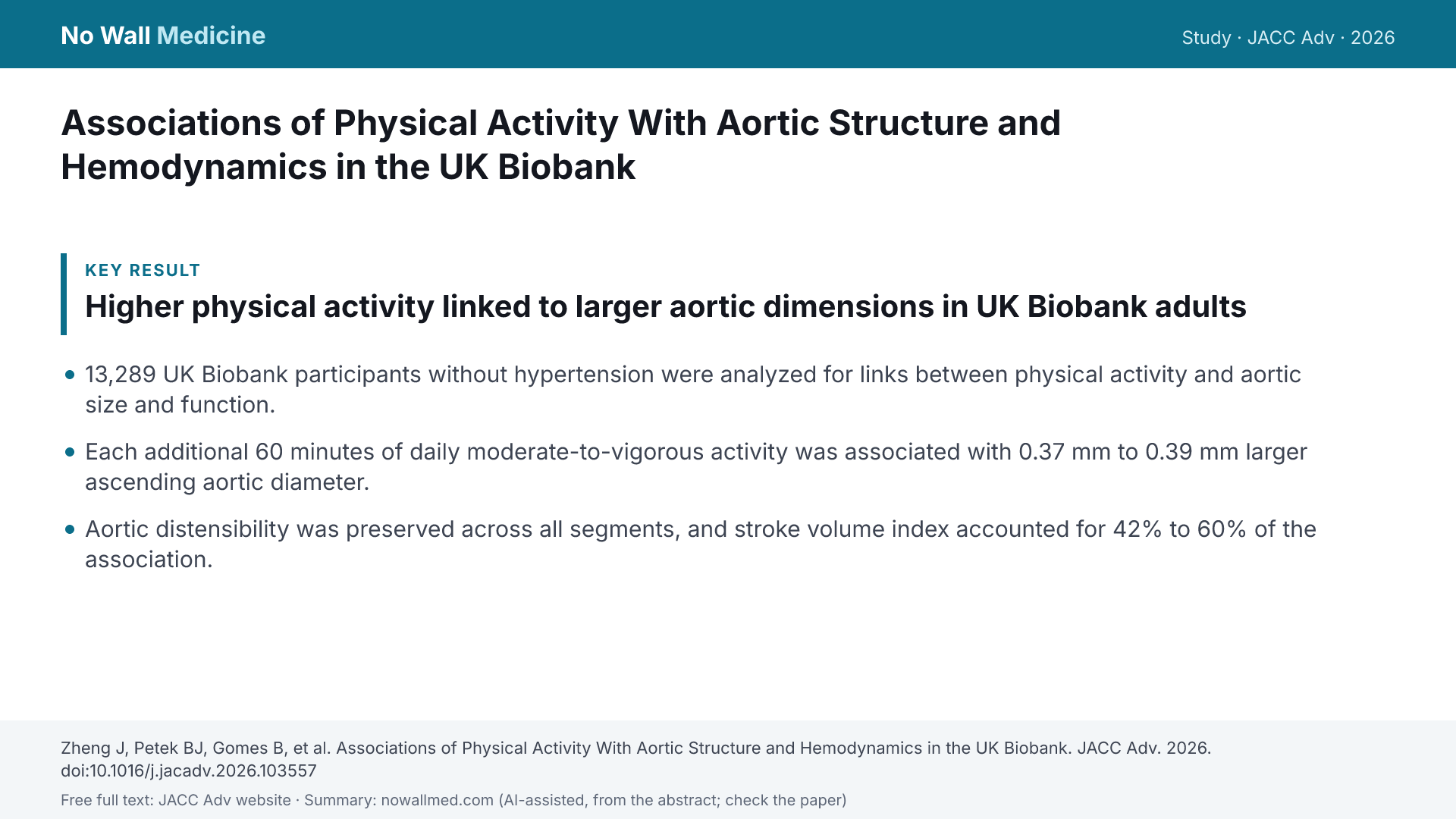
Key result: Higher physical activity linked to larger aortic dimensions in UK Biobank adults
Key points
- 13,289 UK Biobank participants without hypertension were analyzed for links between physical activity and aortic size and function.
- Each additional 60 minutes of daily moderate-to-vigorous activity was associated with 0.37 mm to 0.39 mm larger ascending aortic diameter.
- Aortic distensibility was preserved across all segments, and stroke volume index accounted for 42% to 60% of the association.
Why it matters: The relationship between habitual exercise and aortic phenotypes in the general population remains poorly characterized.
Limitation the authors note: The authors state that longitudinal prospective studies are warranted to validate these findings.
Discussion prompts
- Would these patients look like yours? Who was left out?
- Is the main outcome one that matters to patients?
- Is the difference large enough to change what you do?
Cite: Zheng J, Petek BJ, Gomes B, et al. Associations of Physical Activity With Aortic Structure and Hemodynamics in the UK Biobank. JACC Adv. 2026. doi:10.1016/j.jacadv.2026.103557
Free full text: JACC Adv website · Summary and visual abstract: nowallmed.com/a/associations-of-physical-activity-with-aortic-structure-and-3a0e09/ (AI-assisted from the abstract; check the paper before relying on it).