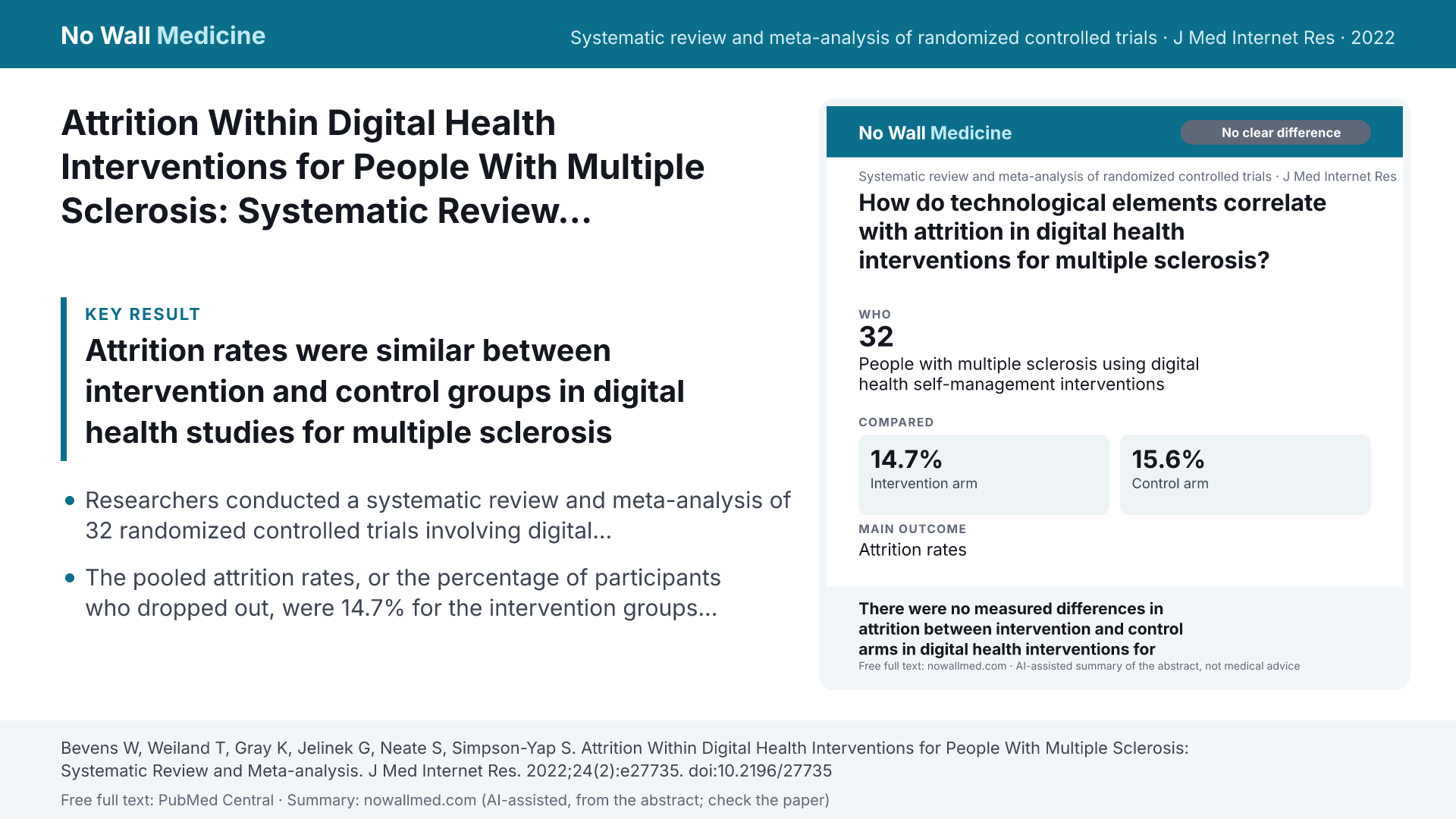
Attrition rates were similar between intervention and control groups in digital health studies for multiple sclerosis
Attrition Within Digital Health Interventions for People With Multiple Sclerosis: Systematic Review and Meta-analysis
Systematic review and meta-analysis of randomized controlled trialsNo clear difference
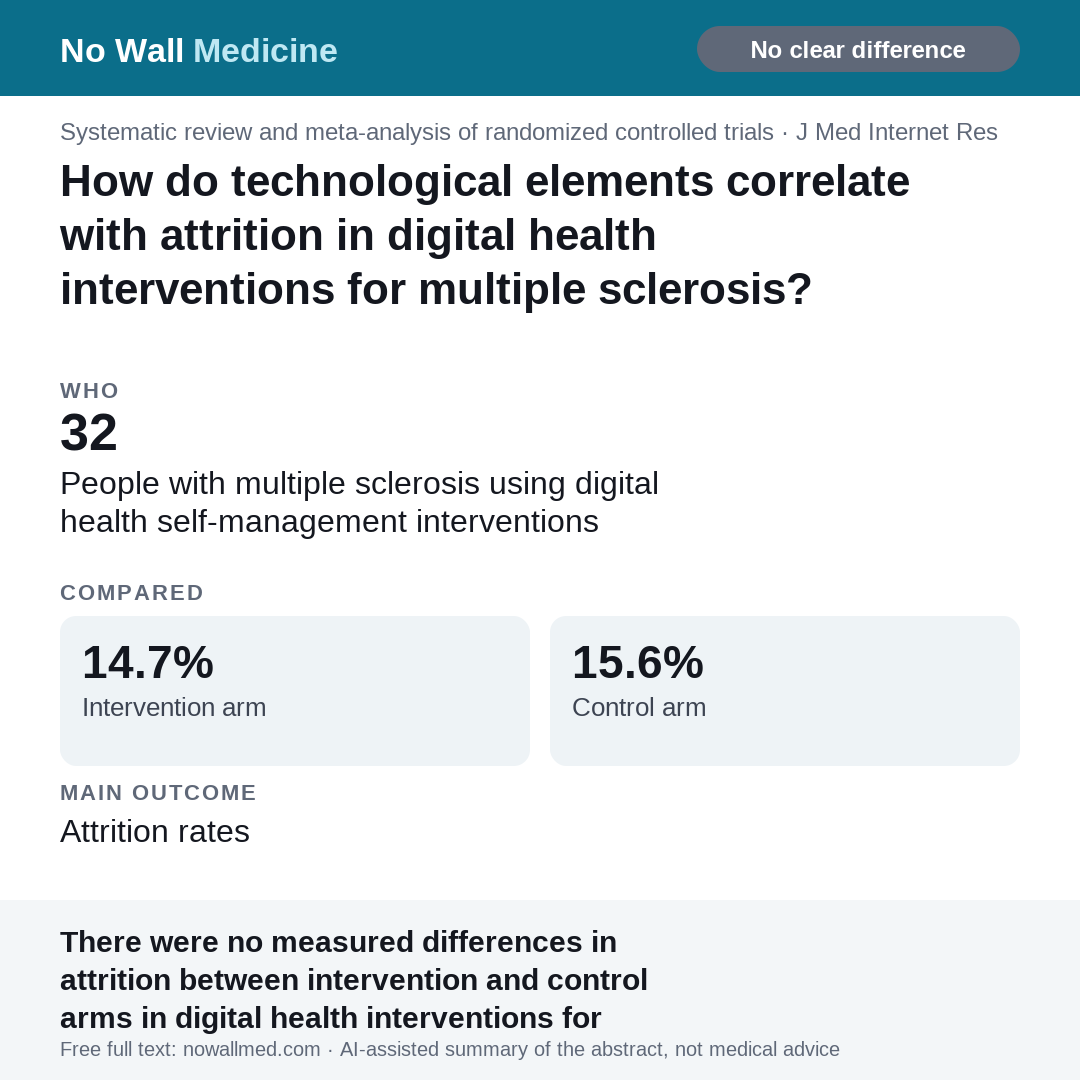
How do technological elements correlate with attrition in digital health interventions for multiple sclerosis?
Who
32
People with multiple sclerosis using digital health self-management interventions
Compared
14.7%Intervention arm
15.6%Control arm
Main outcome
Attrition rates
Bottom line: There were no measured differences in attrition between intervention and control arms in digital health interventions for multiple sclerosis.
J Med Internet Res · 2022-02-09Download image
Clinical question: How do technological elements correlate with attrition in digital health interventions for multiple sclerosis?
Why it matters: It is unknown how technological elements within digital health programs influence participant engagement and dropout rates among people with multiple sclerosis.
Key points
- Researchers conducted a systematic review and meta-analysis of 32 randomized controlled trials involving digital health self-management programs for people with multiple sclerosis.
- The pooled attrition rates, or the percentage of participants who dropped out, were 14.7% for the intervention groups and 15.6% for the control groups.
- A composite score of technological elements was associated with some of the observed differences in attrition across the studies.
Headline and key points written with AI from the paper’s abstract, with every number checked against it. Read the paper before relying on them.
Was this summary helpful?
Subject terms
Cite this article
Bevens W, Weiland T, Gray K, Jelinek G, Neate S, Simpson-Yap S. Attrition Within Digital Health Interventions for People With Multiple Sclerosis: Systematic Review and Meta-analysis. J Med Internet Res. 2022. doi:10.2196/27735
Spotted a mistake? Suggest a correction