Audiovisual distraction reduced propofol use and improved patient satisfaction during mitral valve repair
Audiovisual Distraction During Mitral Transcatheter Edge-to-Edge Repair: A Sedation-Sparing Randomized Trial
Prospective randomized controlled trialBenefit found
Does audiovisual distraction reduce propofol requirements and improve patient experience during mitral transcatheter edge-to-edge repair?
Who
60
Patients undergoing mitral transcatheter edge-to-edge repair
Compared
Audiovisual distraction: 4.6 ± 1.6 mg/kg/h
Sham control: 5.9 ± 1.4 mg/kg/h
Main outcome
Mean propofol dose
Bottom line: Audiovisual distraction reduces propofol requirements and improves patient satisfaction during mitral transcatheter edge-to-edge repair.
JACC Adv · 2026-05-21Download image
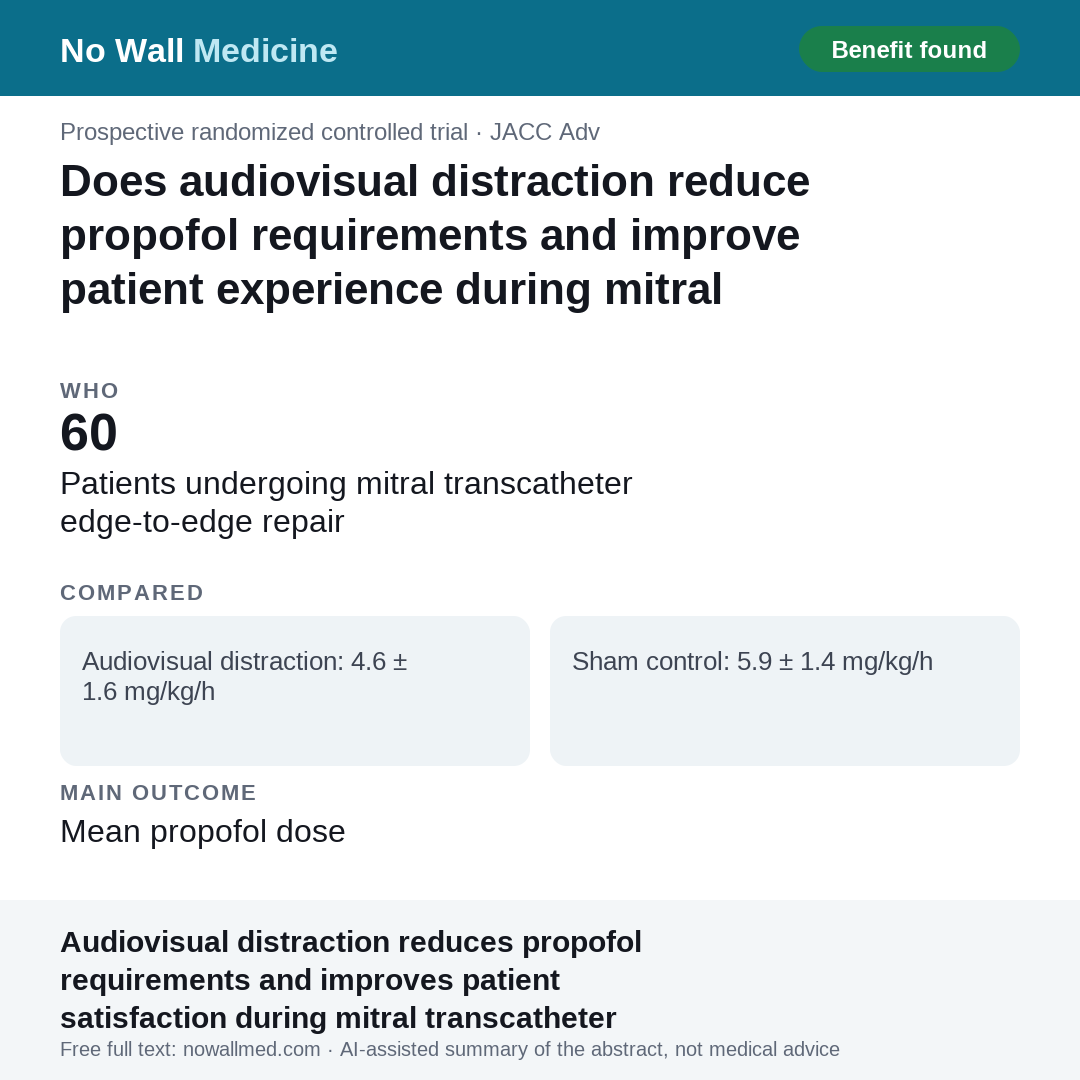
Clinical question: Does audiovisual distraction reduce propofol requirements and improve patient experience during mitral transcatheter edge-to-edge repair?
Why it matters: Doctors face challenges balancing patient comfort with the risks of sedation-related heart and brain complications in frail older adults undergoing mitral valve repair.
Key points
- Researchers conducted a randomized controlled trial with 60 patients undergoing mitral transcatheter edge-to-edge repair, a procedure to repair a heart valve using a catheter.
- The audiovisual distraction group required a lower mean propofol dose of 4.6 ± 1.6 mg/kg/h compared to 5.9 ± 1.4 mg/kg/h in the control group.
- Patients using video glasses reported lower postprocedural anxiety and higher satisfaction scores than those in the sham control group.
Headline and key points written with AI from the paper’s abstract, with every number checked against it. Read the paper before relying on them.
Cite this article
Rawish E, John M, Lemmer F, Constantz A, Genske F, Marquetand C. Audiovisual Distraction During Mitral Transcatheter Edge-to-Edge Repair: A Sedation-Sparing Randomized Trial. JACC Adv. 2026. doi:10.1016/j.jacadv.2026.102835
Spotted a mistake? Suggest a correction