Near-infrared autofluorescence improved parathyroid gland identification during thyroid surgery in a low-volume institution
Autofluorescence-guided hemithyroidectomy in a low-volume thyroid institution with no experience in parathyroid surgery: randomized clinical trial
Randomized clinical trialBenefit found
Does autofluorescence guidance improve parathyroid gland identification during hemithyroidectomy?
Who
170
Patients referred for hemithyroidectomy · low-volume thyroid institution
Compared
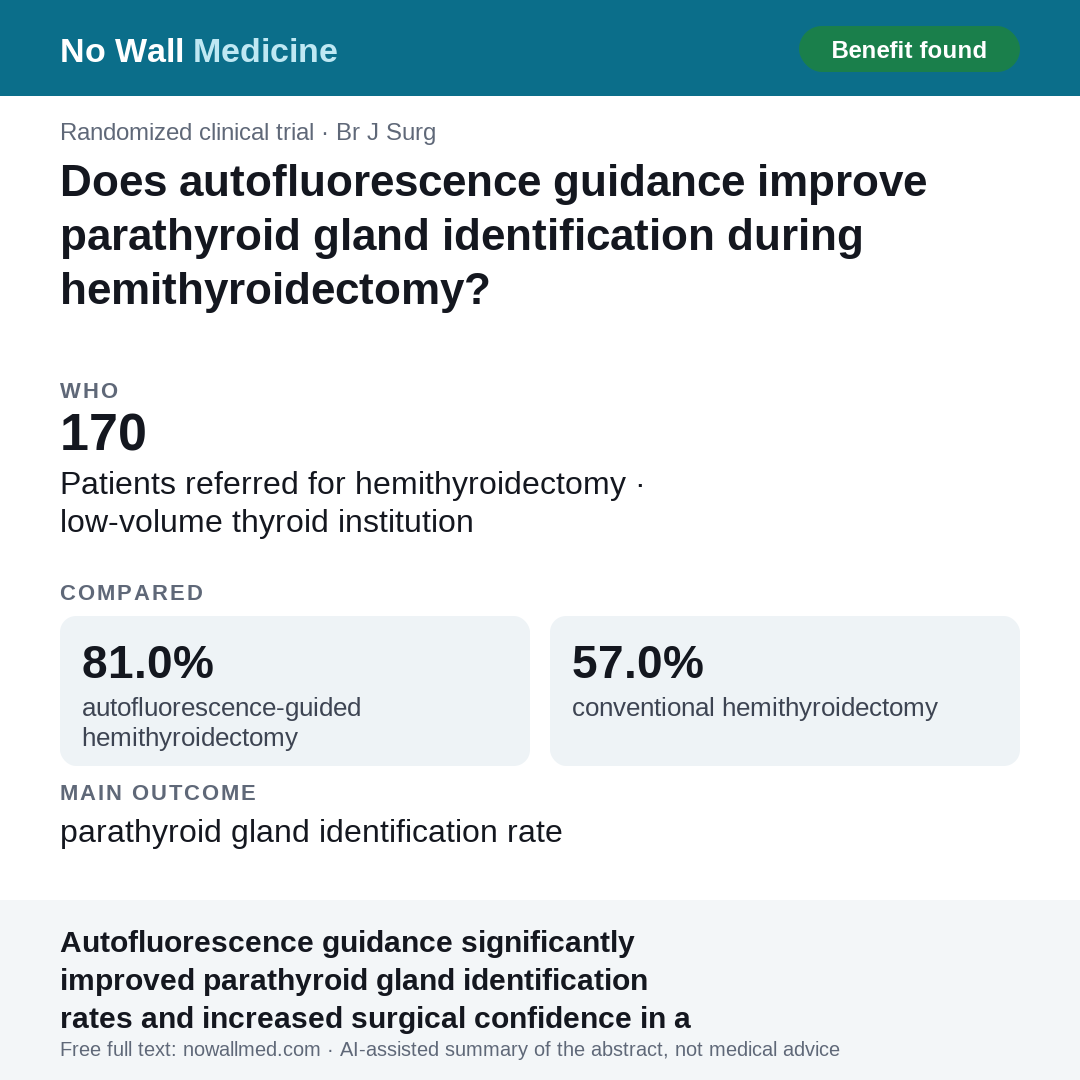
81.0%autofluorescence-guided hemithyroidectomy
57.0%conventional hemithyroidectomy
Main outcome
parathyroid gland identification rate
Bottom line: Autofluorescence guidance significantly improved parathyroid gland identification rates and increased surgical confidence in a low-volume institution.
Br J Surg · 2024-04-04Download image
Clinical question: Does autofluorescence guidance improve parathyroid gland identification during hemithyroidectomy?
Why it matters: Low-volume surgeons without experience in parathyroid surgery may face an increased risk of damaging parathyroid glands during thyroid operations.
In absolute numbers
autofluorescence-guided hemithyroidectomy: 81% · conventional hemithyroidectomy: 57% → a difference of 24 percentage points, so about 5 people would need the treatment for 1 more to benefit (number needed to treat) over the trial’s follow-up.
Worked out by us from the two group results above, not reported by the authors. Check the paper for the exact outcome and timing.
Key points
- Researchers randomized 170 patients to receive either autofluorescence-guided hemithyroidectomy (84 patients) or conventional hemithyroidectomy (86 patients).
- The identification rate of parathyroid glands was 81.0% in the autofluorescence group compared to 57.0% in the control group.
- Surgeon confidence in identifying the glands was 87.5% with autofluorescence versus 59.1% in the control group, though excision rates showed no difference.
Headline and key points written with AI from the paper’s abstract, with every number checked against it. Read the paper before relying on them.
Was this summary helpful?
Subject terms
Cite this article
Abood A, Rolighed L, Ovesen T, Madsen SH, Vestergaard P, Triponez F. Autofluorescence-guided hemithyroidectomy in a low-volume thyroid institution with no experience in parathyroid surgery: randomized clinical trial. Br J Surg. 2024. doi:10.1093/bjs/znae075
Spotted a mistake? Suggest a correction
Top studies every Monday
The week’s key trials and guidelines in your specialties, plus any topics you follow. By email, free.
Get the weekly digest