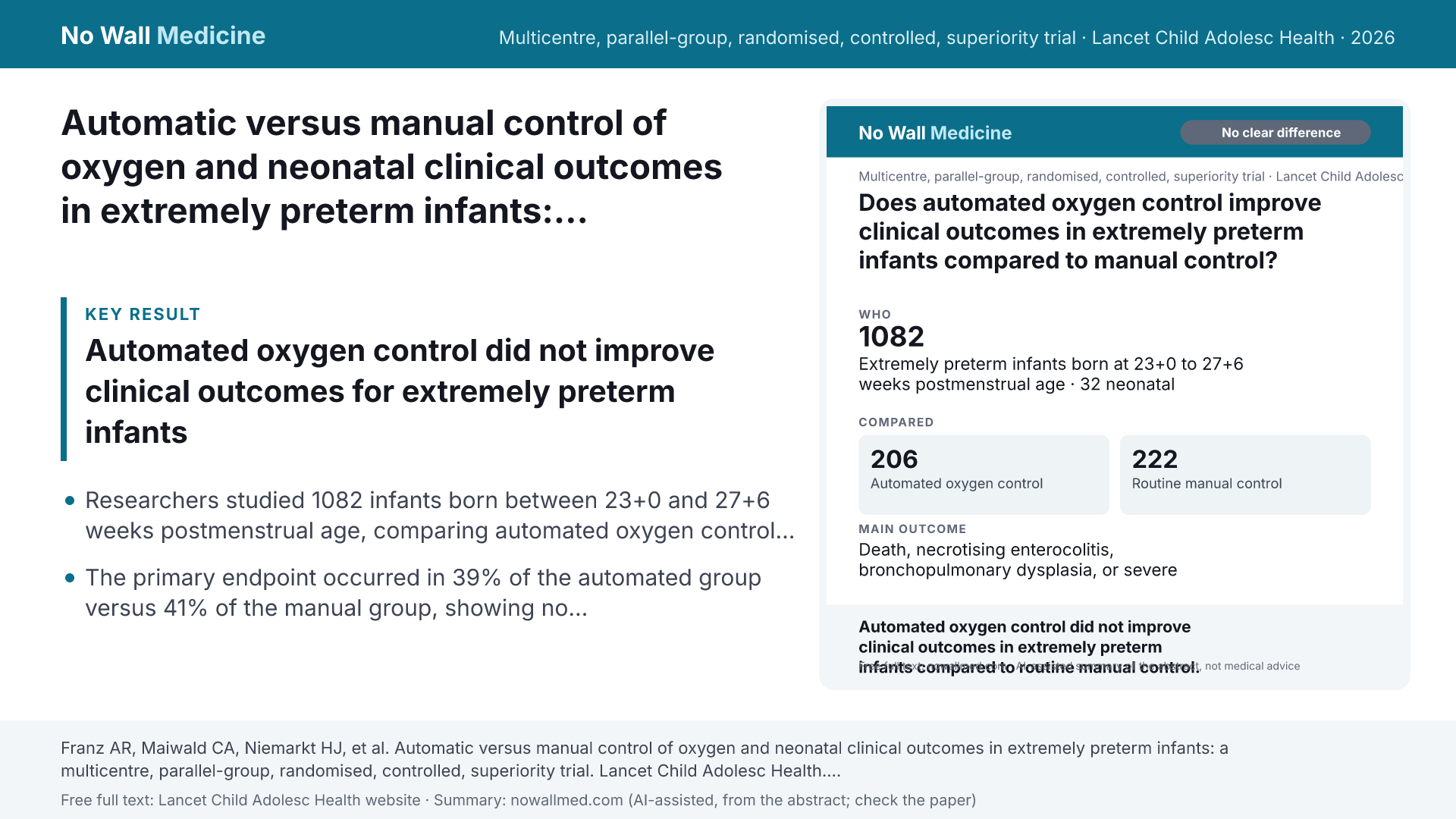
Automatic versus manual control of oxygen and neonatal clinical outcomes in extremely preterm infants: a multicentre, parallel-group, randomised, controlled, superiority trial
Key result: Automated oxygen control did not improve clinical outcomes for extremely preterm infants
Key points
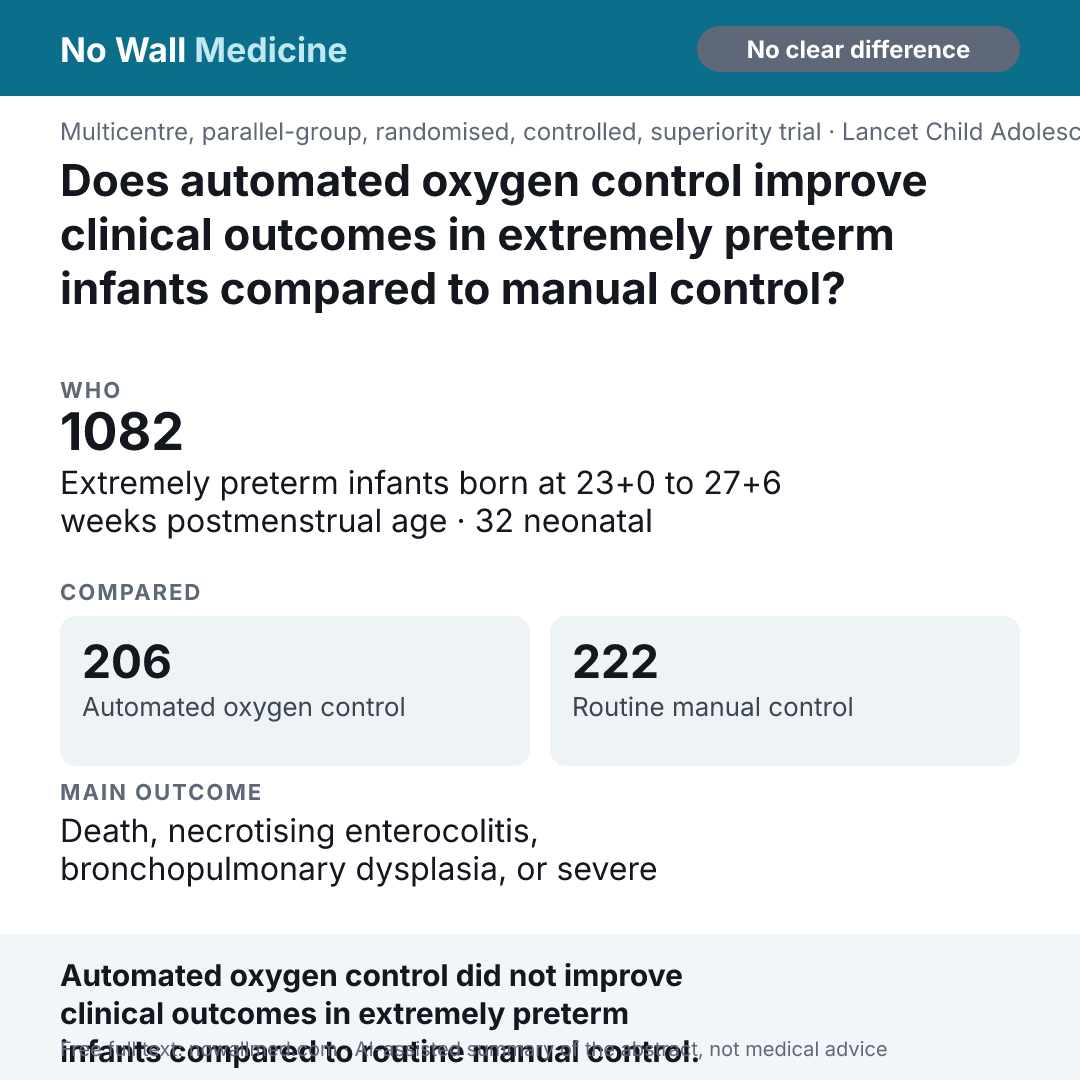
- Researchers studied 1082 infants born between 23+0 and 27+6 weeks postmenstrual age, comparing automated oxygen control to routine manual care.
- The primary endpoint occurred in 39% of the automated group versus 41% of the manual group, showing no statistically significant difference.
- Rates of death, necrotising enterocolitis, bronchopulmonary dysplasia, and severe retinopathy of prematurity were similar between the two groups.
Why it matters: Extremely preterm infants face complications and death from episodes of low oxygen or exposure to inadequately high oxygen concentrations.
Discussion prompts
- Would these patients look like yours? Who was left out?
- Is the main outcome one that matters to patients?
- Is the difference large enough to change what you do?
Cite: Franz AR, Maiwald CA, Niemarkt HJ, et al. Automatic versus manual control of oxygen and neonatal clinical outcomes in extremely preterm infants: a multicentre, parallel-group, randomised, controlled, superiority trial. Lancet Child Adolesc Health. 2026;10(3):179-188. doi:10.1016/S2352-4642(25)00351-7
Free full text: Lancet Child Adolesc Health website · Summary and visual abstract: nowallmed.com/a/automatic-versus-manual-control-of-oxygen-and-neonatal-clinical-1omo0v0/ (AI-assisted from the abstract; check the paper before relying on it).