Axillary Pathologic Complete Response After Neoadjuvant Systemic Therapy by Breast Cancer Subtype in Patients With Initially Clinically Node-Positive Disease: A Systematic Review and Meta-analysis
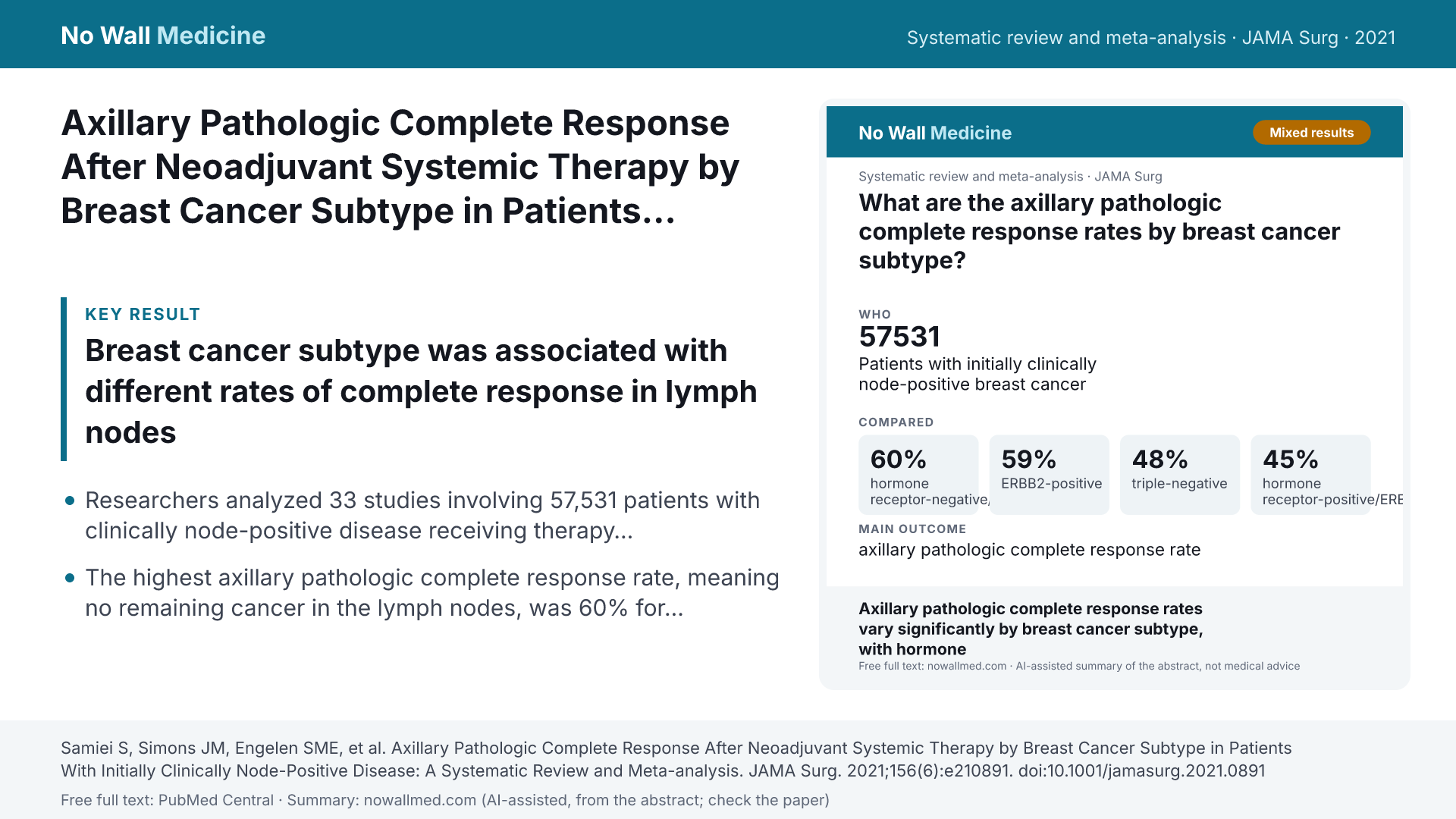
Key result: Breast cancer subtype was associated with different rates of complete response in lymph nodes
Systematic review and meta-analysisMixed results
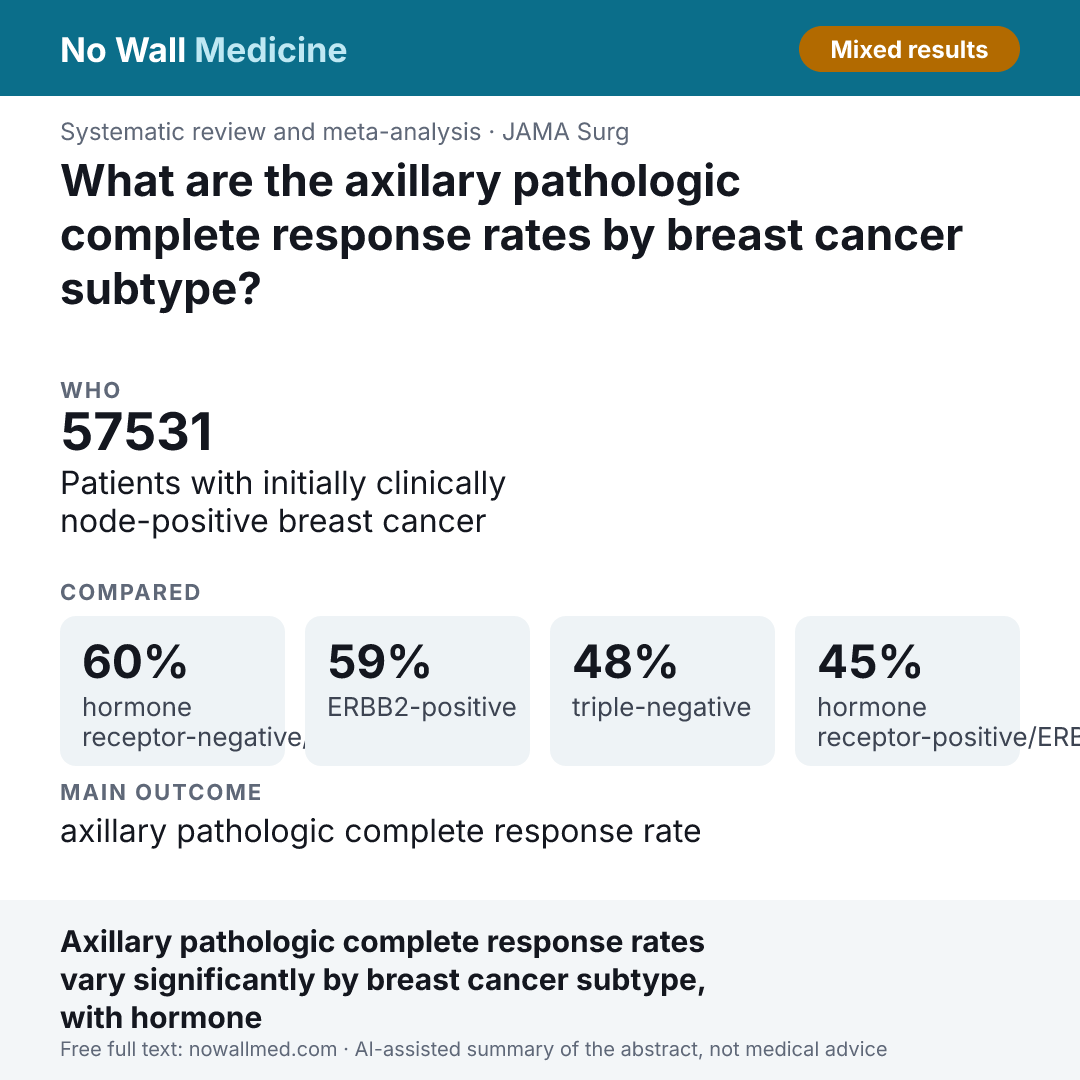
What are the axillary pathologic complete response rates by breast cancer subtype?
Who
57531
Patients with initially clinically node-positive breast cancer
Compared
60%hormone receptor-negative/ERBB2-positive
59%ERBB2-positive
48%triple-negative
45%hormone receptor-positive/ERBB2-positive
Main outcome
axillary pathologic complete response rate
Bottom line: Axillary pathologic complete response rates vary significantly by breast cancer subtype, with hormone receptor-negative/ERBB2-positive showing the highest rates.
JAMA Surg · 2021-06-09 · Save PNG
Key points
- Researchers analyzed 33 studies involving 57,531 patients with clinically node-positive disease receiving therapy before surgery.
- The highest axillary pathologic complete response rate, meaning no remaining cancer in the lymph nodes, was 60% for hormone receptor-negative/ERBB2-positive cancer.
- The lowest rate was 13% for luminal A breast cancer, while triple-negative cancer showed a 48% response rate.
Discussion prompts
- Would these patients look like yours? Who was left out?
- Is the main outcome one that matters to patients?
- Is the difference large enough to change what you do?
Cite: Samiei S, Simons JM, Engelen SME, et al. Axillary Pathologic Complete Response After Neoadjuvant Systemic Therapy by Breast Cancer Subtype in Patients With Initially Clinically Node-Positive Disease: A Systematic Review and Meta-analysis. JAMA Surg. 2021. doi:10.1001/jamasurg.2021.0891
Free full text: PubMed Central · Summary and visual abstract: nowallmed.com/a/axillary-pathologic-complete-response-after-neoadjuvant-systemic-1stwvy/ (AI-assisted from the abstract; check the paper before relying on it).