Mupirocin nasal ointment was associated with less severe oral mucositis in nasopharyngeal cancer patients
Bacterial Decolonization With Mupirocin Ointment for Acute Radiation Oral Mucositis Prevention: A Phase 3 Randomized Clinical Trial
Phase 3 randomized clinical trialBenefit found
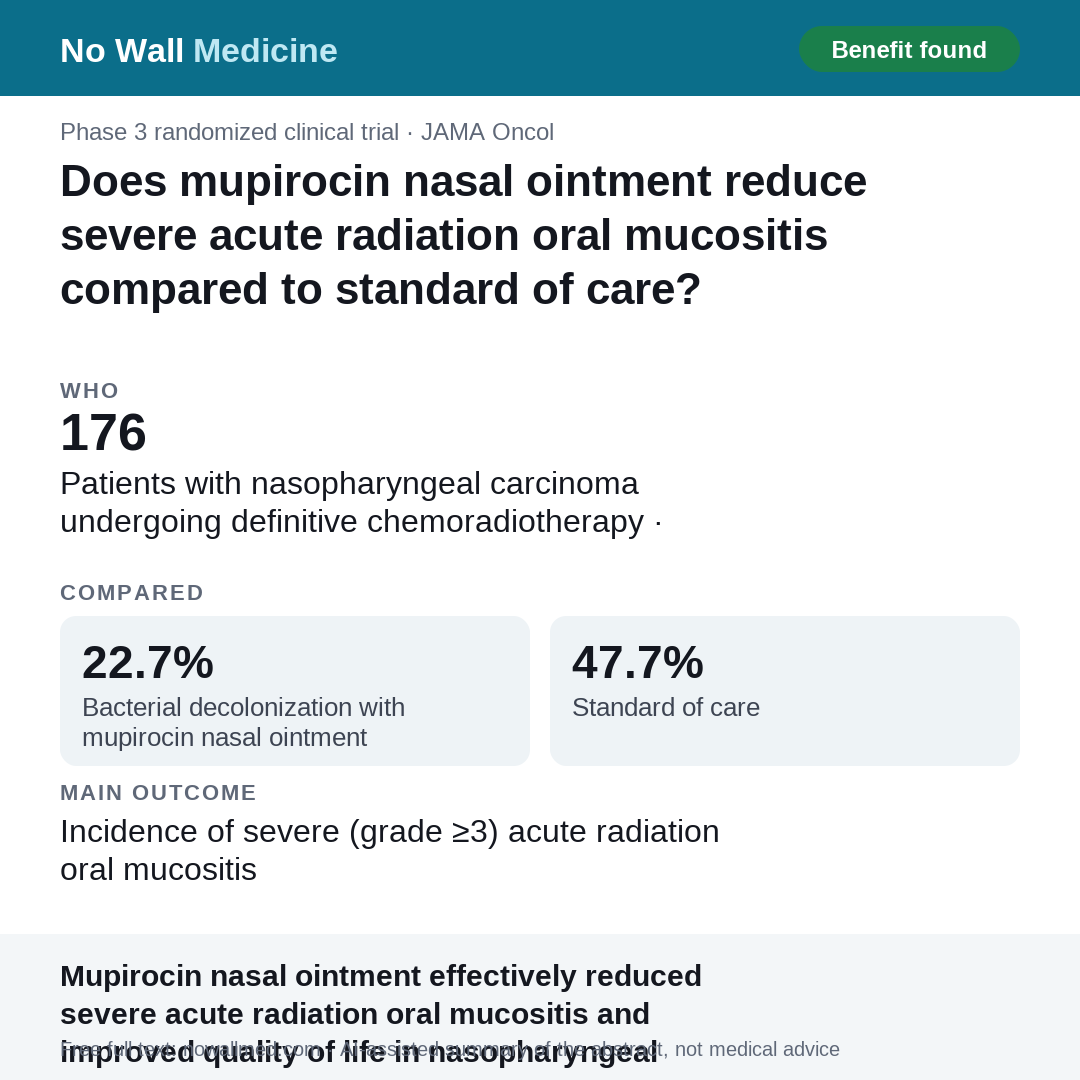
Does mupirocin nasal ointment reduce severe acute radiation oral mucositis compared to standard of care?
Who
176
Patients with nasopharyngeal carcinoma undergoing definitive chemoradiotherapy · Single-center in China
Compared
22.7%Bacterial decolonization with mupirocin nasal ointment
47.7%Standard of care
Main outcome
Incidence of severe (grade ≥3) acute radiation oral mucositis
Result: relative risk, 0.48 (95% CI, 0.31-0.74)
Bottom line: Mupirocin nasal ointment effectively reduced severe acute radiation oral mucositis and improved quality of life in nasopharyngeal carcinoma patients.
JAMA Oncol · 2025-08-07Download image
Clinical question: Does mupirocin nasal ointment reduce severe acute radiation oral mucositis compared to standard of care?
Why it matters: Severe oral mucositis is a major dose-limiting toxic effect for patients undergoing radiotherapy for nasopharyngeal cancer.
In absolute numbers
Bacterial decolonization with mupirocin nasal ointment: 22.7% · Standard of care: 47.7% → a difference of 25 percentage points, so about 4 people would need the treatment for 1 more to benefit (number needed to treat) over the trial’s follow-up.
Worked out by us from the two group results above, not reported by the authors. Check the paper for the exact outcome and timing.
Key points
- The study enrolled 176 patients with nasopharyngeal carcinoma undergoing chemoradiotherapy and compared mupirocin nasal ointment to standard care.
- Severe oral mucositis, which is painful inflammation of the mouth, occurred in 22.7% of the mupirocin group compared to 47.7% in the standard care group.
- Mupirocin use was associated with lower Staphylococcus aureus colonization in the nose (9.4% vs 22.9%) and mouth (5.9% vs 20.5%) at the end of radiotherapy.
Headline and key points written with AI from the paper’s abstract, with every number checked against it. Read the paper before relying on them.
Topics
Cite this article
Liao Z, Xiong X, Zhao L, Zhang Z, Guan C, Zhang L. Bacterial Decolonization With Mupirocin Ointment for Acute Radiation Oral Mucositis Prevention: A Phase 3 Randomized Clinical Trial. JAMA Oncol. 2025. doi:10.1001/jamaoncol.2025.2361
Spotted a mistake? Suggest a correction