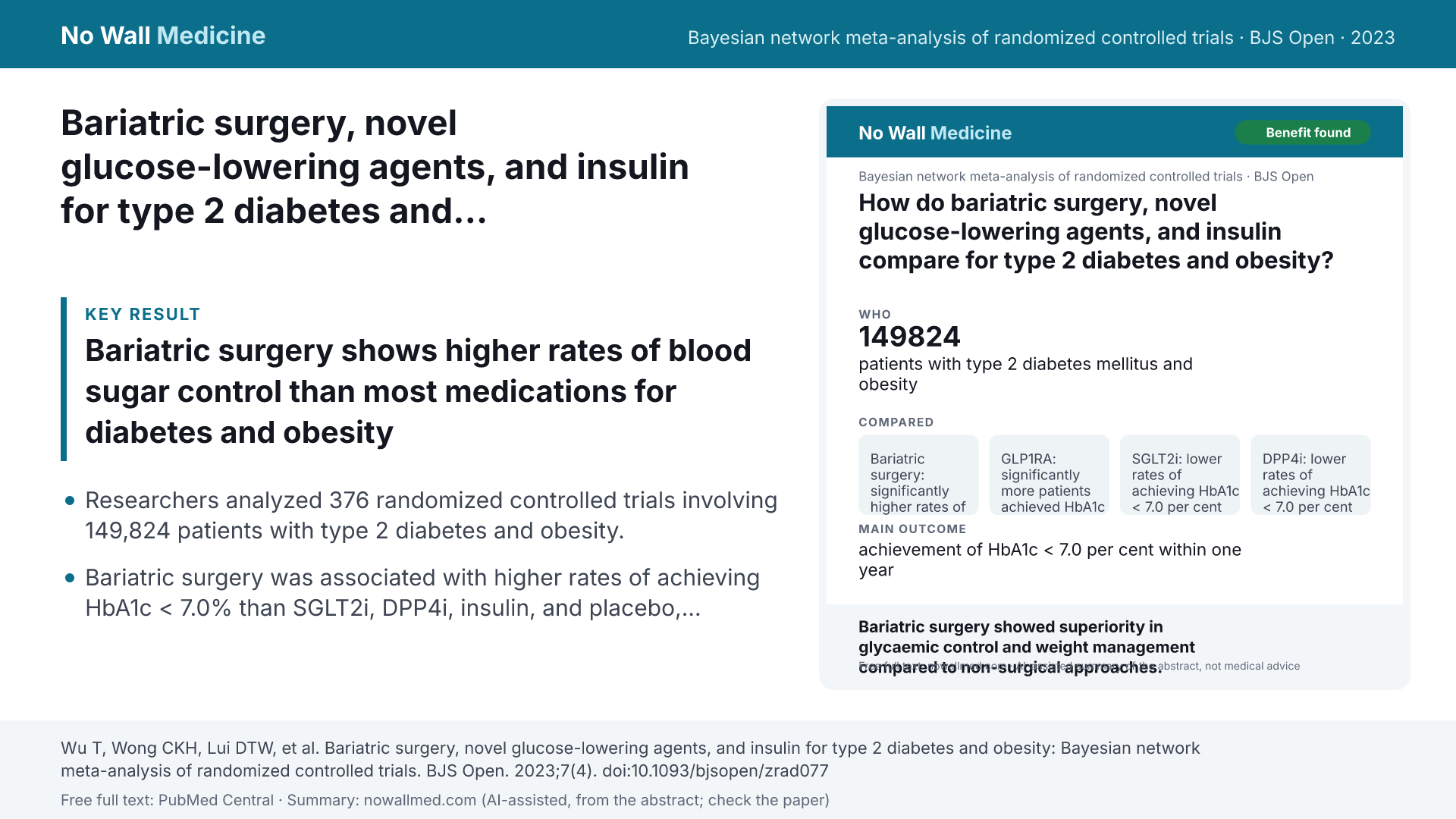
Bariatric surgery shows higher rates of blood sugar control than most medications for diabetes and obesity
Bariatric surgery, novel glucose-lowering agents, and insulin for type 2 diabetes and obesity: Bayesian network meta-analysis of randomized controlled trials
Bayesian network meta-analysis of randomized controlled trialsBenefit found
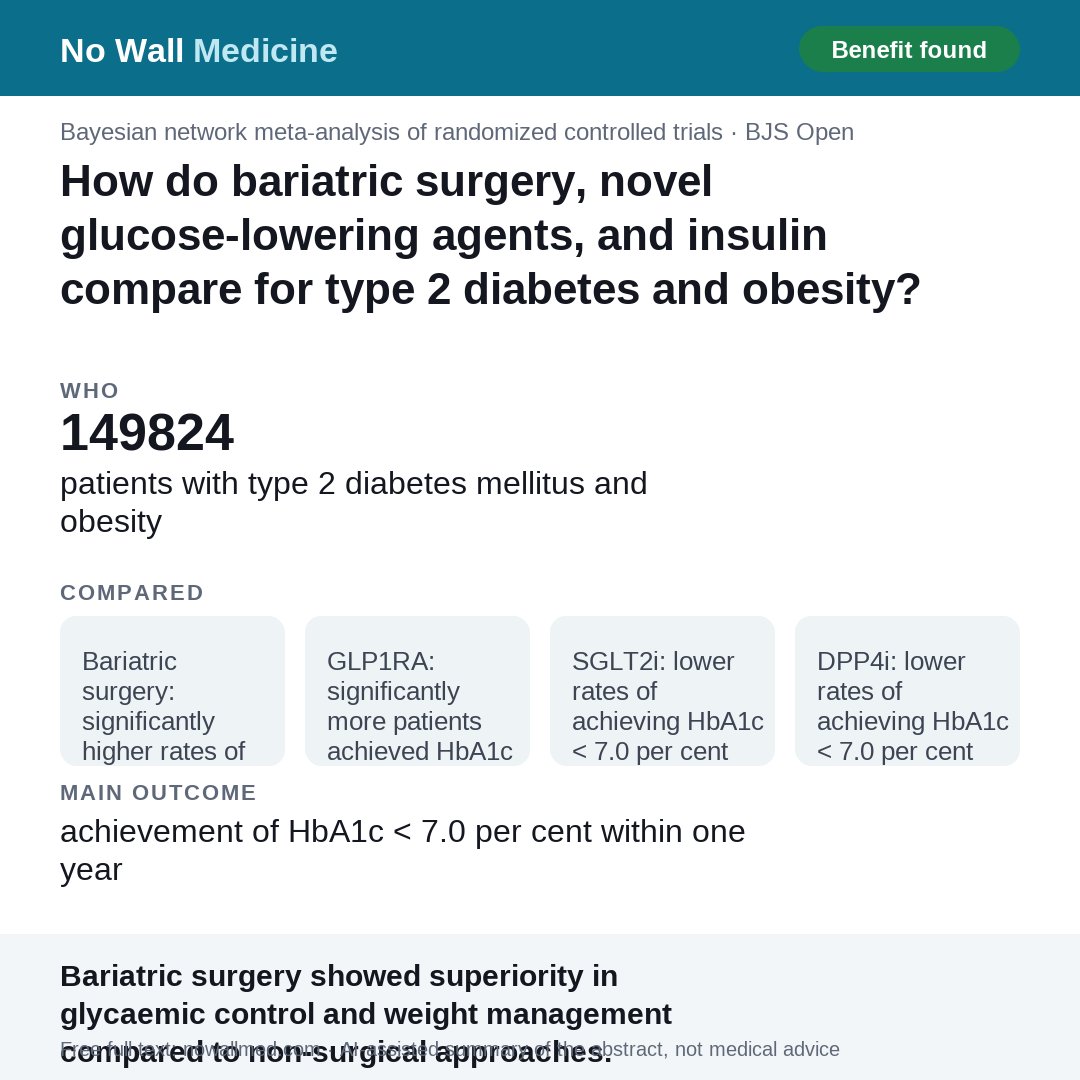
How do bariatric surgery, novel glucose-lowering agents, and insulin compare for type 2 diabetes and obesity?
Who
149824
patients with type 2 diabetes mellitus and obesity
Compared
Bariatric surgery: significantly higher rates of achieving HbA1c < 7.0 per cent
GLP1RA: significantly more patients achieved HbA1c < 7.0 per cent
SGLT2i: lower rates of achieving HbA1c < 7.0 per cent
DPP4i: lower rates of achieving HbA1c < 7.0 per cent
Main outcome
achievement of HbA1c < 7.0 per cent within one year
Bottom line: Bariatric surgery showed superiority in glycaemic control and weight management compared to non-surgical approaches.
BJS Open · 2023-08-06Download image
Clinical question: How do bariatric surgery, novel glucose-lowering agents, and insulin compare for type 2 diabetes and obesity?
Why it matters: It was unknown how bariatric surgery compares to novel glucose-lowering agents and insulin for managing blood sugar and weight in patients with type 2 diabetes and obesity.
Key points
- Researchers analyzed 376 randomized controlled trials involving 149,824 patients with type 2 diabetes and obesity.
- Bariatric surgery was associated with higher rates of achieving HbA1c < 7.0% than SGLT2i, DPP4i, insulin, and placebo, but showed no significant difference compared to GLP1RA.
- At 12 months, bariatric surgery was associated with approximately 1% more HbA1c reduction and approximately 15 kg more body weight reduction than other treatments.
Headline and key points written with AI from the paper’s abstract, with every number checked against it. Read the paper before relying on them.
Was this summary helpful?
Subject terms
Cite this article
Wu T, Wong CKH, Lui DTW, et al. Bariatric surgery, novel glucose-lowering agents, and insulin for type 2 diabetes and obesity: Bayesian network meta-analysis of randomized controlled trials. BJS Open. 2023. doi:10.1093/bjsopen/zrad077
Spotted a mistake? Suggest a correction