High neutrophil-to-lymphocyte ratio was linked to better radiographic progression-free survival with cabazitaxel
Baseline neutrophil-to-lymphocyte ratio as a predictive and prognostic biomarker in patients with metastatic castration-resistant prostate cancer treated with cabazitaxel versus abiraterone or enzalutamide in the CARD study
Multicenter, open-label randomized trialBenefit found
Does baseline neutrophil-to-lymphocyte ratio predict outcomes in metastatic castration-resistant prostate cancer?
Who
Metastatic castration-resistant prostate cancer patients previously treated with docetaxel and androgen-receptor-targeted agents · Multicenter
Compared
8.5 monthsCabazitaxel with high neutrophil-to-lymphocyte ratio
2.8 monthsAbiraterone or enzalutamide with high neutrophil-to-lymphocyte ratio
7.5 monthsCabazitaxel with low neutrophil-to-lymphocyte ratio
5.1 monthsAbiraterone or enzalutamide with low neutrophil-to-lymphocyte ratio
Main outcome
radiographic progression-free survival and overall survival
Result: hazard ratio 0.43 (95% CI 0.27-0.67)
Bottom line: Cabazitaxel provides radiographic progression-free survival benefits regardless of neutrophil-to-lymphocyte ratio, unlike androgen-receptor-targeted agents.
ESMO Open · 2021-08-24Download image
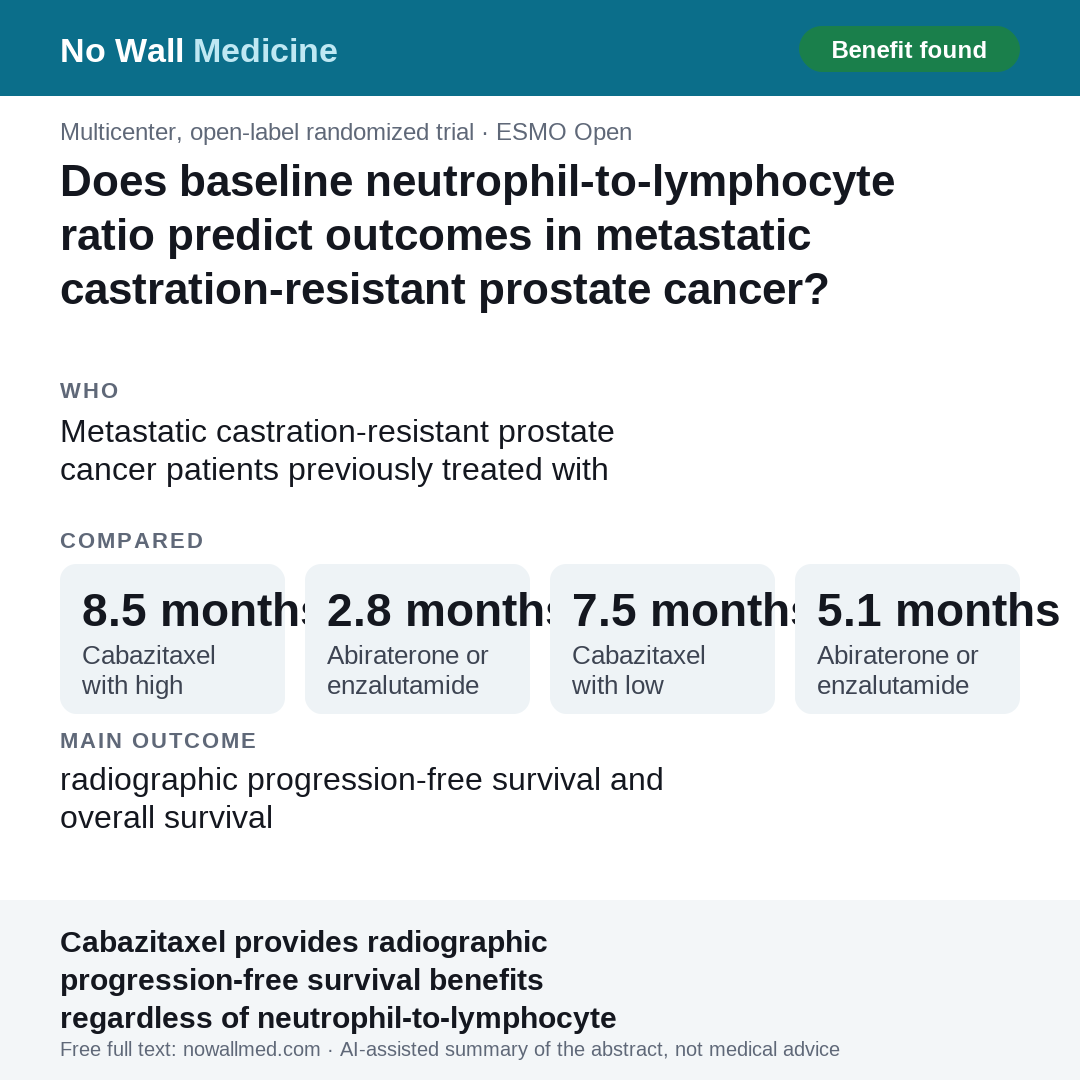
Clinical question: Does baseline neutrophil-to-lymphocyte ratio predict outcomes in metastatic castration-resistant prostate cancer?
Why it matters: It was unknown if the neutrophil-to-lymphocyte ratio, a measure of immune system balance, could predict how patients with advanced prostate cancer respond to different treatments.
Key points
- Researchers studied patients with metastatic castration-resistant prostate cancer randomized to receive cabazitaxel or androgen-receptor-targeted agents like abiraterone or enzalutamide.
- In patients with high neutrophil-to-lymphocyte ratio, radiographic progression-free survival was 8.5 months with cabazitaxel versus 2.8 months with androgen-receptor-targeted agents.
- A higher neutrophil-to-lymphocyte ratio was independently associated with poor overall survival, though cabazitaxel showed no overall survival difference between high and low ratio groups.
Headline and key points written with AI from the paper’s abstract, with every number checked against it. Read the paper before relying on them.
Was this summary helpful?
Subject terms
Cite this article
de Wit R, Wülfing C, Castellano D, Kramer G, Eymard JC, Sternberg CN. Baseline neutrophil-to-lymphocyte ratio as a predictive and prognostic biomarker in patients with metastatic castration-resistant prostate cancer treated with cabazitaxel versus abiraterone or enzalutamide in the CARD study. ESMO Open. 2021. doi:10.1016/j.esmoop.2021.100241
Spotted a mistake? Suggest a correction
Top studies every Monday
The week’s key trials and guidelines in your specialties, plus any topics you follow. By email, free.
Get the weekly digest