Tezepelumab reduced asthma exacerbations regardless of baseline inflammatory biomarker levels in severe asthma patients
Baseline type 2 biomarker levels and response to tezepelumab in severe asthma
Randomized trialBenefit found
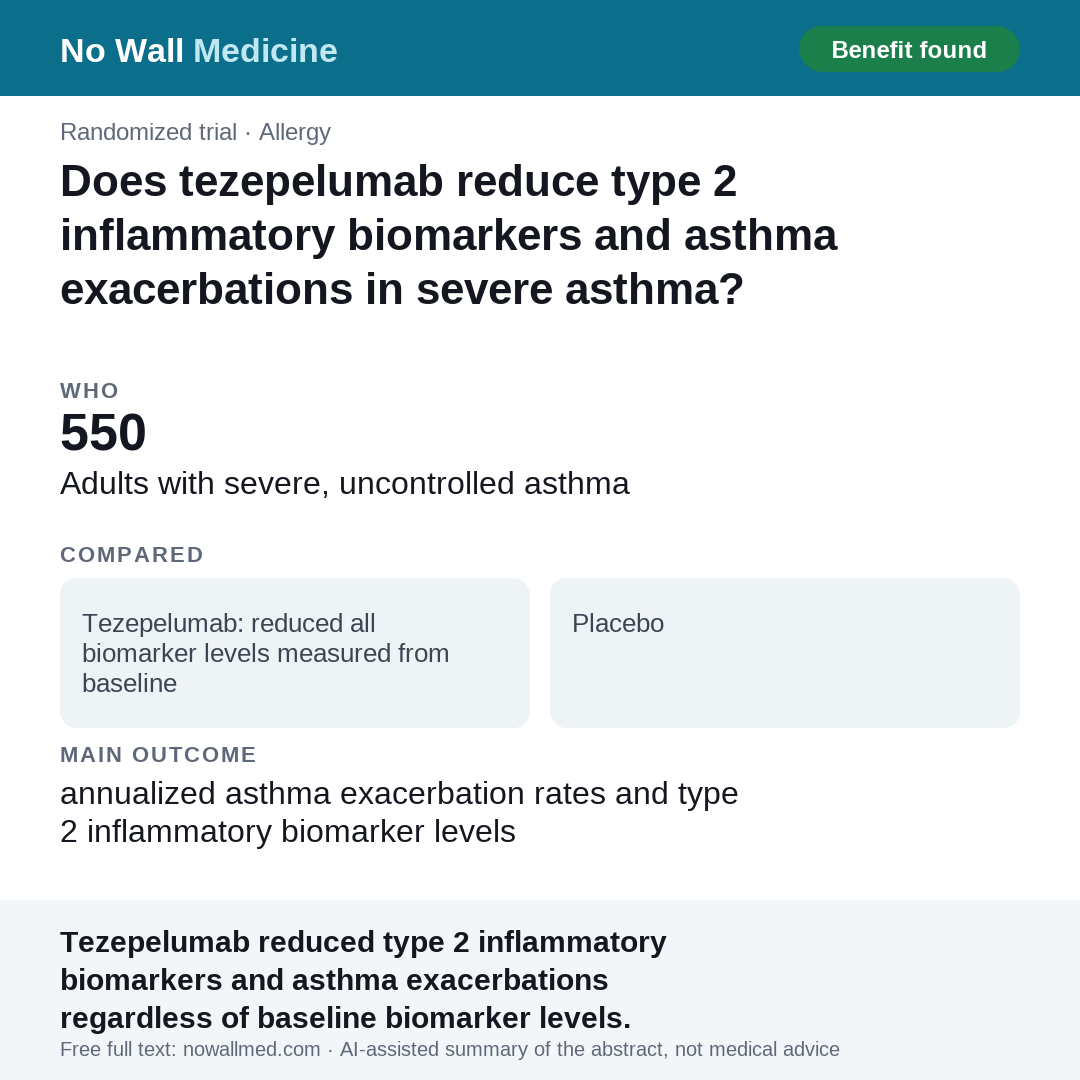
Does tezepelumab reduce type 2 inflammatory biomarkers and asthma exacerbations in severe asthma?
Who
550
Adults with severe, uncontrolled asthma
Compared
Tezepelumab: reduced all biomarker levels measured from baseline
Placebo
Main outcome
annualized asthma exacerbation rates and type 2 inflammatory biomarker levels
Result: exacerbations were reduced by 55-83% in the pooled tezepelumab cohort versus placebo
Bottom line: Tezepelumab reduced type 2 inflammatory biomarkers and asthma exacerbations regardless of baseline biomarker levels.
Allergy · 2022-02-09Download image
Clinical question: Does tezepelumab reduce type 2 inflammatory biomarkers and asthma exacerbations in severe asthma?
Why it matters: It was unknown if the effectiveness of tezepelumab in reducing asthma exacerbations depended on a patient's initial levels of specific inflammatory biomarkers.
Key points
- Researchers studied 550 adults with severe, uncontrolled asthma randomized to receive tezepelumab at various doses or a placebo for 52 weeks.
- Tezepelumab reduced asthma exacerbations by 55-83% in the pooled treatment group compared to placebo, regardless of baseline levels of blood eosinophils, FeNO, or other biomarkers.
- Treatment with 210 mg of tezepelumab reduced all measured type 2 inflammatory biomarker levels from baseline compared to placebo at Week 52.
Headline and key points written with AI from the paper’s abstract, with every number checked against it. Read the paper before relying on them.
Was this summary helpful?
Subject terms
Cite this article
Corren J, Pham TH, Garcia Gil E, Sałapa K, Ren P, Parnes JR. Baseline type 2 biomarker levels and response to tezepelumab in severe asthma. Allergy. 2022. doi:10.1111/all.15197
Spotted a mistake? Suggest a correction
Top studies every Monday
The week’s key trials and guidelines in your specialties, plus any topics you follow. By email, free.
Get the weekly digest