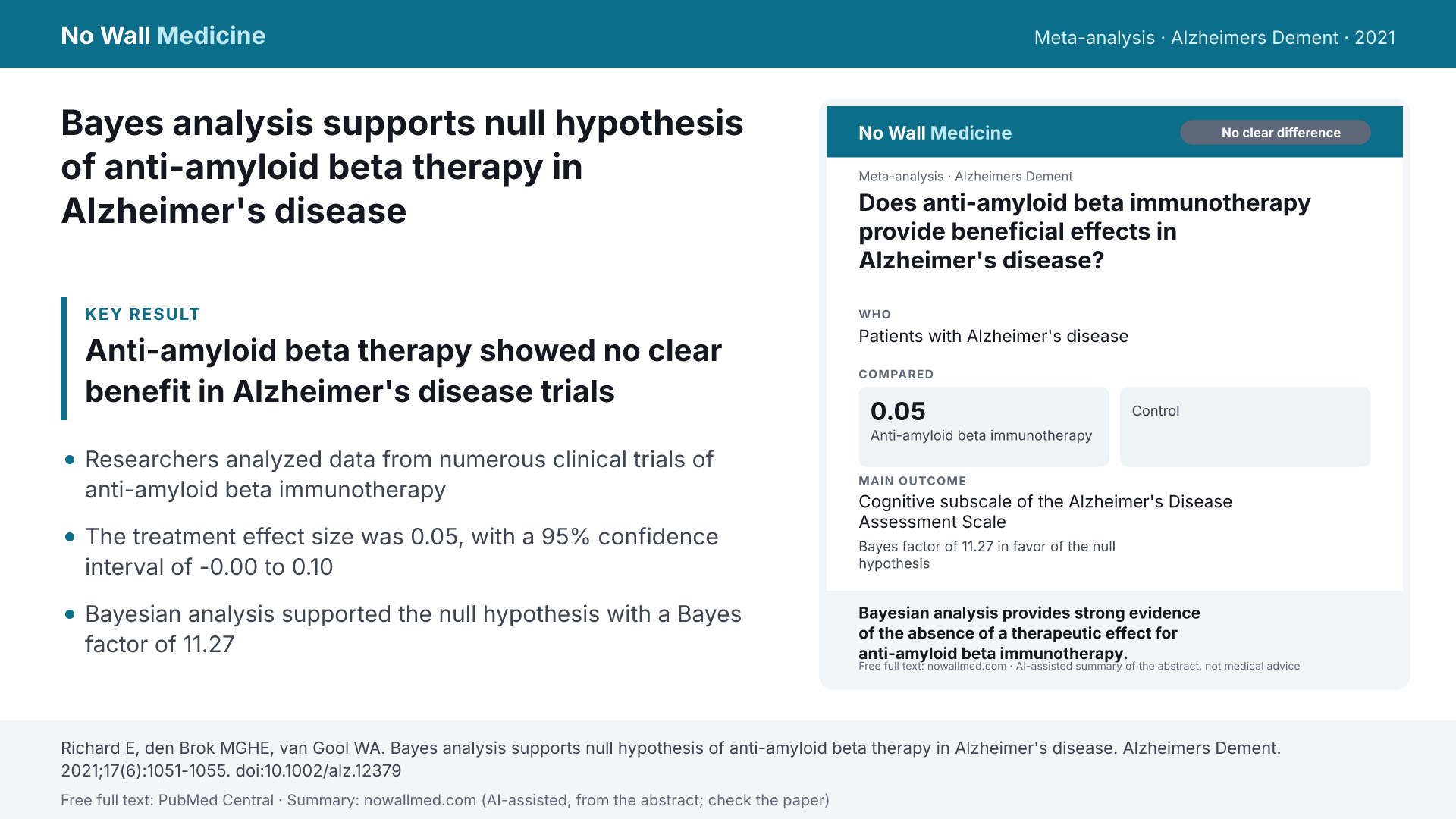
Anti-amyloid beta therapy showed no clear benefit in Alzheimer's disease trials
Bayes analysis supports null hypothesis of anti-amyloid beta therapy in Alzheimer's disease
Meta-analysisNo clear difference
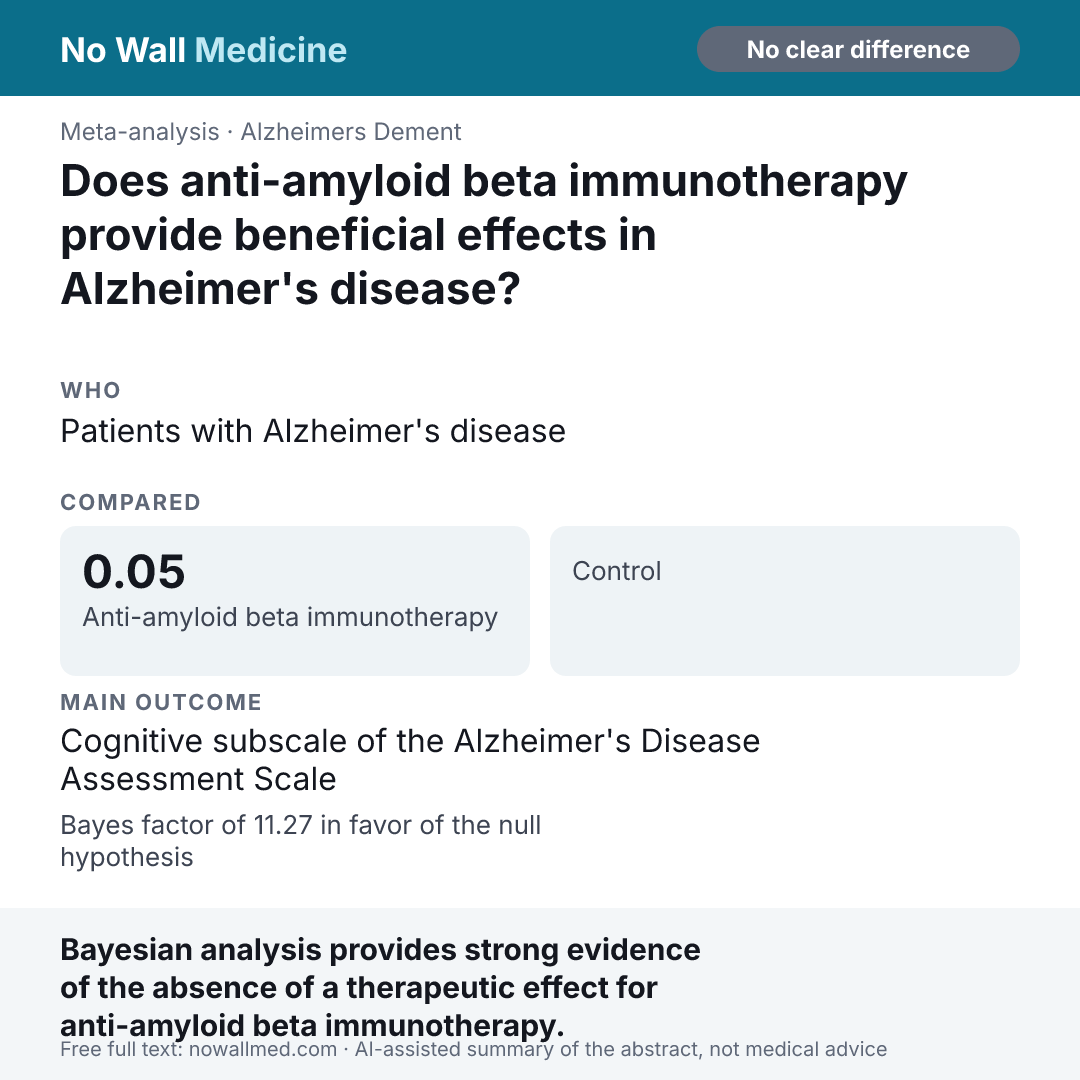
Does anti-amyloid beta immunotherapy provide beneficial effects in Alzheimer's disease?
Who
Patients with Alzheimer's disease
Compared
0.05Anti-amyloid beta immunotherapy (95% confidence interval -0.00 to 0.10)
Control
Main outcome
Cognitive subscale of the Alzheimer's Disease Assessment Scale
Result: Bayes factor of 11.27 in favor of the null hypothesis
Bottom line: Bayesian analysis provides strong evidence of the absence of a therapeutic effect for anti-amyloid beta immunotherapy.
Alzheimers Dement · 2021-05-31 · Save PNG
Clinical question: Does anti-amyloid beta immunotherapy provide beneficial effects in Alzheimer's disease?
Key points
- Researchers analyzed data from numerous clinical trials of anti-amyloid beta immunotherapy.
- The treatment effect size was 0.05, with a 95% confidence interval of -0.00 to 0.10.
- Bayesian analysis supported the null hypothesis with a Bayes factor of 11.27.
Headline and key points written with AI from the paper’s abstract, with every number checked against it. Read the paper before relying on them.
Was this summary helpful?
Subject terms
Headline, design, result, key points, caveat and citation as plain text.
Cite this article
Richard E, den Brok MGHE, van Gool WA. Bayes analysis supports null hypothesis of anti-amyloid beta therapy in Alzheimer's disease. Alzheimers Dement. 2021. doi:10.1002/alz.12379
Spotted a mistake? Suggest a correction