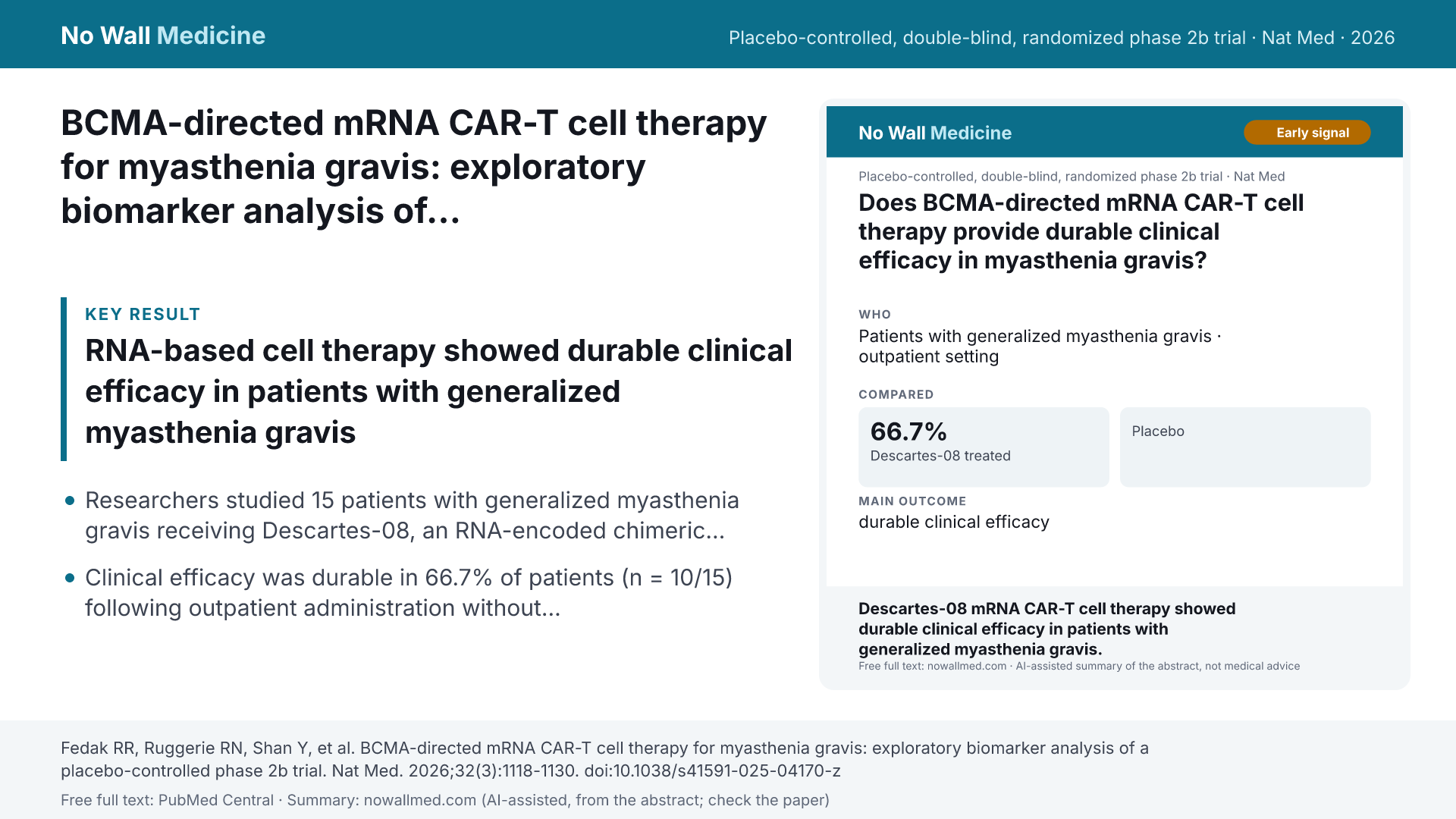
RNA-based cell therapy showed durable clinical efficacy in patients with generalized myasthenia gravis
BCMA-directed mRNA CAR-T cell therapy for myasthenia gravis: exploratory biomarker analysis of a placebo-controlled phase 2b trial
Secondary analysis of a trialEarly signal
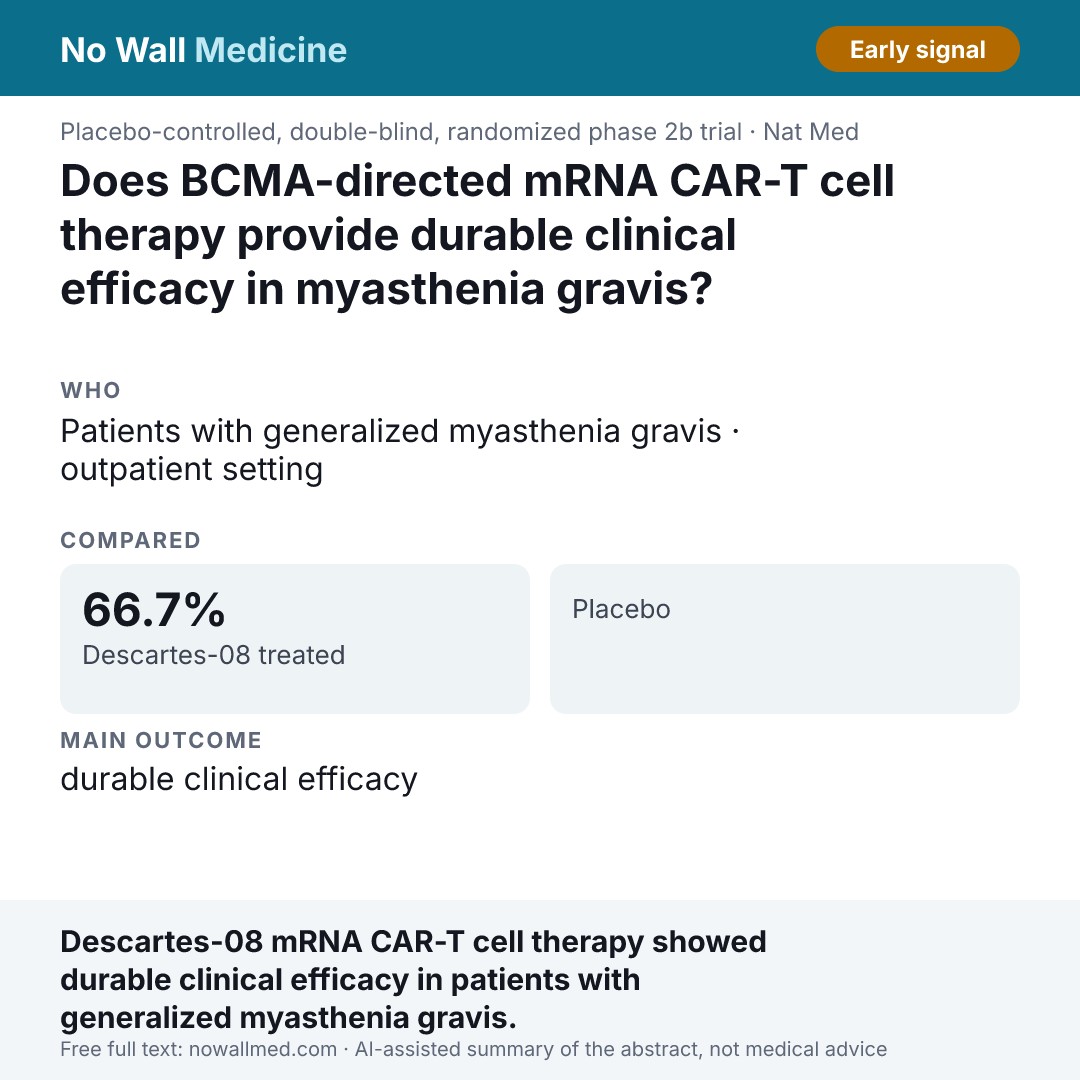
Does BCMA-directed mRNA CAR-T cell therapy provide durable clinical efficacy in myasthenia gravis?
Who
Patients with generalized myasthenia gravis · outpatient setting
Compared
66.7%Descartes-08 treated (10/15)
Placebo
Main outcome
durable clinical efficacy
Bottom line: Descartes-08 mRNA CAR-T cell therapy showed durable clinical efficacy in patients with generalized myasthenia gravis.
Nat Med · 2026-01-09 · Save PNG
Same trial (NCT04146051)
Papers we list that report this registered trial, oldest first. Read a secondary analysis alongside the main results.
- Related analysis
Five of seven myasthenia gravis patients maintained response at 12 months to Descartes-08 therapy Ann Clin Transl Neurol 2025-08 - Main results Early signal
BCMA-directed mRNA T cell therapy improved symptoms in patients with generalized myasthenia gravis Nat Med 2026-01 - Secondary analysis Early signal
This paper Nat Med 2026-01
Clinical question: Does BCMA-directed mRNA CAR-T cell therapy provide durable clinical efficacy in myasthenia gravis?
Why it matters: Adoption of cell therapies for autoimmune diseases is limited by concerns regarding inpatient administration, lymphodepletion, and safety issues like cytokine release syndrome.
Key points
- Researchers studied 15 patients with generalized myasthenia gravis receiving Descartes-08, an RNA-encoded chimeric antigen receptor T cell therapy targeting B cell maturation antigen.
- Clinical efficacy was durable in 66.7% of patients (n = 10/15) following outpatient administration without lymphodepletion, which is the process of reducing immune cells before therapy.
- The therapy decreased activity of B cell maturation antigen positive plasma cells and plasmacytoid dendritic cells without causing hypogammaglobulinemia or a decline in vaccine-specific antibodies.
Headline and key points written with AI from the paper’s abstract, with every number checked against it. Read the paper before relying on them.
Was this summary helpful?
Subject terms
Headline, design, result, key points, caveat and citation as plain text.
Cite this article
Fedak RR, Ruggerie RN, Shan Y, et al. BCMA-directed mRNA CAR-T cell therapy for myasthenia gravis: exploratory biomarker analysis of a placebo-controlled phase 2b trial. Nat Med. 2026;32(3):1118-1130. doi:10.1038/s41591-025-04170-z
Spotted a mistake? Suggest a correction