Three months of computerised cognitive training showed no significant cognitive or biological benefits
Behavioural and neuronal substrates of serious game-based computerised cognitive training in cognitive decline: randomised controlled trial
Bi-centric randomized controlled trialMixed results
Does serious game-based computerized cognitive training improve cognitive, biological, or subjective outcomes?
Who
160
160 participants with cognitive impairment from subjective decline to mild cognitive impairment · bi-centric
Compared
intervention group receiving computerized cognitive training
active control watching documentaries
waitlist condition
Main outcome
cognitive, subjective, and biological outcomes
Bottom line: Three months of training showed no cognitive or biological benefits, but long-term training improved subjective and cognitive outcomes.
BJPsych Open · 2024-11-06Download image
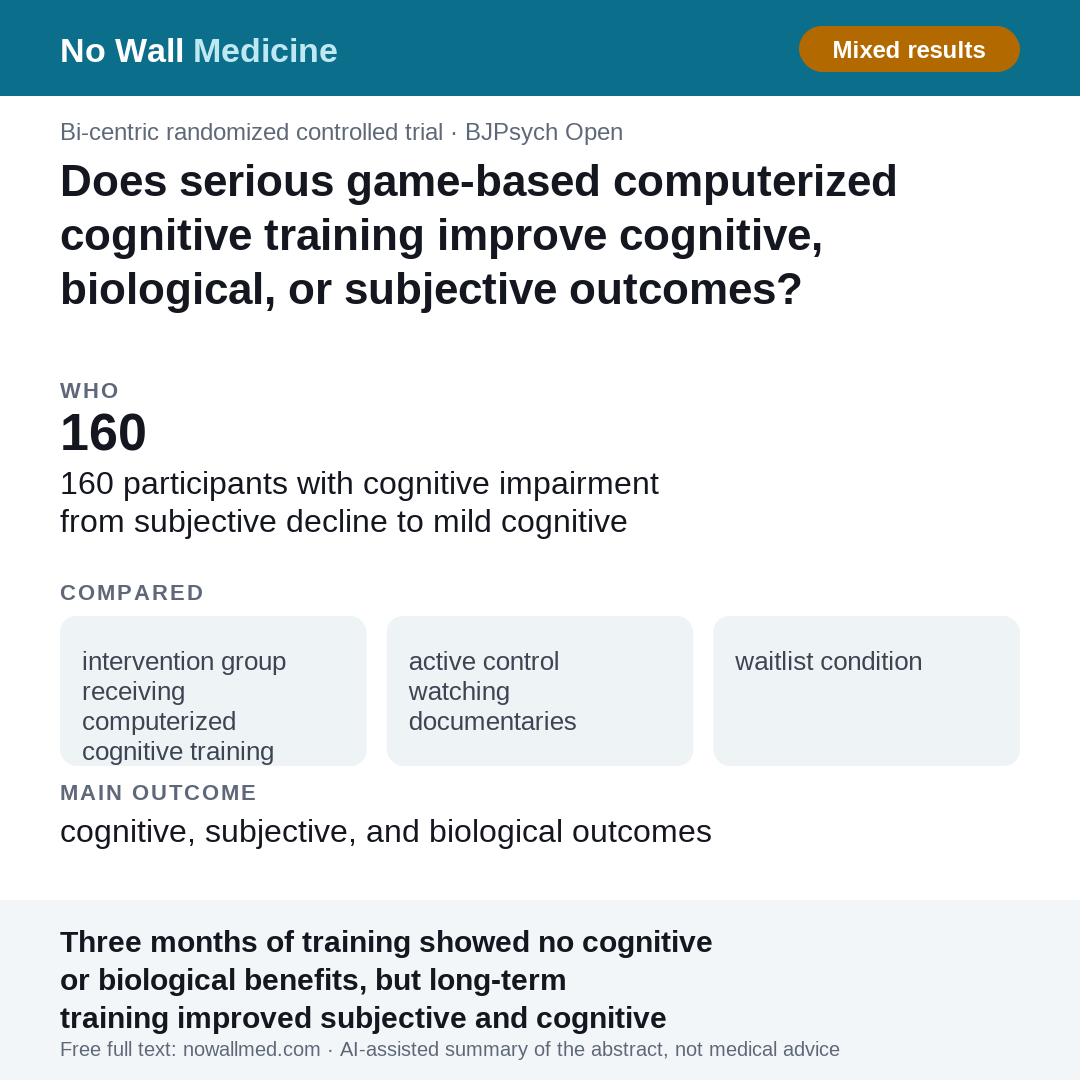
Clinical question: Does serious game-based computerized cognitive training improve cognitive, biological, or subjective outcomes?
Why it matters: Results from computerised cognitive training, which uses games to exercise the brain, have been inconsistent in slowing age-related cognitive decline.
Key points
- Researchers studied 160 participants with a mean age of 71.3 years who had cognitive impairment ranging from subjective decline to mild cognitive impairment.
- The 3-month intervention showed no significant interaction between groups and time points for domain-specific cognitive scores, grey matter volume, or amyloid blood markers.
- Subjective improvements and cognitive changes were observed after long-term training following the initial 3-month period.
Headline and key points written with AI from the paper’s abstract, with every number checked against it. Read the paper before relying on them.
Was this summary helpful?
Cite this article
Brill E, Holfelder A, Falkner M, Krebs C, Brem AK, Klöppel S. Behavioural and neuronal substrates of serious game-based computerised cognitive training in cognitive decline: randomised controlled trial. BJPsych Open. 2024. doi:10.1192/bjo.2024.797
Spotted a mistake? Suggest a correction
Top studies every Monday
The week’s key trials and guidelines in your specialties, plus any topics you follow. By email, free.
Get the weekly digest