Berberine ursodeoxycholate reduced hemoglobin A1c levels in patients with type 2 diabetes
Berberine Ursodeoxycholate for the Treatment of Type 2 Diabetes: A Randomized Clinical Trial
Phase 2 double-blind, placebo-controlled, randomized clinical trialBenefit found
Is berberine ursodeoxycholate effective and safe for patients with type 2 diabetes?
Who
113
Patients with type 2 diabetes inadequately controlled with diet and exercise · China
Compared
Placebo
-0.4%HTD1801 500 mg twice daily
-0.7%HTD1801 1000 mg twice daily
Main outcome
hemoglobin A1c level change from baseline to week 12
Result: least-squares mean difference -0.4% (95% CI, -0.79% to -0.03%) and -0.7% (95% CI, -1.10% to -0.35%)
Bottom line: HTD1801 resulted in significant dose-dependent reductions in hemoglobin A1c and improved cardiometabolic and liver parameters.
JAMA Netw Open · 2025-03-03 · Save PNG
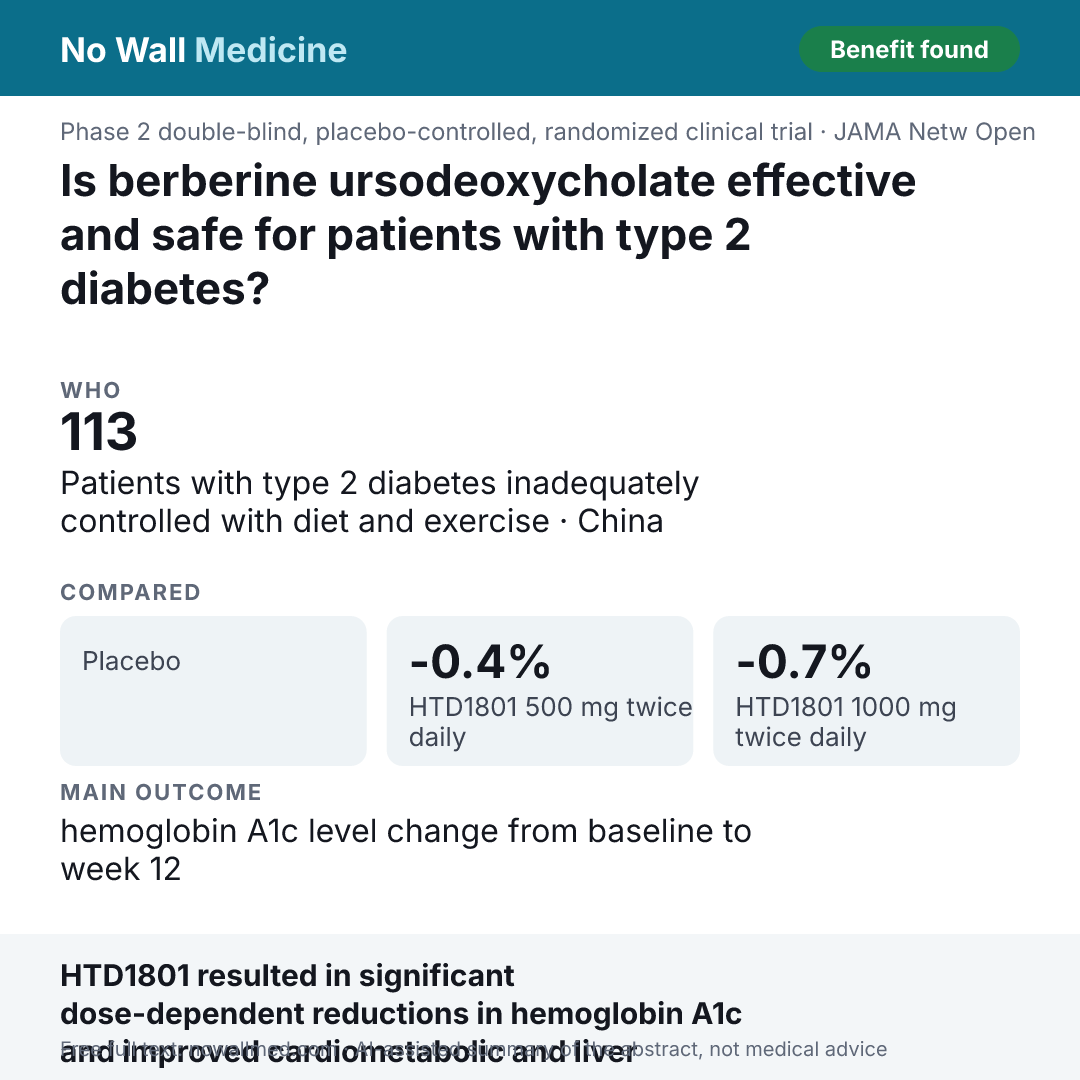
Clinical question: Is berberine ursodeoxycholate effective and safe for patients with type 2 diabetes?
Key points
- This 12-week randomized trial studied 113 patients with type 2 diabetes who had inadequate control through diet and exercise.
- Compared to placebo, the 500 mg dose of HTD1801 resulted in a -0.4% change in hemoglobin A1c, while the 1000 mg dose resulted in a -0.7% change.
- The 1000 mg dose was associated with reductions in lipids and markers of liver injury, and 97.3% of participants completed the study.
Headline and key points written with AI from the paper’s abstract, with every number checked against it. Read the paper before relying on them.
Was this summary helpful?
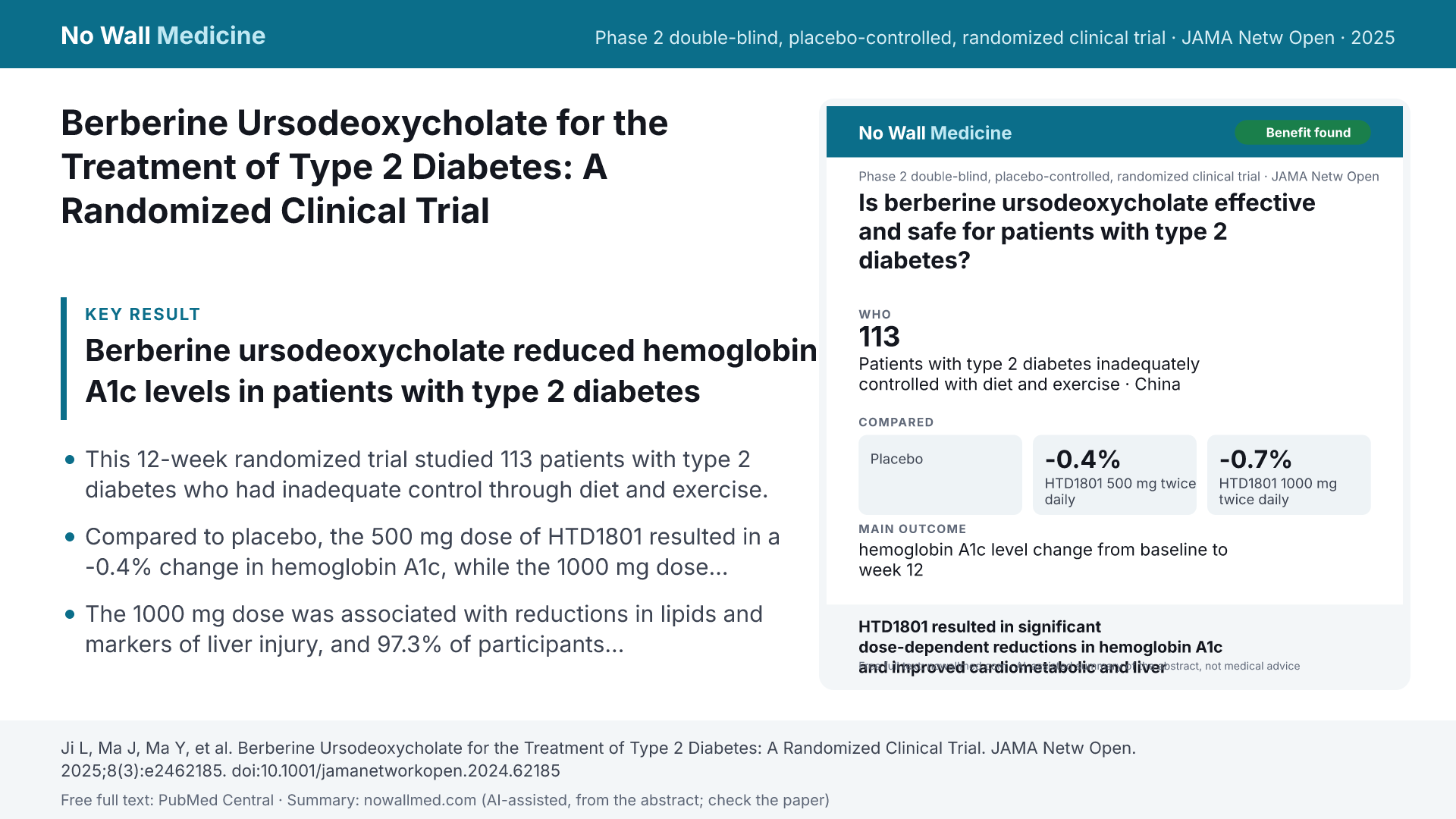
Subject terms
Headline, design, result, key points, caveat and citation as plain text.
Cite this article
Ji L, Ma J, Ma Y, et al. Berberine Ursodeoxycholate for the Treatment of Type 2 Diabetes: A Randomized Clinical Trial. JAMA Netw Open. 2025;8(3):e2462185. doi:10.1001/jamanetworkopen.2024.62185
Spotted a mistake? Suggest a correction