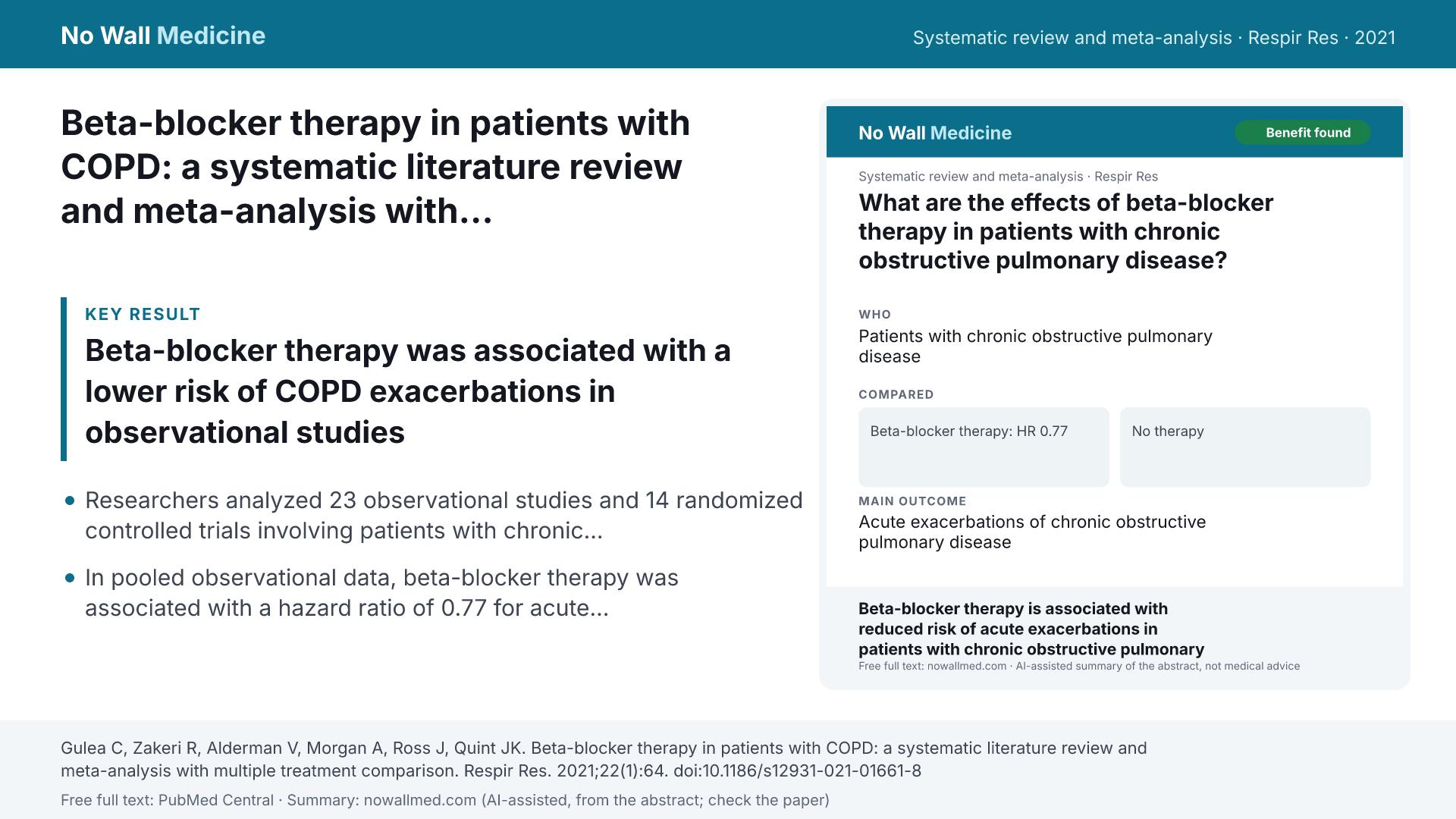
Beta-blocker therapy was associated with a lower risk of COPD exacerbations in observational studies
Beta-blocker therapy in patients with COPD: a systematic literature review and meta-analysis with multiple treatment comparison
Systematic review and meta-analysisBenefit found
What are the effects of beta-blocker therapy in patients with chronic obstructive pulmonary disease?
Who
Patients with chronic obstructive pulmonary disease
Compared
Beta-blocker therapy: HR 0.77
No therapy
Main outcome
Acute exacerbations of chronic obstructive pulmonary disease
Result: hazard ratio 0.77 (95% CI 0.70 to 0.85)
Bottom line: Beta-blocker therapy is associated with reduced risk of acute exacerbations in patients with chronic obstructive pulmonary disease.
Respir Res · 2021-02-23 · Save PNG
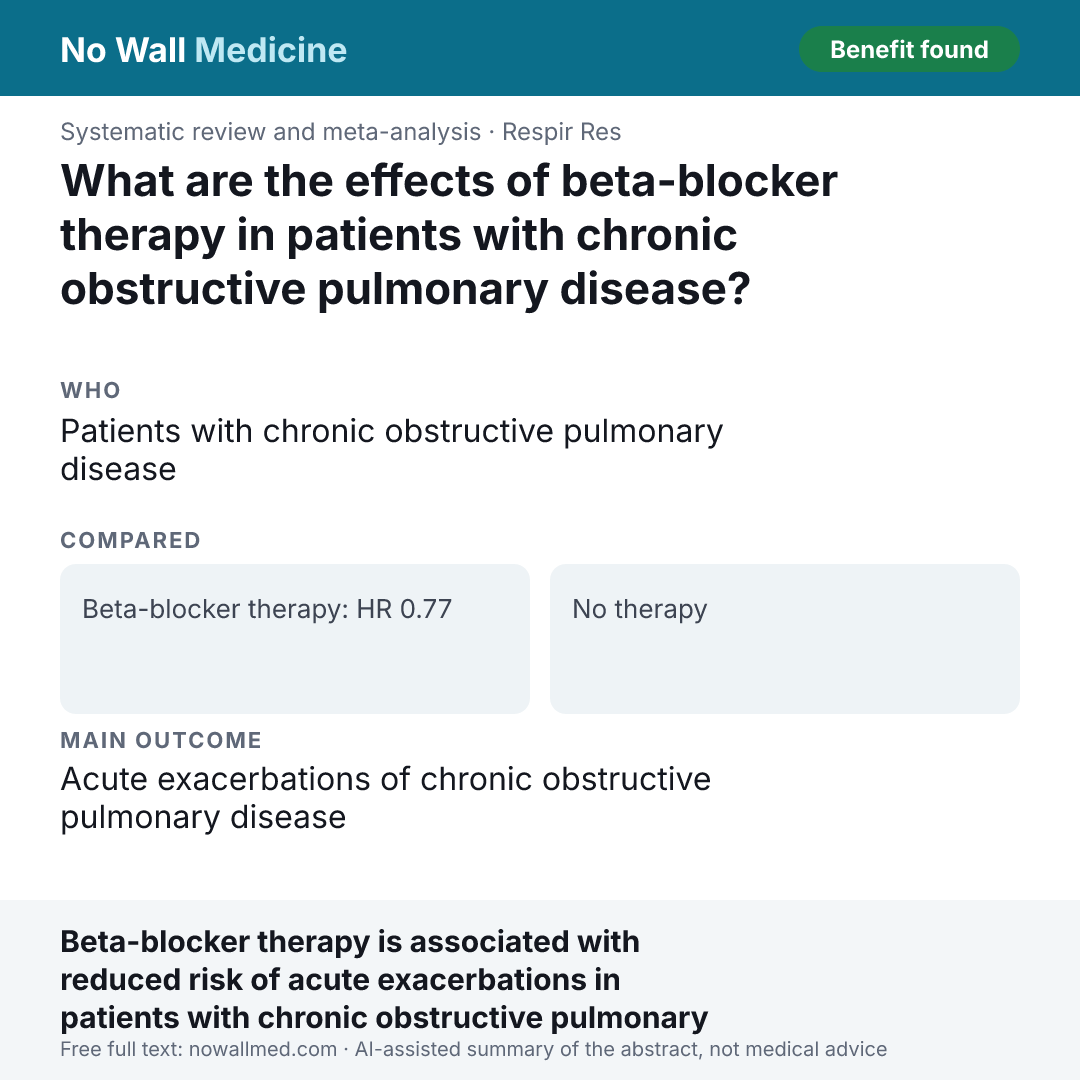
Clinical question: What are the effects of beta-blocker therapy in patients with chronic obstructive pulmonary disease?
Why it matters: Doctors often under-prescribe beta-blockers to patients with COPD due to concerns regarding potential respiratory side-effects.
Key points
- Researchers analyzed 23 observational studies and 14 randomized controlled trials involving patients with chronic obstructive pulmonary disease (COPD).
- In pooled observational data, beta-blocker therapy was associated with a hazard ratio of 0.77 for acute exacerbations of COPD compared to no therapy.
- Among 199 patients in randomized controlled trials, only propranolol was associated with a relative reduction in forced expiratory volume in one second (FEV1).
Limitation the authors note: Narrative syntheses for mortality, hospitalization, and quality of life showed a high degree of heterogeneity in study design and patient characteristics.
Headline and key points written with AI from the paper’s abstract, with every number checked against it. Read the paper before relying on them.
Was this summary helpful?
Subject terms
Headline, design, result, key points, caveat and citation as plain text.
Cite this article
Gulea C, Zakeri R, Alderman V, Morgan A, Ross J, Quint JK. Beta-blocker therapy in patients with COPD: a systematic literature review and meta-analysis with multiple treatment comparison. Respir Res. 2021. doi:10.1186/s12931-021-01661-8
Spotted a mistake? Suggest a correction