Anxiety and depression are linked to worse outcomes in patients with inflammatory bowel disease
Bidirectional brain-gut axis effects influence mood and prognosis in IBD: a systematic review and meta-analysis
Systematic review and meta-analysisBenefit found
Does the brain-gut axis influence mood and prognosis in inflammatory bowel disease?
Who
9192
Patients with inflammatory bowel disease
Compared
Presence of anxiety at baseline: higher risks of escalation of therapy (RR=1.68; 95% CI 1.18 to 2.40)
Presence of depression at baseline: higher risks of flare (RR=1.60; 95% CI 1.21 to 2.12)
Active disease at baseline: future development of anxiety (RR=2.24; 95% CI 1.25 to 4.01)
Main outcome
Adverse disease outcomes and new onset of anxiety or depression
Bottom line: Bidirectional effects exist where anxiety, depression, and active disease influence each other in inflammatory bowel disease.
Gut · 2021-11-01Download image
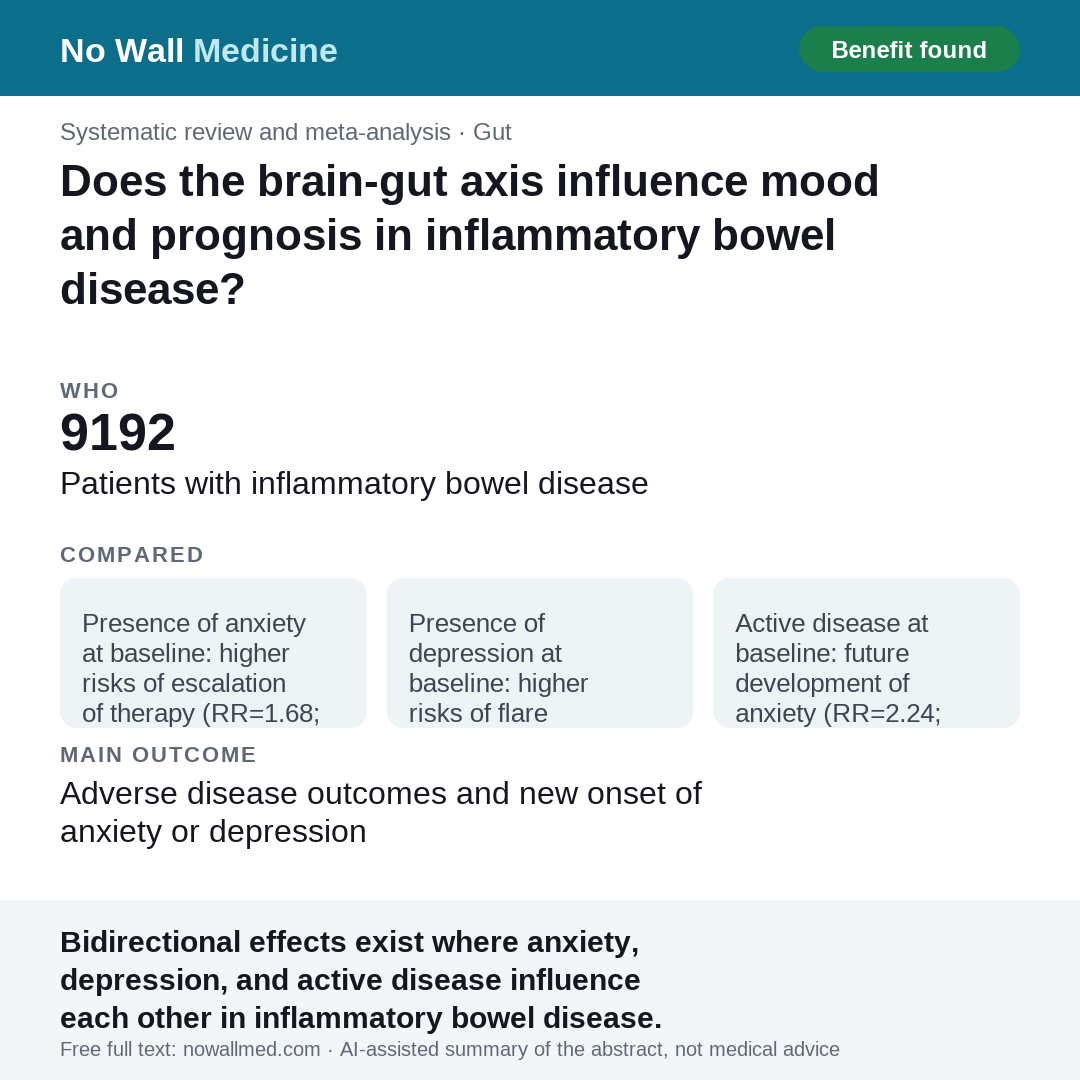
Clinical question: Does the brain-gut axis influence mood and prognosis in inflammatory bowel disease?
Why it matters: It is unclear how mental health symptoms and gastrointestinal inflammation influence each other in patients with inflammatory bowel disease.
Key points
- Researchers analyzed 12 longitudinal studies involving 9192 patients to examine the bidirectional relationship between mental health and inflammatory bowel disease.
- Baseline anxiety was associated with higher risks of therapy escalation (RR=1.68; 95% CI 1.18 to 2.40), hospitalization (RR=1.72; 95% CI 1.01 to 2.95), and emergency department attendance (RR=1.30; 95% CI 1.21 to 1.39).
- Active disease at baseline was associated with the future development of anxiety (RR=2.24; 95% CI 1.25 to 4.01) or depression (RR=1.49; 95% CI 1.11 to 1.98).
Headline and key points written with AI from the paper’s abstract, with every number checked against it. Read the paper before relying on them.
Was this summary helpful?
Subject terms
Cite this article
Fairbrass KM, Lovatt J, Barberio B, Yuan Y, Gracie DJ, Ford AC. Bidirectional brain-gut axis effects influence mood and prognosis in IBD: a systematic review and meta-analysis. Gut. 2021. doi:10.1136/gutjnl-2021-325985
Spotted a mistake? Suggest a correction
Top studies every Monday
The week’s key trials and guidelines in your specialties, plus any topics you follow. By email, free.
Get the weekly digest