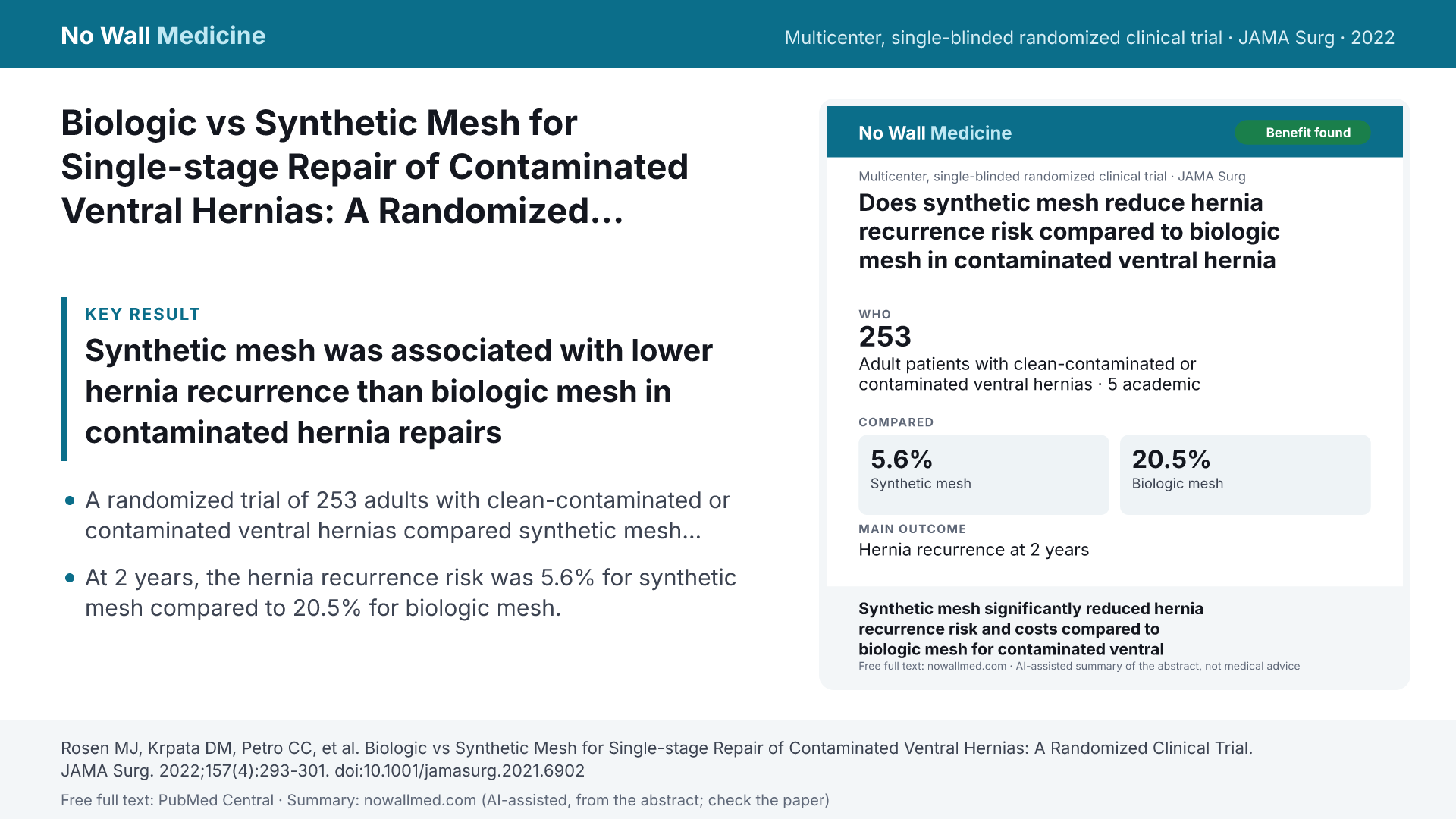
Synthetic mesh was associated with lower hernia recurrence than biologic mesh in contaminated hernia repairs
Biologic vs Synthetic Mesh for Single-stage Repair of Contaminated Ventral Hernias: A Randomized Clinical Trial
Multicenter, single-blinded randomized clinical trialBenefit found
Does synthetic mesh reduce hernia recurrence risk compared to biologic mesh in contaminated ventral hernia repairs?
Who
253
Adult patients with clean-contaminated or contaminated ventral hernias · 5 academic medical centers in the US
Compared
5.6%Synthetic mesh (7 of 126 patients)
20.5%Biologic mesh (26 of 127 patients)
Main outcome
Hernia recurrence at 2 years
Result: hazard ratio 0.31 (95% CI 0.23-0.42)
Bottom line: Synthetic mesh significantly reduced hernia recurrence risk and costs compared to biologic mesh for contaminated ventral hernia repairs.
JAMA Surg · 2022-01-20 · Save PNG
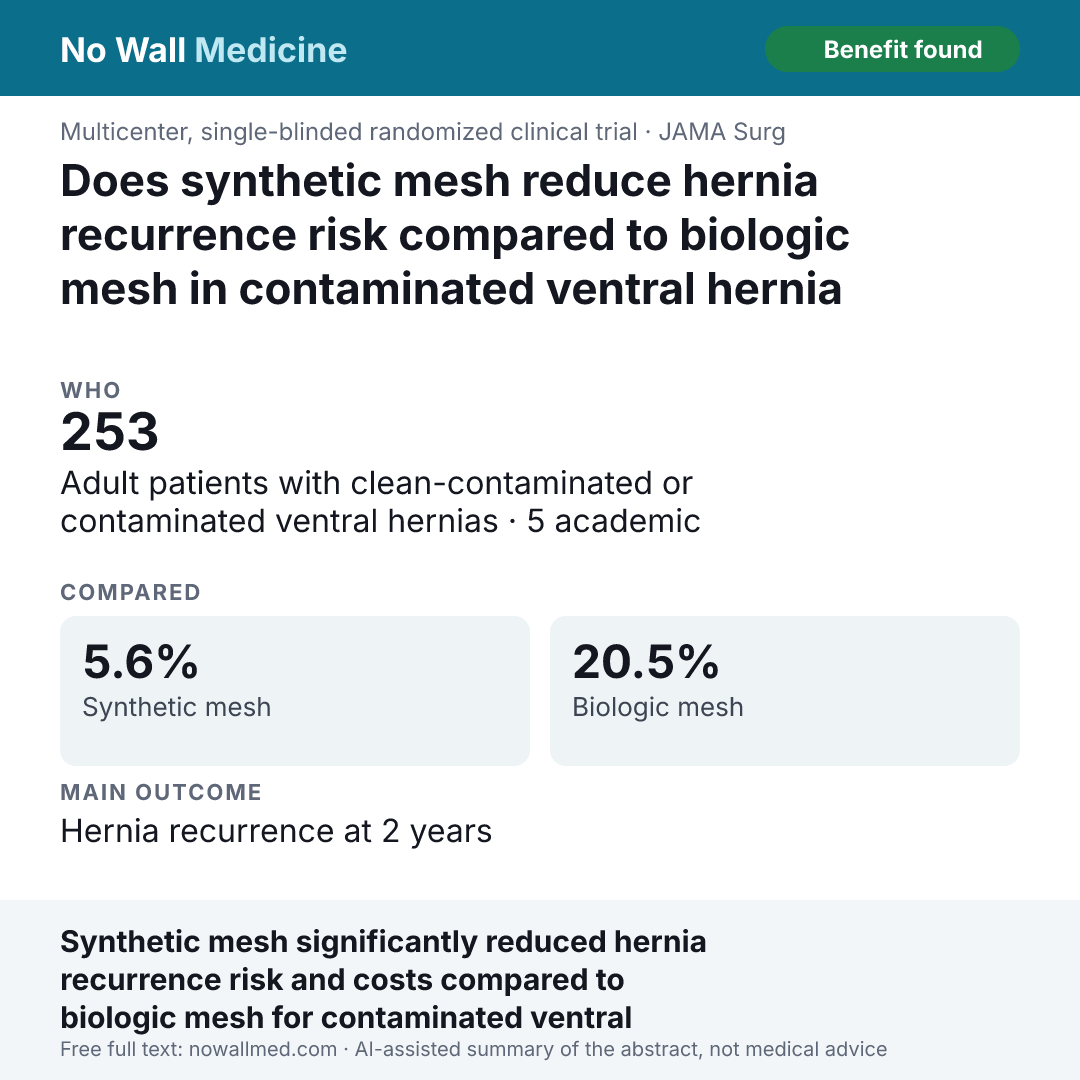
Clinical question: Does synthetic mesh reduce hernia recurrence risk compared to biologic mesh in contaminated ventral hernia repairs?
Key points
- A randomized trial of 253 adults with clean-contaminated or contaminated ventral hernias compared synthetic mesh to biologic mesh during single-stage repair.
- At 2 years, the hernia recurrence risk was 5.6% for synthetic mesh compared to 20.5% for biologic mesh.
- Median 30-day hospital direct costs were $17,289 for the synthetic group versus $44,936 for the biologic group.
Headline and key points written with AI from the paper’s abstract, with every number checked against it. Read the paper before relying on them.
Was this summary helpful?
Subject terms
Headline, design, result, key points, caveat and citation as plain text.
Cite this article
Rosen MJ, Krpata DM, Petro CC, et al. Biologic vs Synthetic Mesh for Single-stage Repair of Contaminated Ventral Hernias: A Randomized Clinical Trial. JAMA Surg. 2022;157(4):293-301. doi:10.1001/jamasurg.2021.6902
Spotted a mistake? Suggest a correction