Biological meshes were associated with higher hernia recurrence and seroma rates than synthetic meshes
Biological vs Synthetic Mesh in Laparoendoscopic Inguinal Hernia Repair: The BIOLAP Randomized Clinical Trial
Multicenter, randomized, self-controlled clinical trialHarm found
Are biological or synthetic meshes better for laparoendoscopic inguinal hernia repair?
Who
491
Adult patients with primary bilateral inguinal hernias · 21 certified German hernia centers
Compared
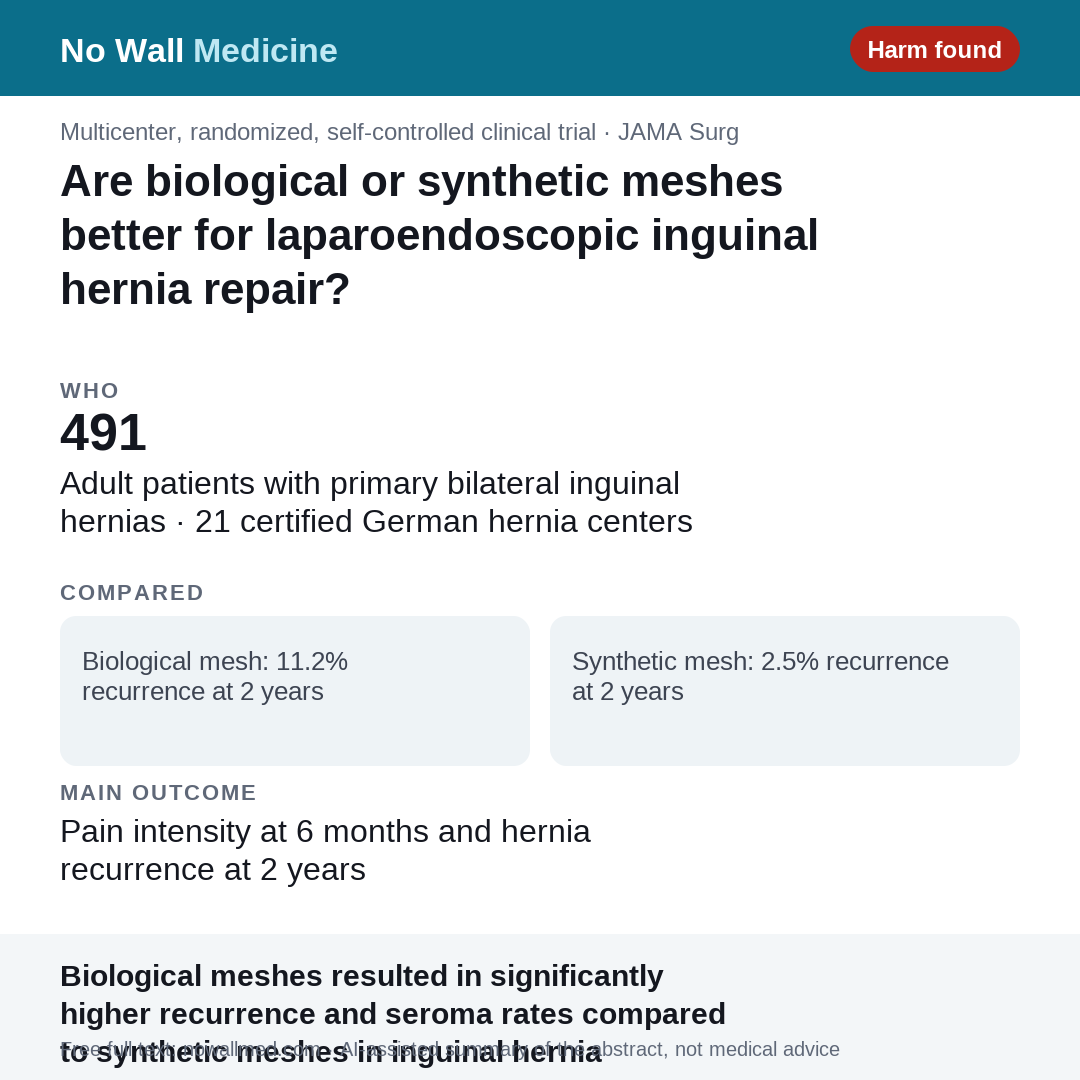
Biological mesh: 11.2% recurrence at 2 years
Synthetic mesh: 2.5% recurrence at 2 years
Main outcome
Pain intensity at 6 months and hernia recurrence at 2 years
Bottom line: Biological meshes resulted in significantly higher recurrence and seroma rates compared to synthetic meshes in inguinal hernia repair.
JAMA Surg · 2025-10-08Download image
Clinical question: Are biological or synthetic meshes better for laparoendoscopic inguinal hernia repair?
Why it matters: Biological meshes are proposed as resorbable alternatives to synthetic implants to potentially reduce postoperative pain after hernia repair.
Key points
- Researchers studied 491 adult patients with primary bilateral inguinal hernias using a randomized, self-controlled trial comparing biological and synthetic meshes.
- Biological meshes had a 2-year recurrence rate of 11.2% compared to 2.5% for synthetic meshes, and seroma rates were 33.4% versus 21.6%.
- There was no significant difference in pain intensity at 6 months between the two types of mesh, with both scoring 0.3 on the visual analog scale.
Headline and key points written with AI from the paper’s abstract, with every number checked against it. Read the paper before relying on them.
Was this summary helpful?
Subject terms
Cite this article
Seefeldt CS, Knievel J, Deeb M, Hoedt NT, Rudroff C, Essen R. Biological vs Synthetic Mesh in Laparoendoscopic Inguinal Hernia Repair: The BIOLAP Randomized Clinical Trial. JAMA Surg. 2025. doi:10.1001/jamasurg.2025.4071
Spotted a mistake? Suggest a correction
Top studies every Monday
The week’s key trials and guidelines in your specialties, plus any topics you follow. By email, free.
Get the weekly digest