Decreases in inflammation and metabolism biomarkers were associated with heart structure improvements in heart failure patients
Biomarker profiles associated with reverse ventricular remodelling in patients with heart failure and a reduced ejection fraction: Insights from the echocardiographic substudy of the VICTORIA trial
Randomized controlled trial substudyBenefit found
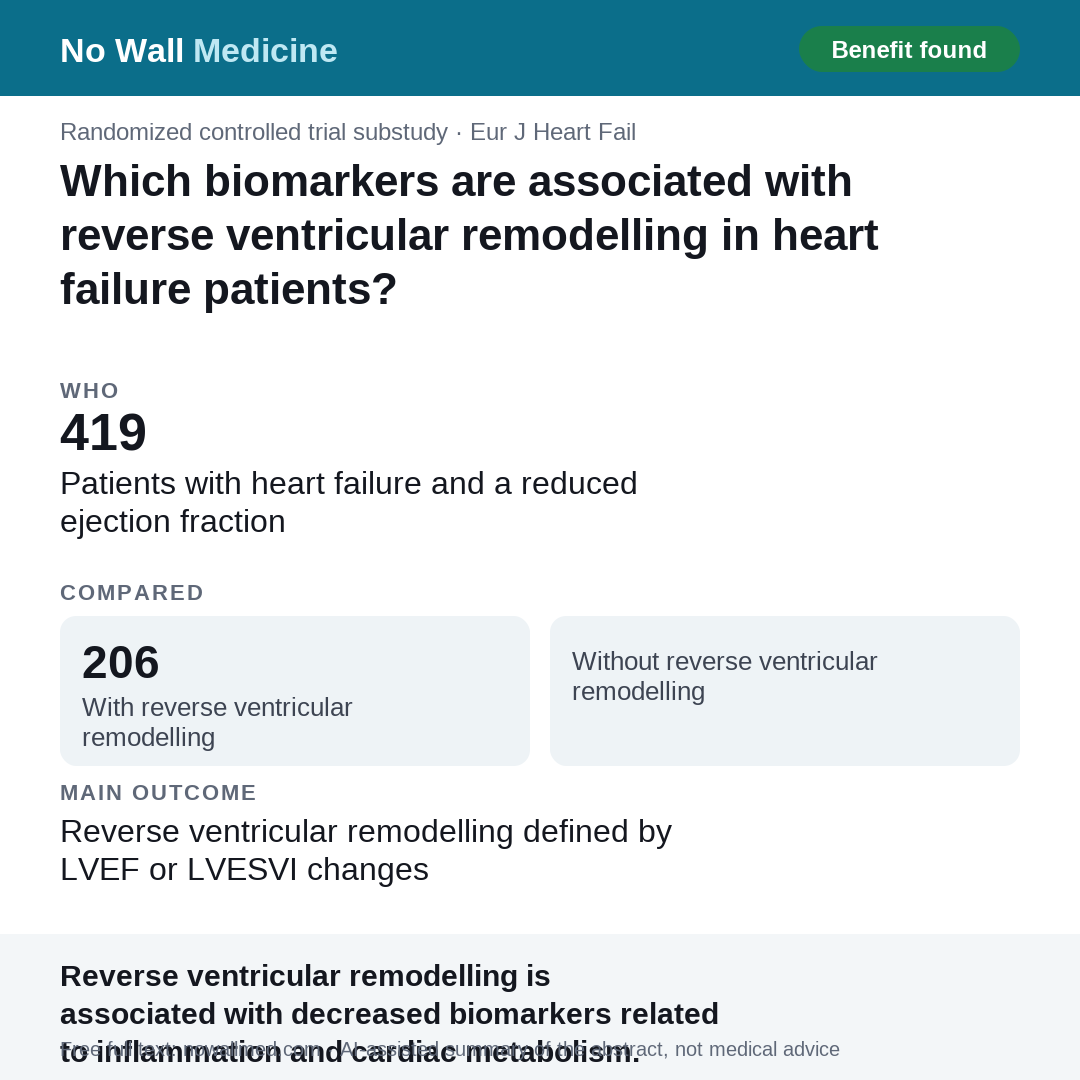
Which biomarkers are associated with reverse ventricular remodelling in heart failure patients?
Who
419
Patients with heart failure and a reduced ejection fraction
Compared
206With reverse ventricular remodelling (49.2%)
Without reverse ventricular remodelling
Main outcome
Reverse ventricular remodelling defined by LVEF or LVESVI changes
Result: tumor necrosis factor superfamily member 13B ratio 0.82 (95% CI 0.77-0.88)
Bottom line: Reverse ventricular remodelling is associated with decreased biomarkers related to inflammation and cardiac metabolism.
Eur J Heart Fail · 2024-07-30Download image
Clinical question: Which biomarkers are associated with reverse ventricular remodelling in heart failure patients?
Why it matters: The underlying biological mechanisms that drive improvements in heart structure and function in patients with heart failure remain unclear.
Key points
- Researchers analyzed 419 participants with heart failure and reduced ejection fraction, measuring 92 biomarkers over 8 months.
- Of the participants, 206 (49.2%) experienced reverse ventricular remodeling, which is defined as an increase in heart pumping efficiency or a decrease in heart chamber size.
- Reverse ventricular remodeling was associated with significant decreases in inflammation and metabolism biomarkers, including growth differentiation factor-15 (ratio 0.74) and insulin-like growth factor binding protein 7 (ratio 0.80).
Headline and key points written with AI from the paper’s abstract, with every number checked against it. Read the paper before relying on them.
Topics
Cite this article
Tromp J, Lam CSP, Alemayehu W, de Filippi CR, Melenovský V, Sliwa K. Biomarker profiles associated with reverse ventricular remodelling in patients with heart failure and a reduced ejection fraction: Insights from the echocardiographic substudy of the VICTORIA trial. Eur J Heart Fail. 2024. doi:10.1002/ejhf.3397
Spotted a mistake? Suggest a correction
Top studies every Monday
The week’s key trials and guidelines in your specialties, by email. Free.
Get the weekly digest