Baseline blood markers were linked to clinical outcomes in adults with certain leukemia
Biomarkers associated with blinatumomab outcomes in acute lymphoblastic leukemia
Randomized phase 3 clinical studyMixed results
What biomarkers are associated with clinical outcomes of blinatumomab or chemotherapy?
Who
Adults with Philadelphia chromosome-negative relapsed/refractory B-cell precursor acute lymphoblastic leukemia
Compared
blinatumomab
chemotherapy
Main outcome
overall survival, event-free survival, hematologic remission, and minimal residual disease response
Bottom line: Baseline platelets, tumor burden, and T cell percentages are prognostic for various clinical outcomes.
Leukemia · 2021-02-04Download image
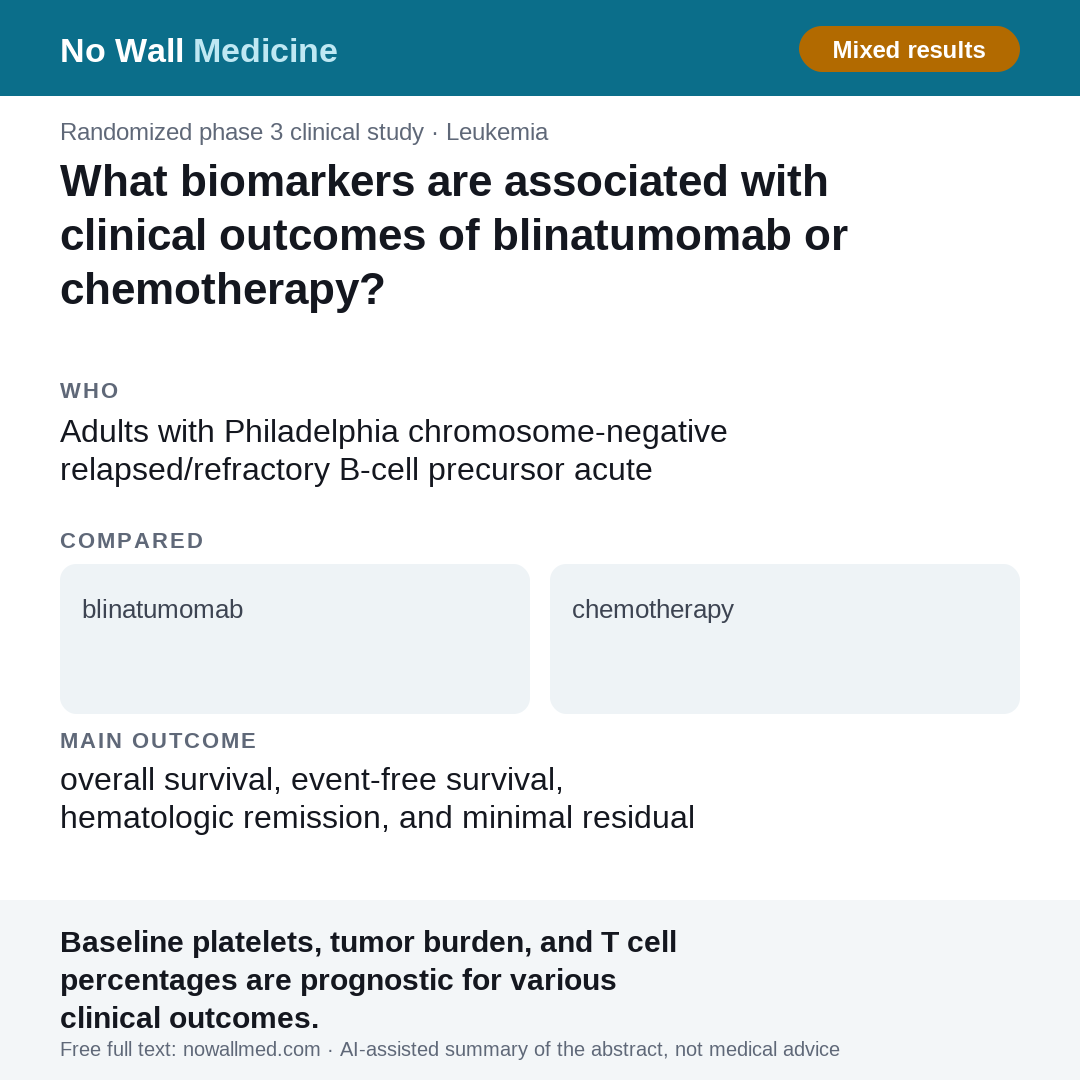
Clinical question: What biomarkers are associated with clinical outcomes of blinatumomab or chemotherapy?
Why it matters: It was unknown which baseline biomarkers could predict clinical outcomes or help identify which patients might benefit most from blinatumomab therapy.
Key points
- Adults with Philadelphia chromosome-negative relapsed or refractory B-cell precursor acute lymphoblastic leukemia were randomized to receive blinatumomab, a bispecific T-cell engager therapy, or chemotherapy.
- Higher baseline platelet counts, lower tumor burden, and higher CD3+ T-cell percentages were linked to better survival, remission, and minimal residual disease response.
- Higher percentages of CD45+ CD3+ CD8+ T cells were associated with hematologic remission following blinatumomab treatment, but no biomarkers were significant for grade 3 or higher adverse events.
Headline and key points written with AI from the paper’s abstract, with every number checked against it. Read the paper before relying on them.
Was this summary helpful?
Subject terms
Cite this article
Wei AH, Ribera JM, Larson RA, Ritchie D, Ghobadi A, Chen Y. Biomarkers associated with blinatumomab outcomes in acute lymphoblastic leukemia. Leukemia. 2021. doi:10.1038/s41375-020-01089-x
Spotted a mistake? Suggest a correction
Top studies every Monday
The week’s key trials and guidelines in your specialties, plus any topics you follow. By email, free.
Get the weekly digest