Biotrauma during ultra-low tidal volume ventilation and venoarterial extracorporeal membrane oxygenation in cardiogenic shock: a randomized crossover clinical trial
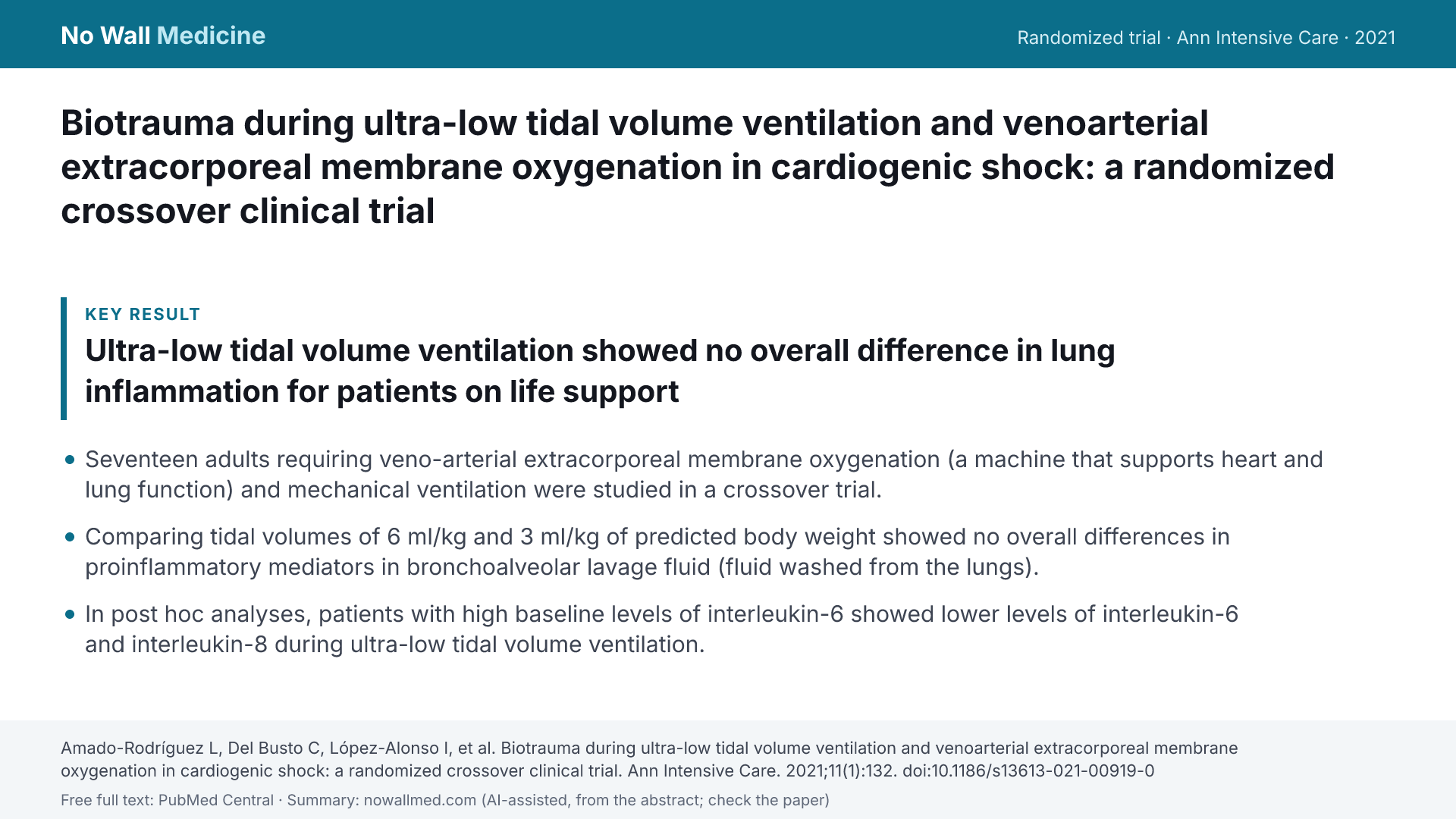
Key result: Ultra-low tidal volume ventilation showed no overall difference in lung inflammation for patients on life support
Key points
- Seventeen adults requiring veno-arterial extracorporeal membrane oxygenation (a machine that supports heart and lung function) and mechanical ventilation were studied in a crossover trial.
- Comparing tidal volumes of 6 ml/kg and 3 ml/kg of predicted body weight showed no overall differences in proinflammatory mediators in bronchoalveolar lavage fluid (fluid washed from the lungs).
- In post hoc analyses, patients with high baseline levels of interleukin-6 showed lower levels of interleukin-6 and interleukin-8 during ultra-low tidal volume ventilation.
Discussion prompts
- Would these patients look like yours? Who was left out?
- Is the main outcome one that matters to patients?
- Is the difference large enough to change what you do?
Cite: Amado-Rodríguez L, Del Busto C, López-Alonso I, et al. Biotrauma during ultra-low tidal volume ventilation and venoarterial extracorporeal membrane oxygenation in cardiogenic shock: a randomized crossover clinical trial. Ann Intensive Care. 2021;11(1):132. doi:10.1186/s13613-021-00919-0
Free full text: PubMed Central · Summary and visual abstract: nowallmed.com/a/biotrauma-during-ultra-low-tidal-volume-ventilation-and-venoarterial-w52ml7/ (AI-assisted from the abstract; check the paper before relying on it).