Omega-3 fatty acid supplements were not associated with an increased risk of bleeding
Bleeding Risk in Patients Receiving Omega-3 Polyunsaturated Fatty Acids: A Systematic Review and Meta-Analysis of Randomized Clinical Trials
Systematic review and meta-analysis of randomized clinical trialsNo clear difference
Does omega-3 polyunsaturated fatty acids increase bleeding risk?
Who
120643
Patients receiving omega-3 polyunsaturated fatty acids
Compared
Omega-3 polyunsaturated fatty acids
Control group
Main outcome
Overall bleeding events including fatal and central nervous system events
Result: rate ratio 1.09 (95% CI 0.91-1.31)
Bottom line: Omega-3 polyunsaturated fatty acids were not associated with increased bleeding risk, though high-dose purified eicosapentaenoic acid showed a modest increase.
J Am Heart Assoc · 2024-05-14Download image
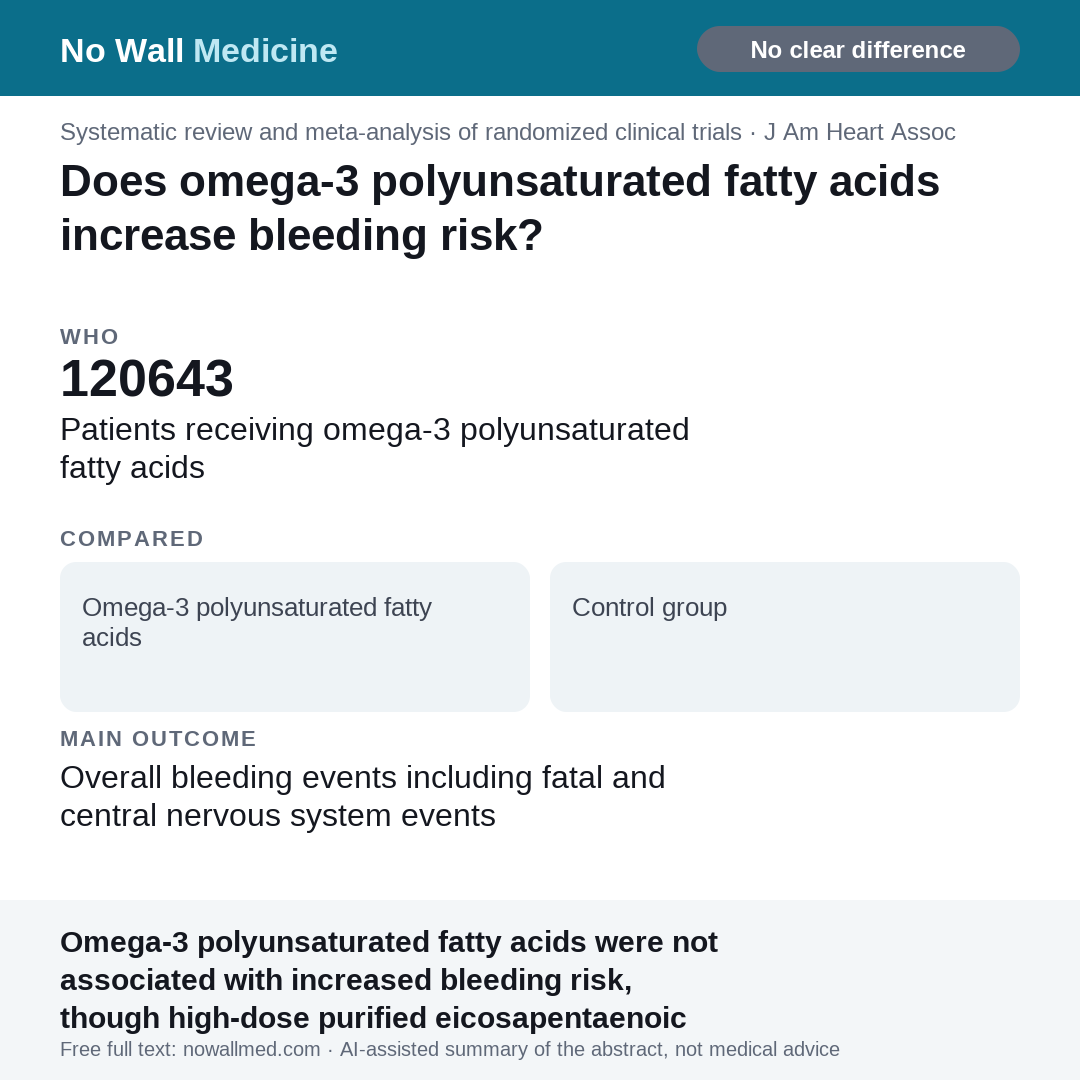
Clinical question: Does omega-3 polyunsaturated fatty acids increase bleeding risk?
Why it matters: It was unknown if omega-3 polyunsaturated fatty acids increase bleeding risk or if this risk depends on the dose or use of antiplatelet therapy.
Key points
- Researchers analyzed 120,643 patients from 11 randomized clinical trials to compare bleeding events between those taking omega-3 polyunsaturated fatty acids and a control group.
- The study found no difference in overall bleeding events, including fatal or central nervous system events, with a rate ratio of 1.09 (95% CI, 0.91-1.31; P=0.34).
- High-dose purified eicosapentaenoic acid (EPA) was associated with a 50% increase in relative bleeding risk and a 0.6% increase in absolute bleeding risk.
Headline and key points written with AI from the paper’s abstract, with every number checked against it. Read the paper before relying on them.
Topics
Cite this article
Javaid M, Kadhim K, Bawamia B, Cartlidge T, Farag M, Alkhalil M. Bleeding Risk in Patients Receiving Omega-3 Polyunsaturated Fatty Acids: A Systematic Review and Meta-Analysis of Randomized Clinical Trials. J Am Heart Assoc. 2024. doi:10.1161/JAHA.123.032390
Spotted a mistake? Suggest a correction
Top studies every Monday
The week’s key trials and guidelines in your specialties, plus any topics you follow. By email, free.
Get the weekly digest