Higher body mass index was associated with a non-significant trend toward lower success in nerve stimulation
Body Mass Index and Hypoglossal Nerve Stimulation Outcomes: A Systematic Review and Meta-Analysis
Systematic review and meta-analysisNo clear difference
How does body mass index influence hypoglossal nerve stimulation outcomes for obstructive sleep apnea?
Who
1572
Patients undergoing hypoglossal nerve stimulation for obstructive sleep apnea
Compared
Body mass index ≥ 32 kg/m2
Body mass index < 32 kg/m2
Main outcome
Surgical success using Sher or modified Sher criteria
Result: odds ratio 0.87 (95% CI 0.68-1.11)
Bottom line: Elevated body mass index showed a nonsignificant trend toward lower surgical success, suggesting individualized candidacy assessment.
Laryngoscope Investig Otolaryngol · 2025-11-13Download image
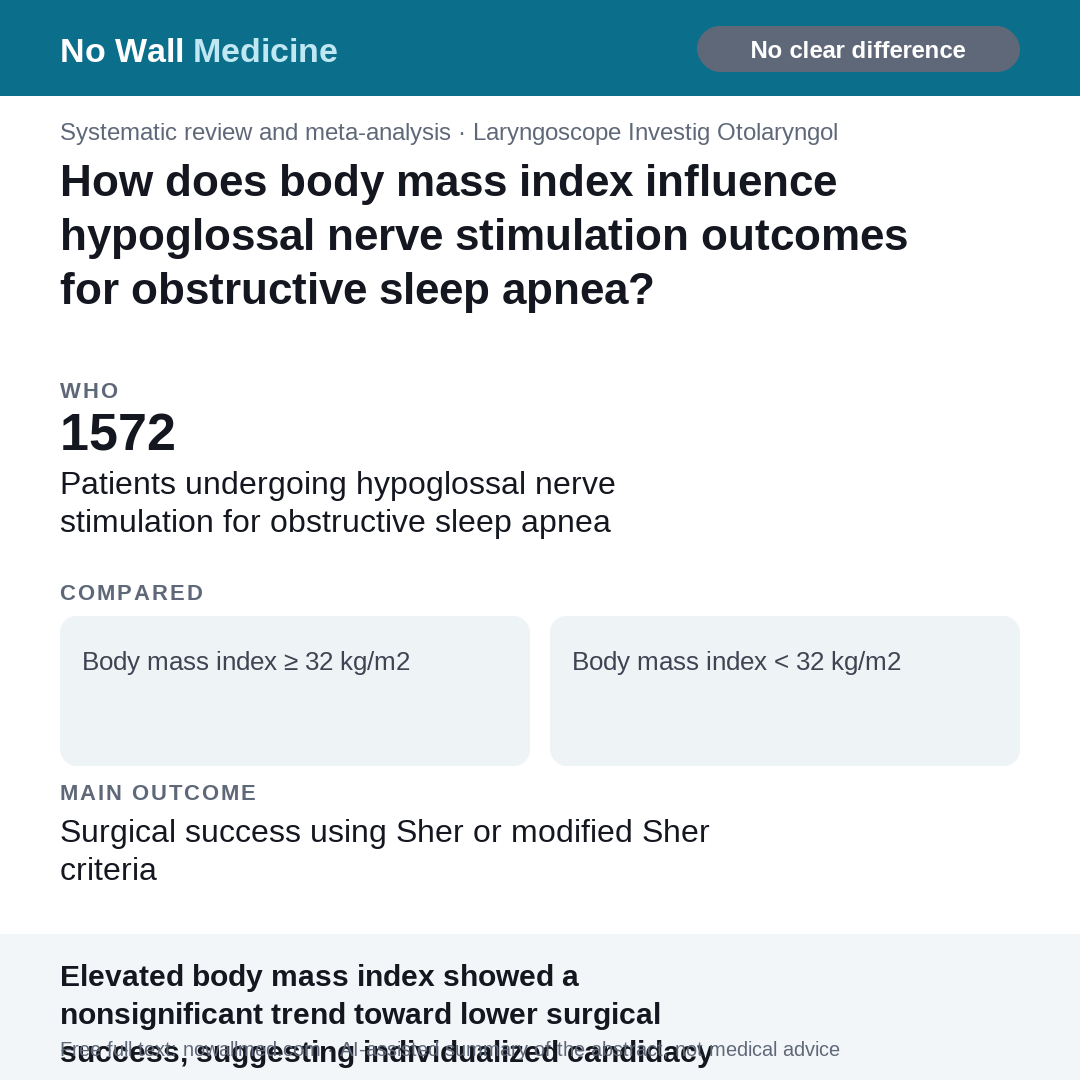
Clinical question: How does body mass index influence hypoglossal nerve stimulation outcomes for obstructive sleep apnea?
Key points
- Researchers analyzed seven studies involving 1572 patients to compare outcomes of hypoglossal nerve stimulation for obstructive sleep apnea between those with a body mass index of 32 kg/m2 or higher and those below 32 kg/m2.
- The pooled odds ratio for treatment success in the group with a body mass index of 32 kg/m2 or higher compared to the lower group was 0.87 (95% CI: 0.68-1.11).
- While some studies reported poorer outcomes at higher body mass index, others showed no difference, and many patients with higher body mass index achieved meaningful improvements.
Headline and key points written with AI from the paper’s abstract, with every number checked against it. Read the paper before relying on them.
Was this summary helpful?
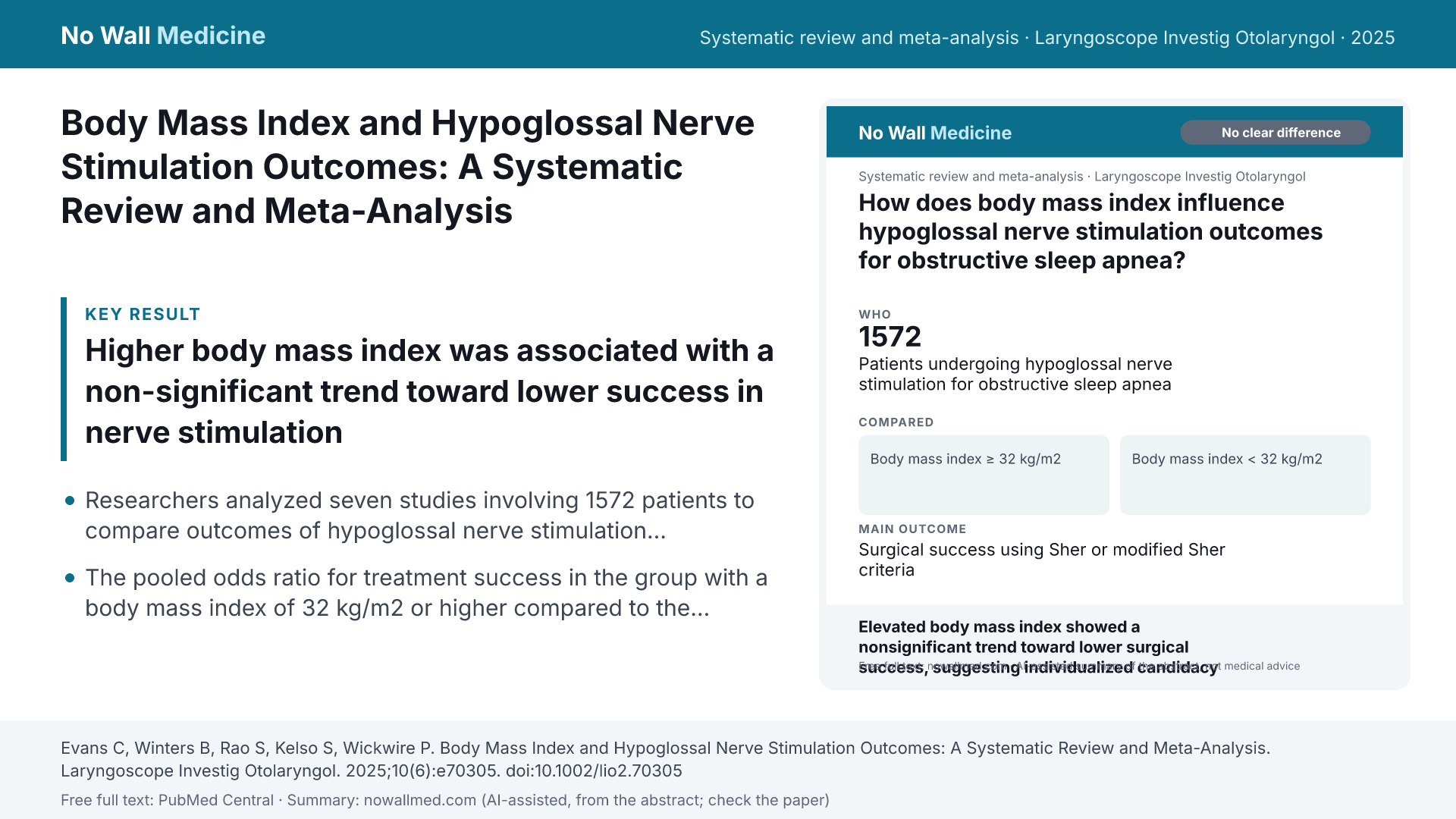
Headline, design, result, key points, caveat and citation as plain text.
Cite this article
Evans C, Winters B, Rao S, Kelso S, Wickwire P. Body Mass Index and Hypoglossal Nerve Stimulation Outcomes: A Systematic Review and Meta-Analysis. Laryngoscope Investig Otolaryngol. 2025. doi:10.1002/lio2.70305
Spotted a mistake? Suggest a correction