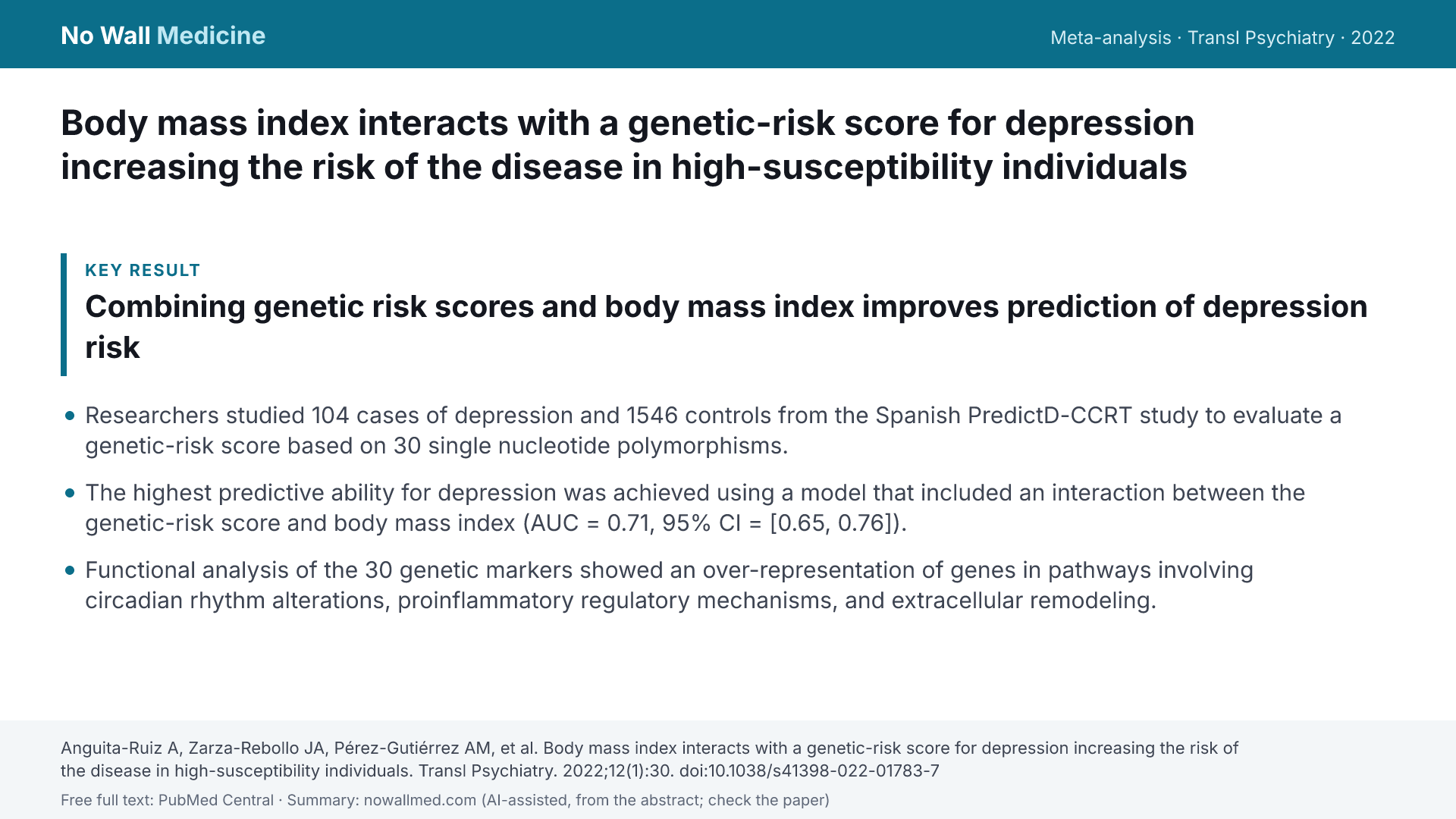
Combining genetic risk scores and body mass index improves prediction of depression risk
Body mass index interacts with a genetic-risk score for depression increasing the risk of the disease in high-susceptibility individuals
Why it matters: It is unknown if a genetic-risk score combining multiple depression-associated genetic variants can effectively predict depression risk when combined with non-genetic factors like body mass index.
Key points
- Researchers studied 104 cases of depression and 1546 controls from the Spanish PredictD-CCRT study to evaluate a genetic-risk score based on 30 single nucleotide polymorphisms.
- The highest predictive ability for depression was achieved using a model that included an interaction between the genetic-risk score and body mass index (AUC = 0.71, 95% CI = [0.65, 0.76]).
- Functional analysis of the 30 genetic markers showed an over-representation of genes in pathways involving circadian rhythm alterations, proinflammatory regulatory mechanisms, and extracellular remodeling.
Headline and key points written with AI from the paper’s abstract, with every number checked against it. Read the paper before relying on them.
Was this summary helpful?
Subject terms
Cite this article
Anguita-Ruiz A, Zarza-Rebollo JA, Pérez-Gutiérrez AM, et al. Body mass index interacts with a genetic-risk score for depression increasing the risk of the disease in high-susceptibility individuals. Transl Psychiatry. 2022. doi:10.1038/s41398-022-01783-7
Spotted a mistake? Suggest a correction