Botulinum toxin A and microwave thermolysis show similar sweat reduction for underarm excessive sweating
Botulinum toxin A versus microwave thermolysis for primary axillary hyperhidrosis: A randomized controlled trial
Prospective, randomized, within-patient, controlled trialMixed results
How do Botulinum toxin A and microwave thermolysis compare for primary axillary hyperhidrosis?
Who
Patients with primary axillary hyperhidrosis
Compared
Botulinum toxin A: equal sweat reduction at 1-year follow-up
Microwave thermolysis: equal sweat reduction at 1-year follow-up
Main outcome
Objective sweat reduction and patient-reported outcomes
Bottom line: Both treatments provide similar sweat reduction, but microwave thermolysis offers better hair reduction and higher patient preference.
Limitation: The intrinsic challenges in efficacy assessment.
JAAD Int · 2024-01-23Download image
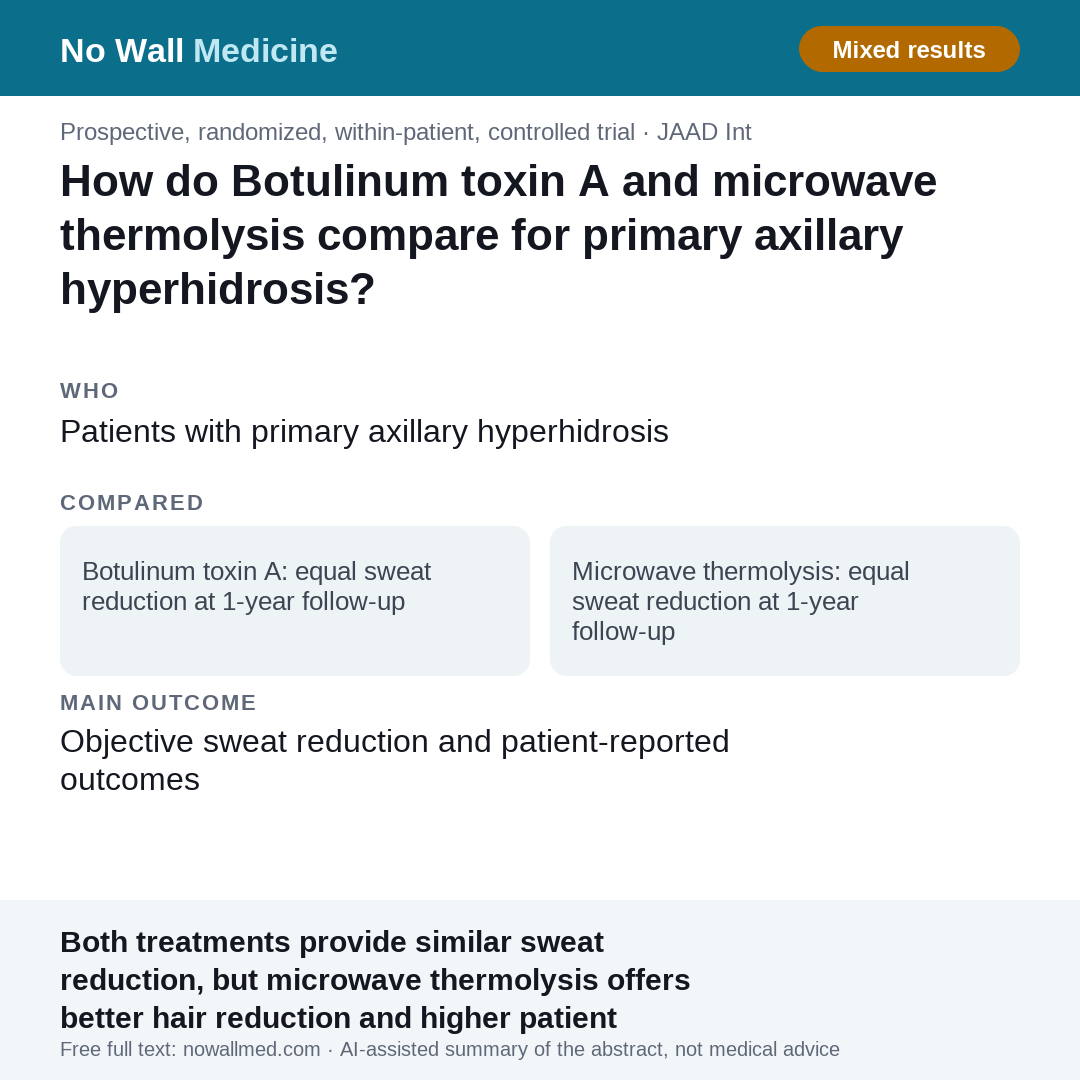
Clinical question: How do Botulinum toxin A and microwave thermolysis compare for primary axillary hyperhidrosis?
Why it matters: It is unknown how botulinum toxin A and microwave thermolysis compare regarding long-term sweat, odor, and hair reduction for treating underarm excessive sweating.
Key points
- Researchers conducted a randomized trial comparing botulinum toxin A (a muscle-relaxing injection) and microwave thermolysis (using heat to destroy sweat glands) in patients with axillary hyperhidrosis.
- Both treatments showed significant sweat reduction, with objective sweat reduction being equal at 1-year follow-up, though botulinum toxin A showed greater reduction at 6 months.
- Microwave thermolysis was associated with visible hair reduction and was preferred by 76% of patients, while odor reduction was only sustained for microwave thermolysis at 1-year follow-up.
Headline and key points written with AI from the paper’s abstract, with every number checked against it. Read the paper before relying on them.
Cite this article
Grove GL, Togsverd-Bo K, Zachariae C, Haedersdal M. Botulinum toxin A versus microwave thermolysis for primary axillary hyperhidrosis: A randomized controlled trial. JAAD Int. 2024. doi:10.1016/j.jdin.2023.12.011
Spotted a mistake? Suggest a correction
Top studies every Monday
The week’s key trials and guidelines in your specialties, plus any topics you follow. By email, free.
Get the weekly digest