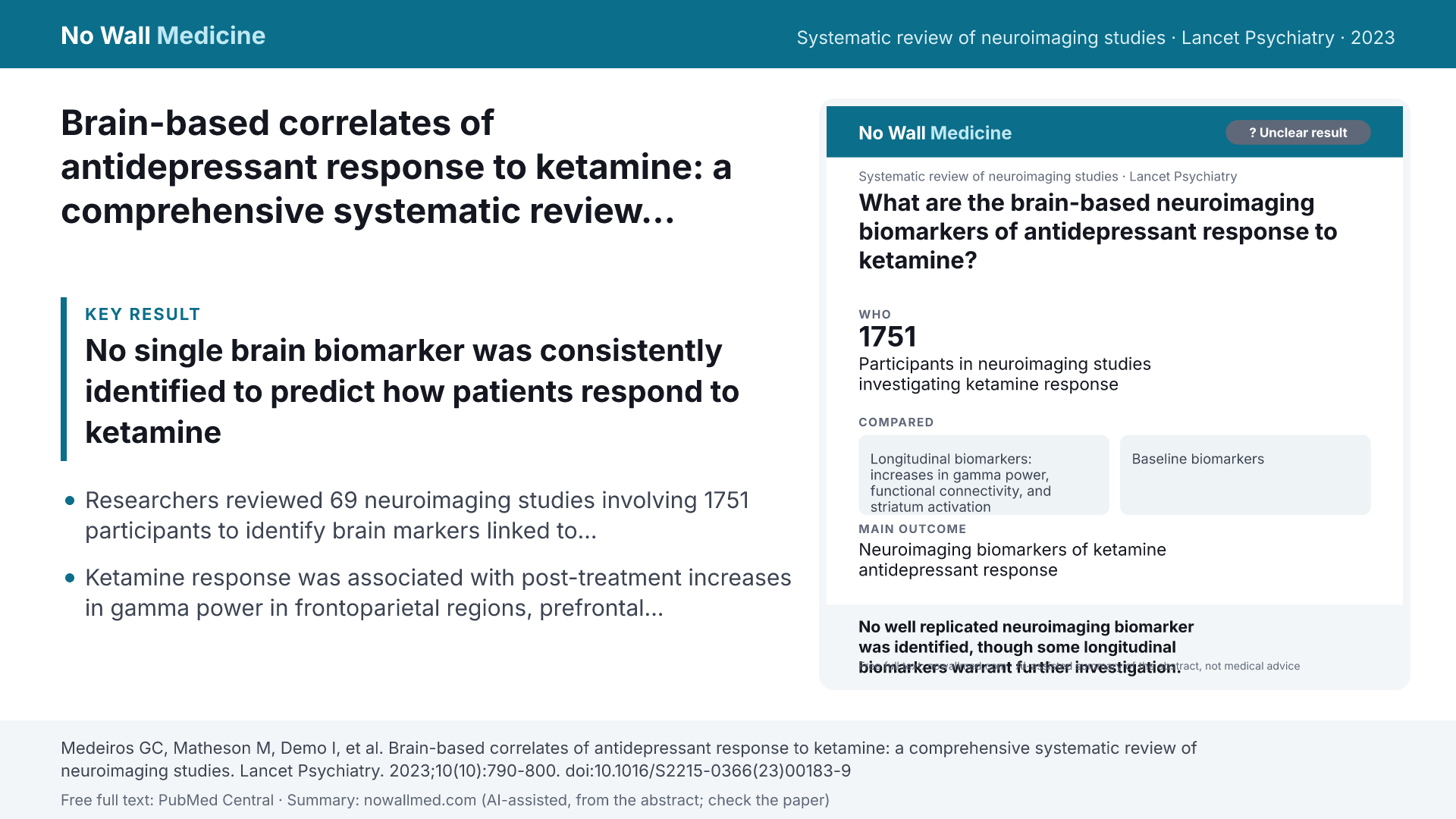
Brain-based correlates of antidepressant response to ketamine: a comprehensive systematic review of neuroimaging studies
Key result: No single brain biomarker was consistently identified to predict how patients respond to ketamine
Key points
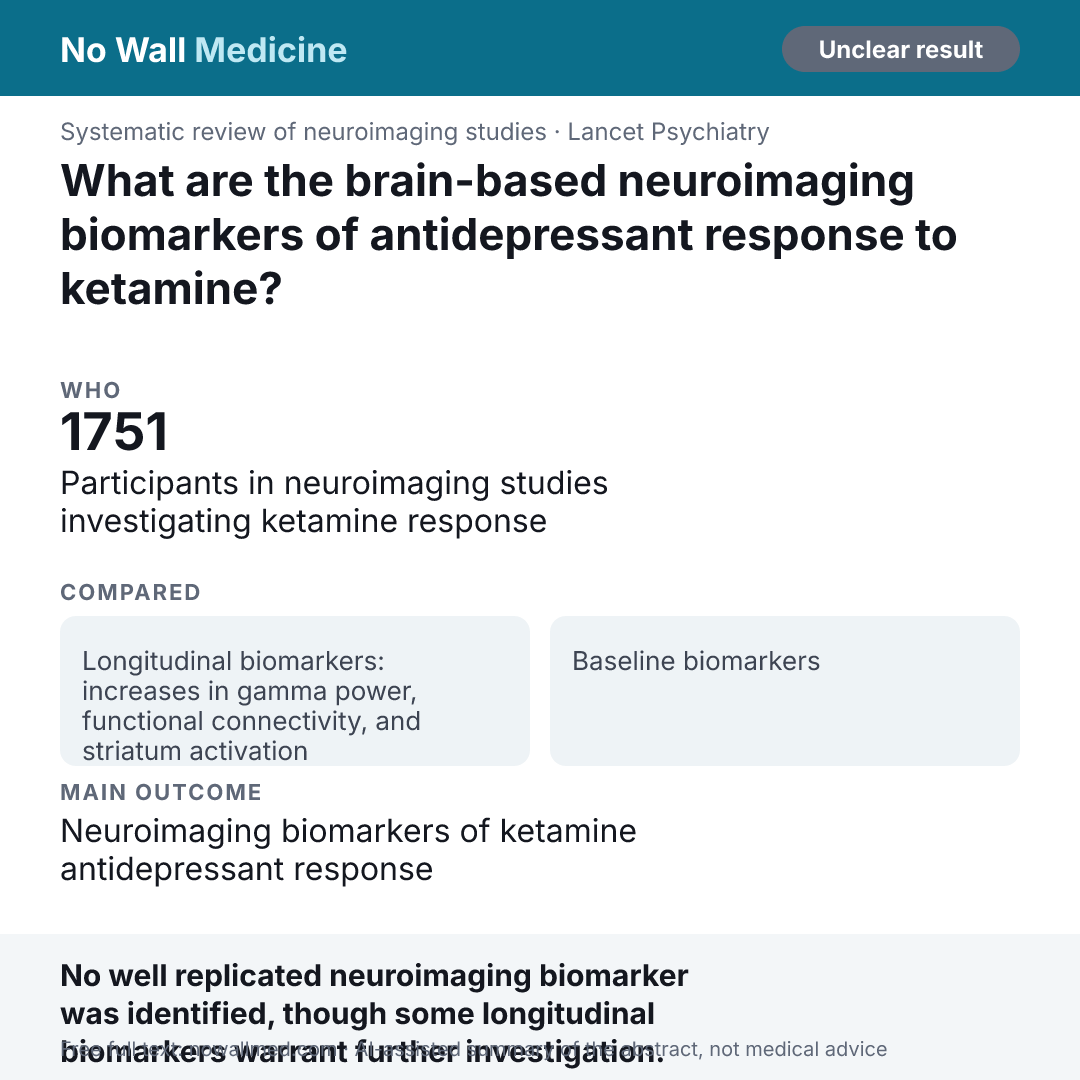
- Researchers reviewed 69 neuroimaging studies involving 1751 participants to identify brain markers linked to ketamine antidepressant response.
- Ketamine response was associated with post-treatment increases in gamma power in frontoparietal regions, prefrontal cortex connectivity, and striatum activation.
- The review found substantial methodological heterogeneity and no single well replicated biomarker across the included studies.
Why it matters: The precise mechanism of action for ketamine is unclear and patient response to the treatment varies substantially.
Limitation the authors note: Findings are limited by small sample sizes in the included studies and substantial methodological heterogeneity.
Discussion prompts
- Would these patients look like yours? Who was left out?
- Is the main outcome one that matters to patients?
- Is the difference large enough to change what you do?
Cite: Medeiros GC, Matheson M, Demo I, et al. Brain-based correlates of antidepressant response to ketamine: a comprehensive systematic review of neuroimaging studies. Lancet Psychiatry. 2023;10(10):790-800. doi:10.1016/S2215-0366(23)00183-9
Free full text: PubMed Central · Summary and visual abstract: nowallmed.com/a/brain-based-correlates-of-antidepressant-response-to-ketamine-a-y51vp8/ (AI-assisted from the abstract; check the paper before relying on it).