Brain network dysfunctions in addiction: a meta-analysis of resting-state functional connectivity
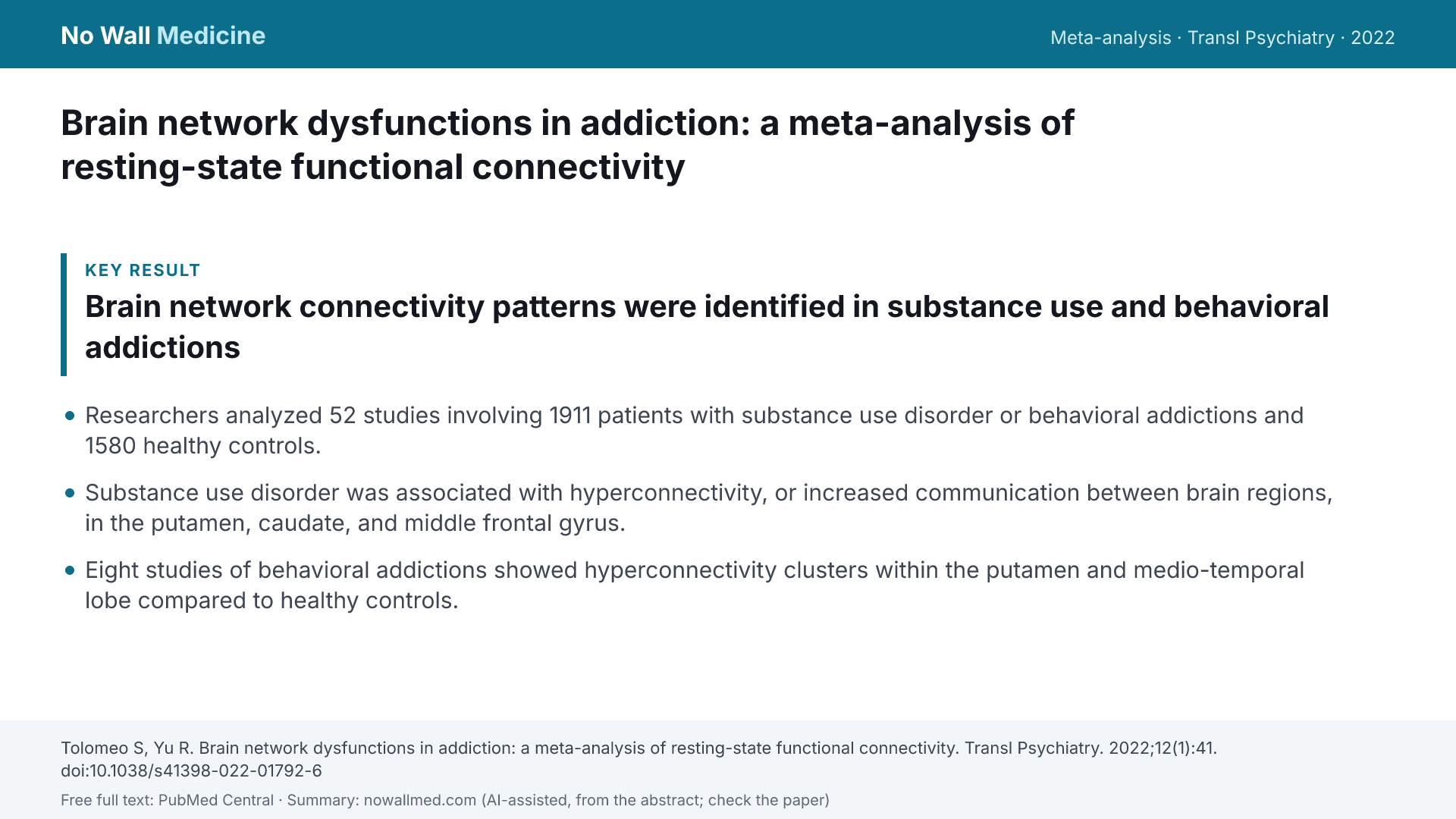
Key result: Brain network connectivity patterns were identified in substance use and behavioral addictions
Key points
- Researchers analyzed 52 studies involving 1911 patients with substance use disorder or behavioral addictions and 1580 healthy controls.
- Substance use disorder was associated with hyperconnectivity, or increased communication between brain regions, in the putamen, caudate, and middle frontal gyrus.
- Eight studies of behavioral addictions showed hyperconnectivity clusters within the putamen and medio-temporal lobe compared to healthy controls.
Why it matters: Inconsistent findings across previous research made it difficult to identify specific, consistent patterns of brain network abnormalities in addiction.
Discussion prompts
- Would these patients look like yours? Who was left out?
- Is the main outcome one that matters to patients?
- Is the difference large enough to change what you do?
Cite: Tolomeo S, Yu R. Brain network dysfunctions in addiction: a meta-analysis of resting-state functional connectivity. Transl Psychiatry. 2022. doi:10.1038/s41398-022-01792-6
Free full text: PubMed Central · Summary and visual abstract: nowallmed.com/a/brain-network-dysfunctions-in-addiction-a-meta-analysis-of-resting-1ezjahf/ (AI-assisted from the abstract; check the paper before relying on it).