Breast Implant-Associated Anaplastic Large-Cell Lymphoma: Updated Systematic Review and Analysis of Treatment Strategies
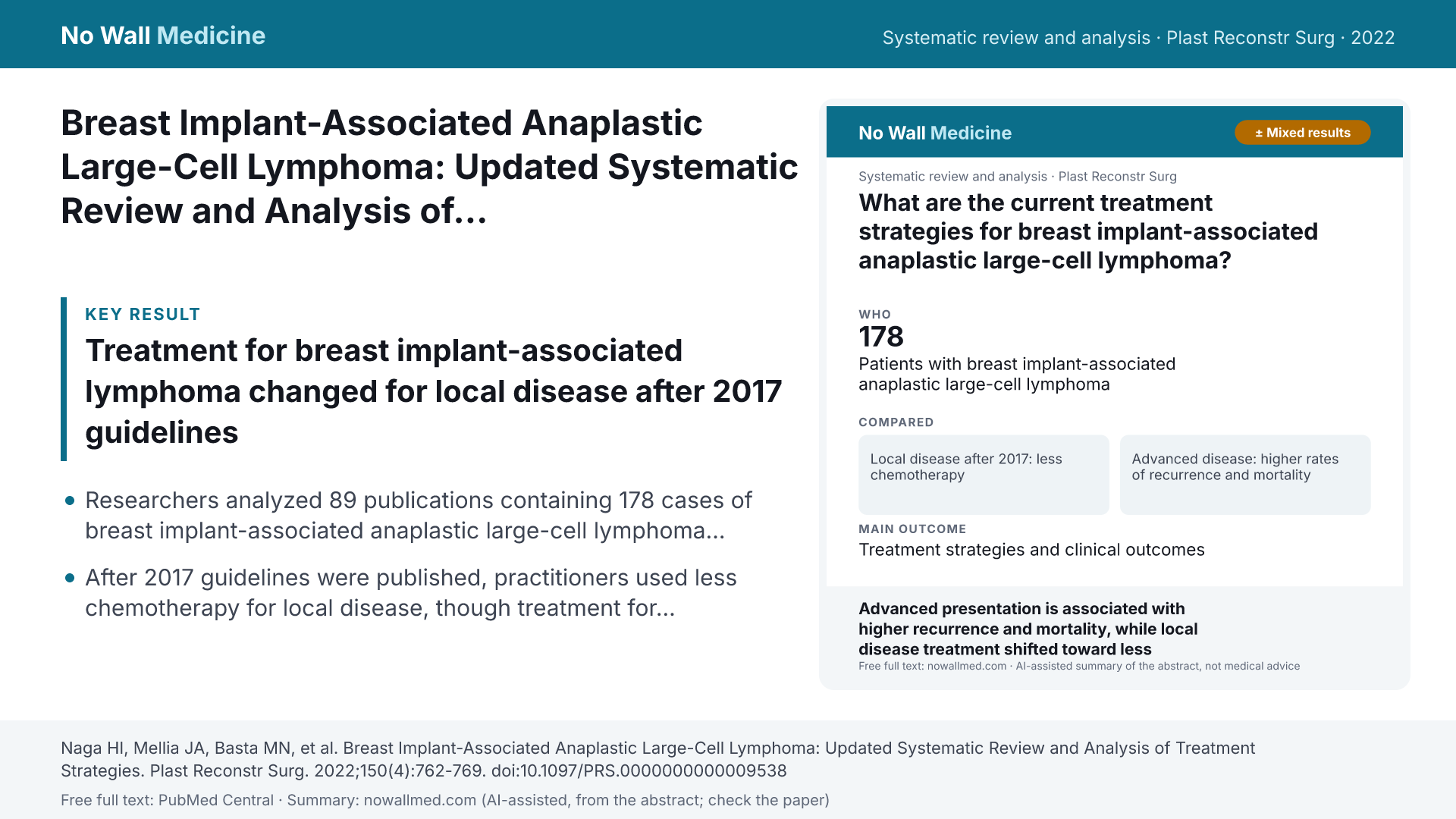
Key result: Treatment for breast implant-associated lymphoma changed for local disease after 2017 guidelines
Systematic review and analysisMixed results
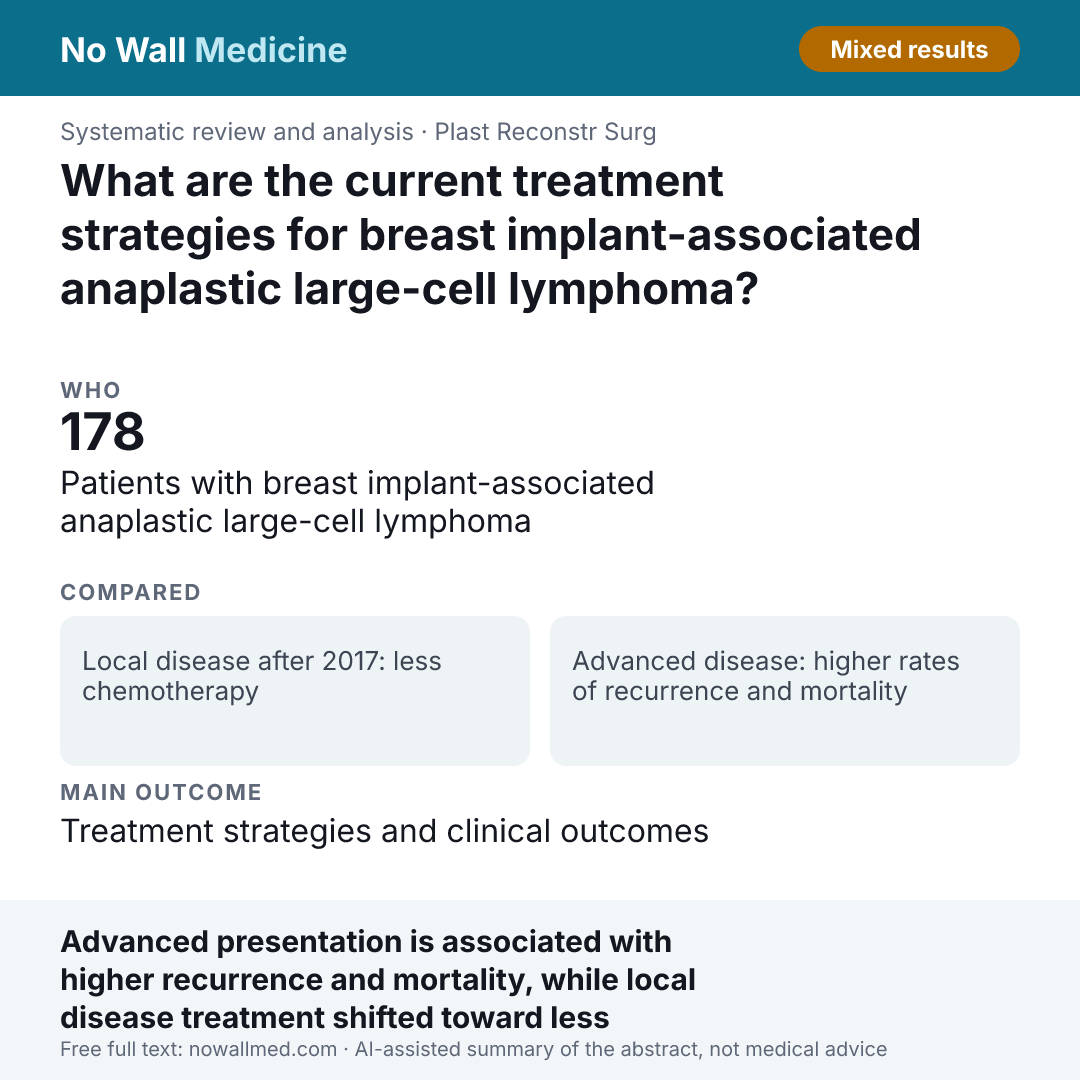
What are the current treatment strategies for breast implant-associated anaplastic large-cell lymphoma?
Who
178
Patients with breast implant-associated anaplastic large-cell lymphoma
Compared
Local disease after 2017: less chemotherapy
Advanced disease: higher rates of recurrence and mortality
Main outcome
Treatment strategies and clinical outcomes
Result: OR, 19.4; 95 percent CI, 3.9 to 96.3
Bottom line: Advanced presentation is associated with higher recurrence and mortality, while local disease treatment shifted toward less chemotherapy after 2017.
Plast Reconstr Surg · 2022-07-22 · Save PNG
Key points
- Researchers analyzed 89 publications containing 178 cases of breast implant-associated anaplastic large-cell lymphoma to compare treatment strategies against national guidelines.
- After 2017 guidelines were published, practitioners used less chemotherapy for local disease, though treatment for advanced disease remained unchanged.
- Advanced disease presentation was associated with higher recurrence rates of 29% compared to 2.1% for local disease.
Discussion prompts
- Would these patients look like yours? Who was left out?
- Is the main outcome one that matters to patients?
- Is the difference large enough to change what you do?
Cite: Naga HI, Mellia JA, Basta MN, et al. Breast Implant-Associated Anaplastic Large-Cell Lymphoma: Updated Systematic Review and Analysis of Treatment Strategies. Plast Reconstr Surg. 2022;150(4):762-769. doi:10.1097/PRS.0000000000009538
Free full text: PubMed Central · Summary and visual abstract: nowallmed.com/a/breast-implant-associated-anaplastic-large-cell-lymphoma-updated-wmjrw2/ (AI-assisted from the abstract; check the paper before relying on it).