Silicone breast implants were linked to B cell activation and antibody production in reviewed studies
Breast Implant Silicones and B Cell-Mediated Immune Responses: A Systematic Review of Literature
Systematic literature reviewMixed results
Does silicone from breast implants affect B cells and antibody formation?
Who
Humans and animal models exposed to silicone breast implants
Compared
Silicone breast implants: activation of B cells in the implant capsule
Control
Main outcome
B lymphocytes and antibody formation
Bottom line: Silicone breast implants may activate B cells and cause systemic autoantibody production or lymphocyte sensitization.
Limitation: Further research is needed on how implants impact other immune system arms.
JPRAS Open · 2024-07-08Download image
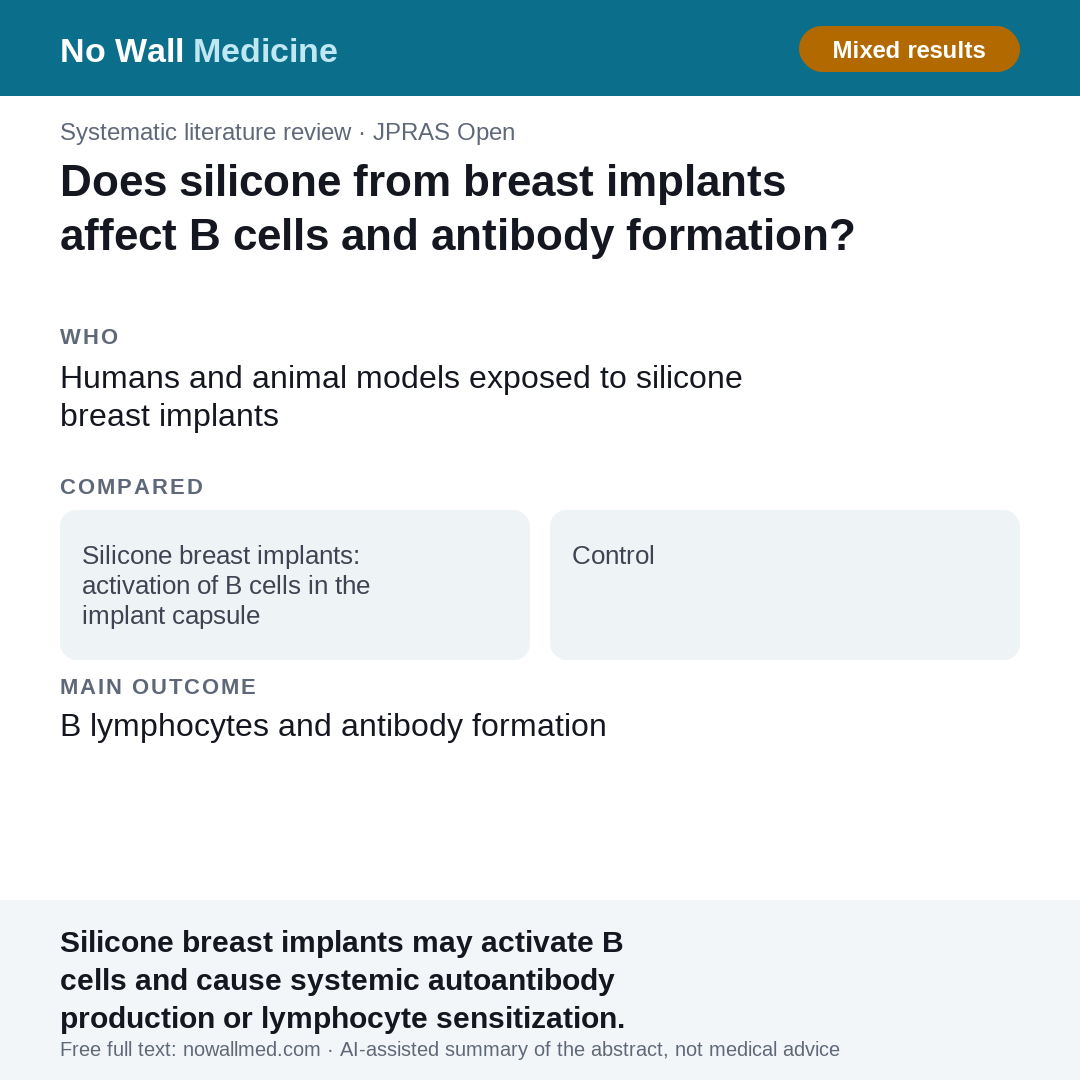
Clinical question: Does silicone from breast implants affect B cells and antibody formation?
Key points
- Researchers reviewed 39 studies, including 23 human studies, 14 animal models, and 2 in vitro studies, regarding silicone and the humoral immune response.
- Findings included the presence of antisilicone antibodies in women with implants, activated B cells in implant capsules, and sensitization of lymphocytes to silicone.
- The review noted that silicone may have systemic effects on autoantibody production and B lymphocyte sensitization.
Headline and key points written with AI from the paper’s abstract, with every number checked against it. Read the paper before relying on them.
Was this summary helpful?
Cite this article
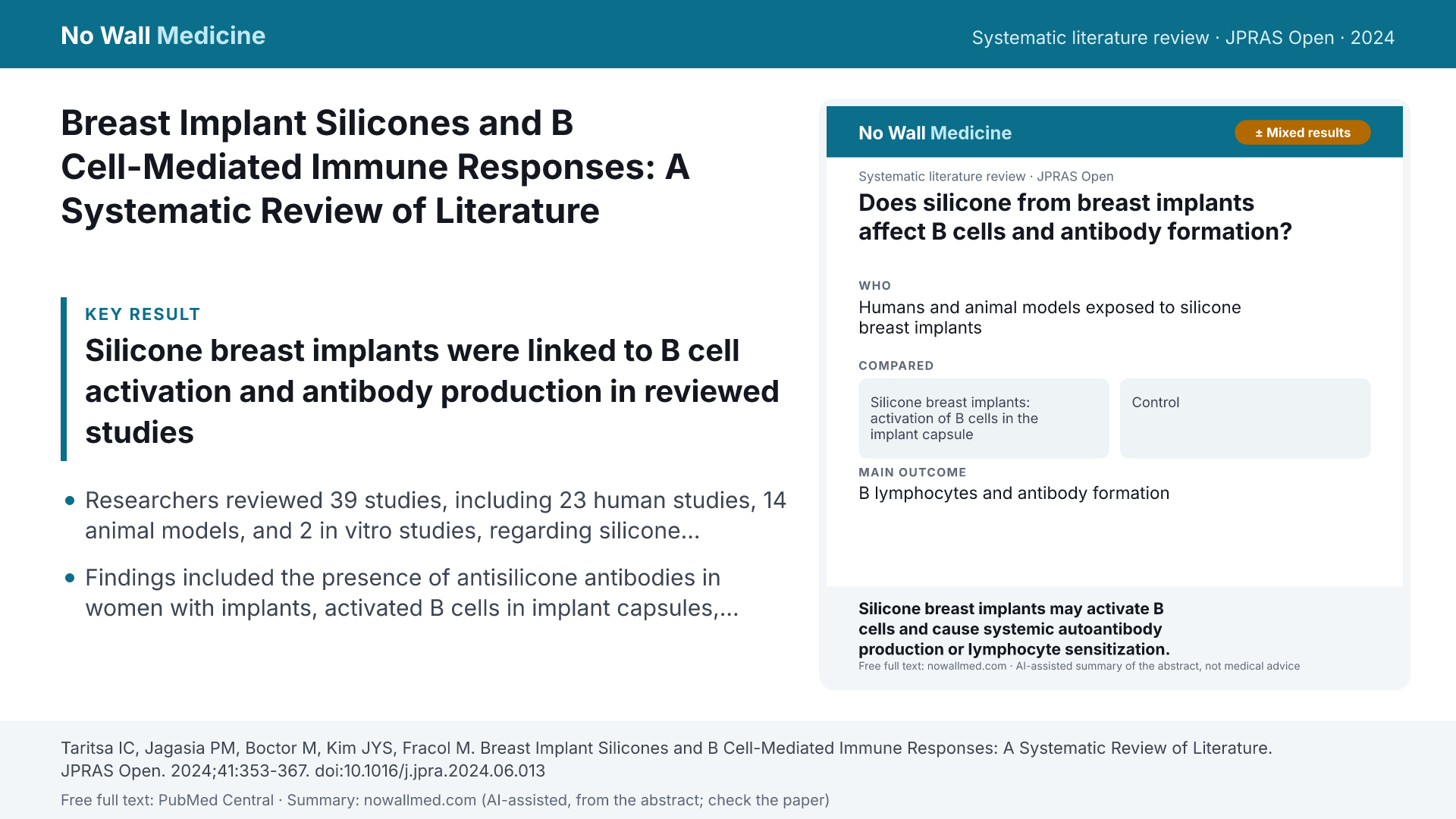
Taritsa IC, Jagasia PM, Boctor M, Kim JYS, Fracol M. Breast Implant Silicones and B Cell-Mediated Immune Responses: A Systematic Review of Literature. JPRAS Open. 2024. doi:10.1016/j.jpra.2024.06.013
Spotted a mistake? Suggest a correction