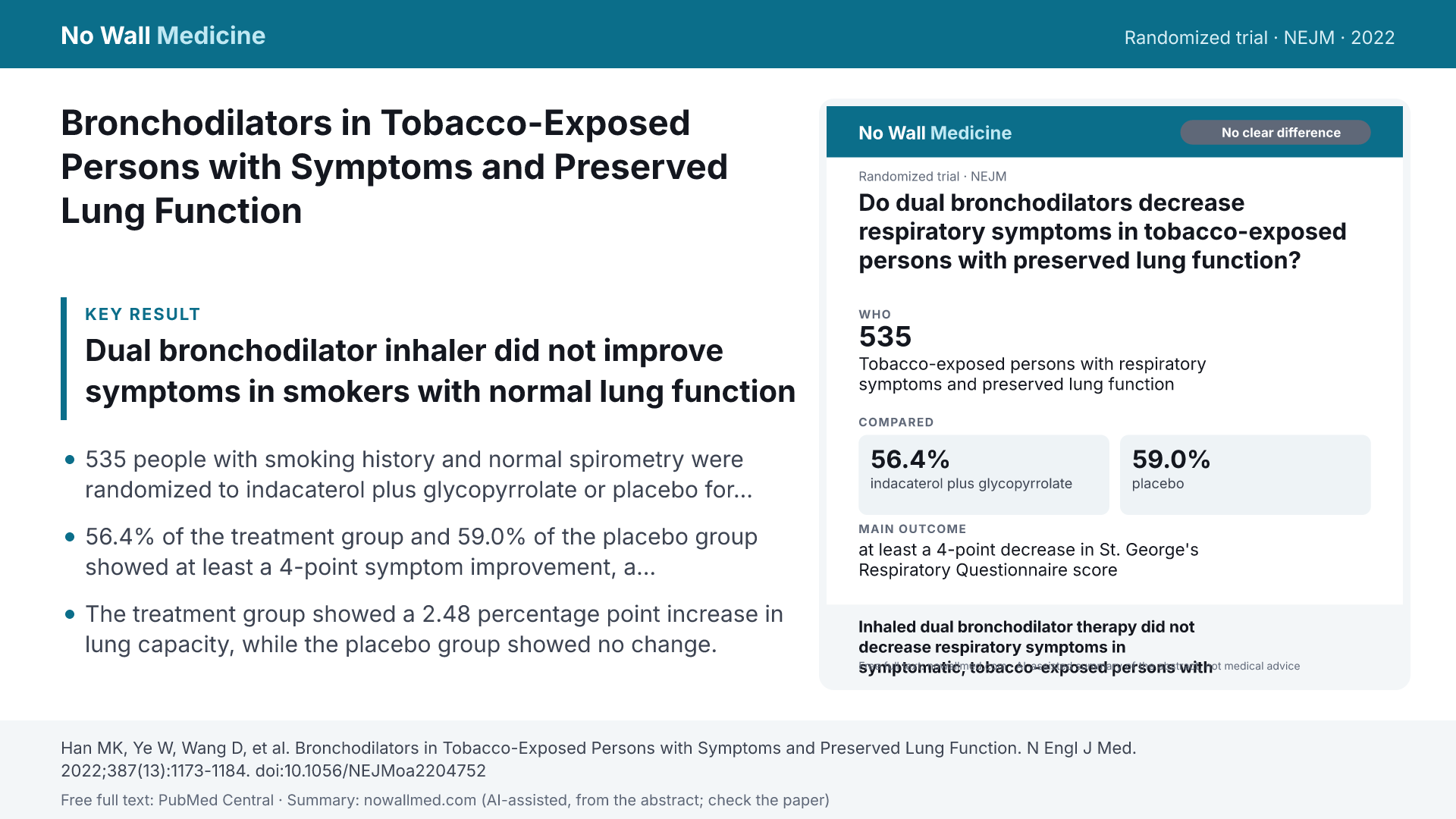
Dual bronchodilator inhaler did not improve symptoms in smokers with normal lung function
Bronchodilators in Tobacco-Exposed Persons with Symptoms and Preserved Lung Function
Randomized trialNo clear difference
Do dual bronchodilators decrease respiratory symptoms in tobacco-exposed persons with preserved lung function?
Who
535
Tobacco-exposed persons with respiratory symptoms and preserved lung function
Compared
56.4%indacaterol plus glycopyrrolate (128/227)
59.0%placebo (144/244)
Main outcome
at least a 4-point decrease in St. George's Respiratory Questionnaire score
Result: adjusted odds ratio, 0.91 (95% CI, 0.60 to 1.37)
Bottom line: Inhaled dual bronchodilator therapy did not decrease respiratory symptoms in symptomatic, tobacco-exposed persons with preserved lung function.
Funded by: National Heart, Lung, and Blood Institute and others
NEJM · 2022-09-04Download image
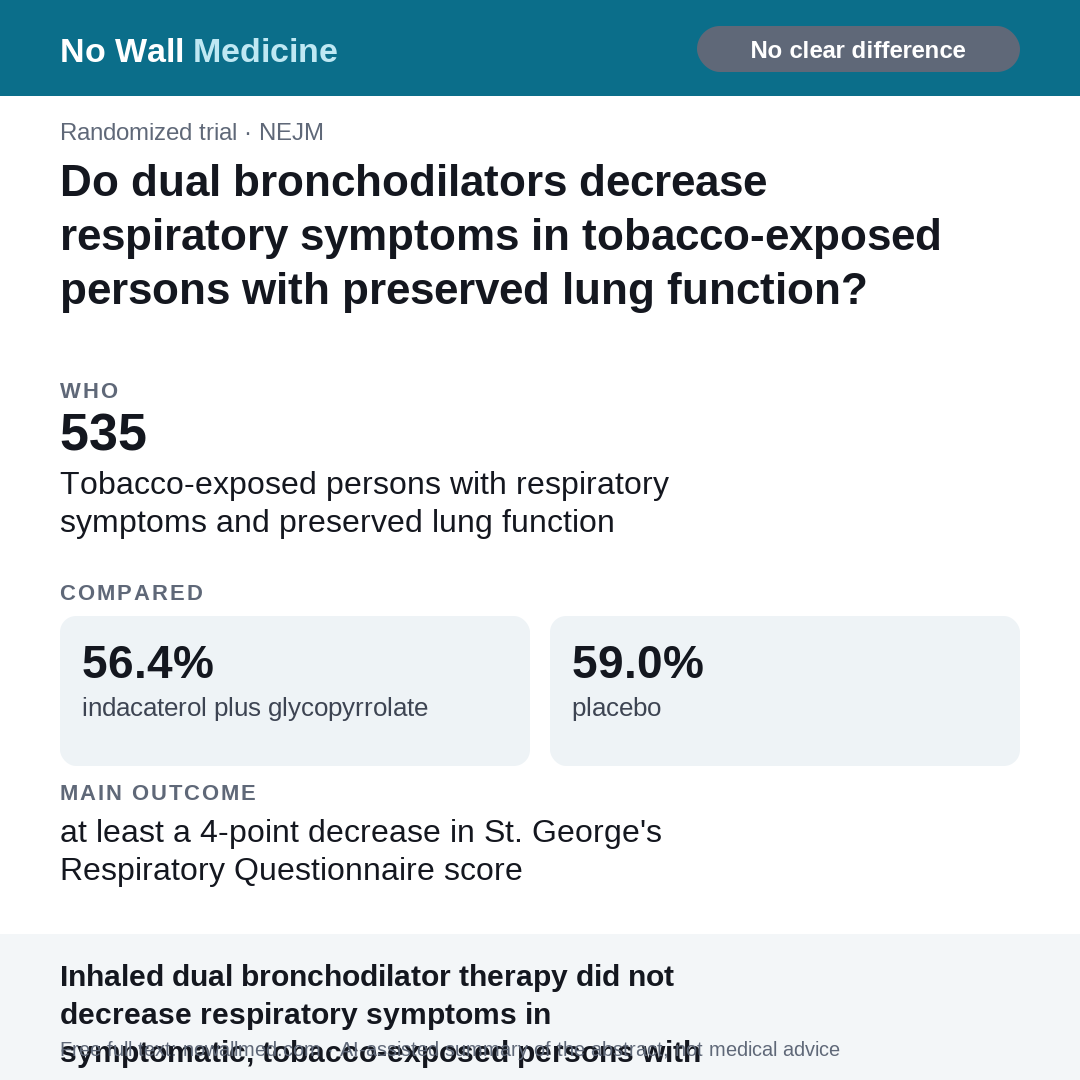
Clinical question: Do dual bronchodilators decrease respiratory symptoms in tobacco-exposed persons with preserved lung function?
Why it matters: Many smokers with breathing symptoms but normal lung function are treated for COPD, but evidence supporting this practice was lacking.
Key points
- 535 people with smoking history and normal spirometry were randomized to indacaterol plus glycopyrrolate or placebo for 12 weeks.
- 56.4% of the treatment group and 59.0% of the placebo group showed at least a 4-point symptom improvement, a difference that was not statistically significant.
- The treatment group showed a 2.48 percentage point increase in lung capacity, while the placebo group showed no change.
Headline and key points written with AI from the paper’s abstract, with every number checked against it. Read the paper before relying on them.
Was this summary helpful?
Subject terms
Cite this article
Han MK, Ye W, Wang D, et al. Bronchodilators in Tobacco-Exposed Persons with Symptoms and Preserved Lung Function. NEJM. 2022. doi:10.1056/NEJMoa2204752
Spotted a mistake? Suggest a correction