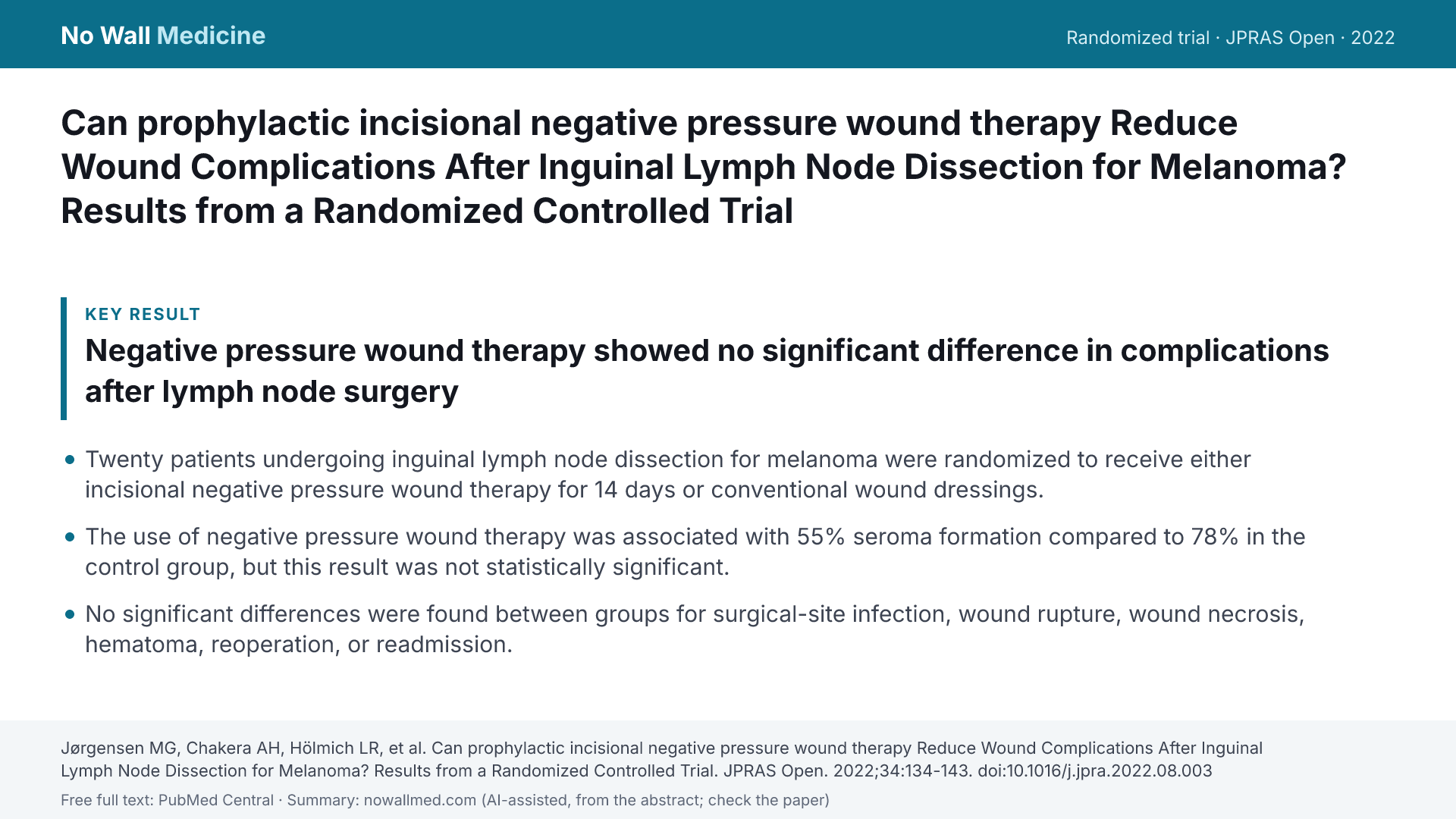
Negative pressure wound therapy showed no significant difference in complications after lymph node surgery
Can prophylactic incisional negative pressure wound therapy Reduce Wound Complications After Inguinal Lymph Node Dissection for Melanoma? Results from a Randomized Controlled Trial
Key points
- Twenty patients undergoing inguinal lymph node dissection for melanoma were randomized to receive either incisional negative pressure wound therapy for 14 days or conventional wound dressings.
- The use of negative pressure wound therapy was associated with 55% seroma formation compared to 78% in the control group, but this result was not statistically significant.
- No significant differences were found between groups for surgical-site infection, wound rupture, wound necrosis, hematoma, reoperation, or readmission.
Limitation the authors note: The trial was terminated early due to a low recruitment rate and did not reach the estimated sample size.
Headline and key points written with AI from the paper’s abstract, with every number checked against it. Read the paper before relying on them.
Was this summary helpful?
Cite this article
Jørgensen MG, Chakera AH, Hölmich LR, et al. Can prophylactic incisional negative pressure wound therapy Reduce Wound Complications After Inguinal Lymph Node Dissection for Melanoma? Results from a Randomized Controlled Trial. JPRAS Open. 2022. doi:10.1016/j.jpra.2022.08.003
Spotted a mistake? Suggest a correction