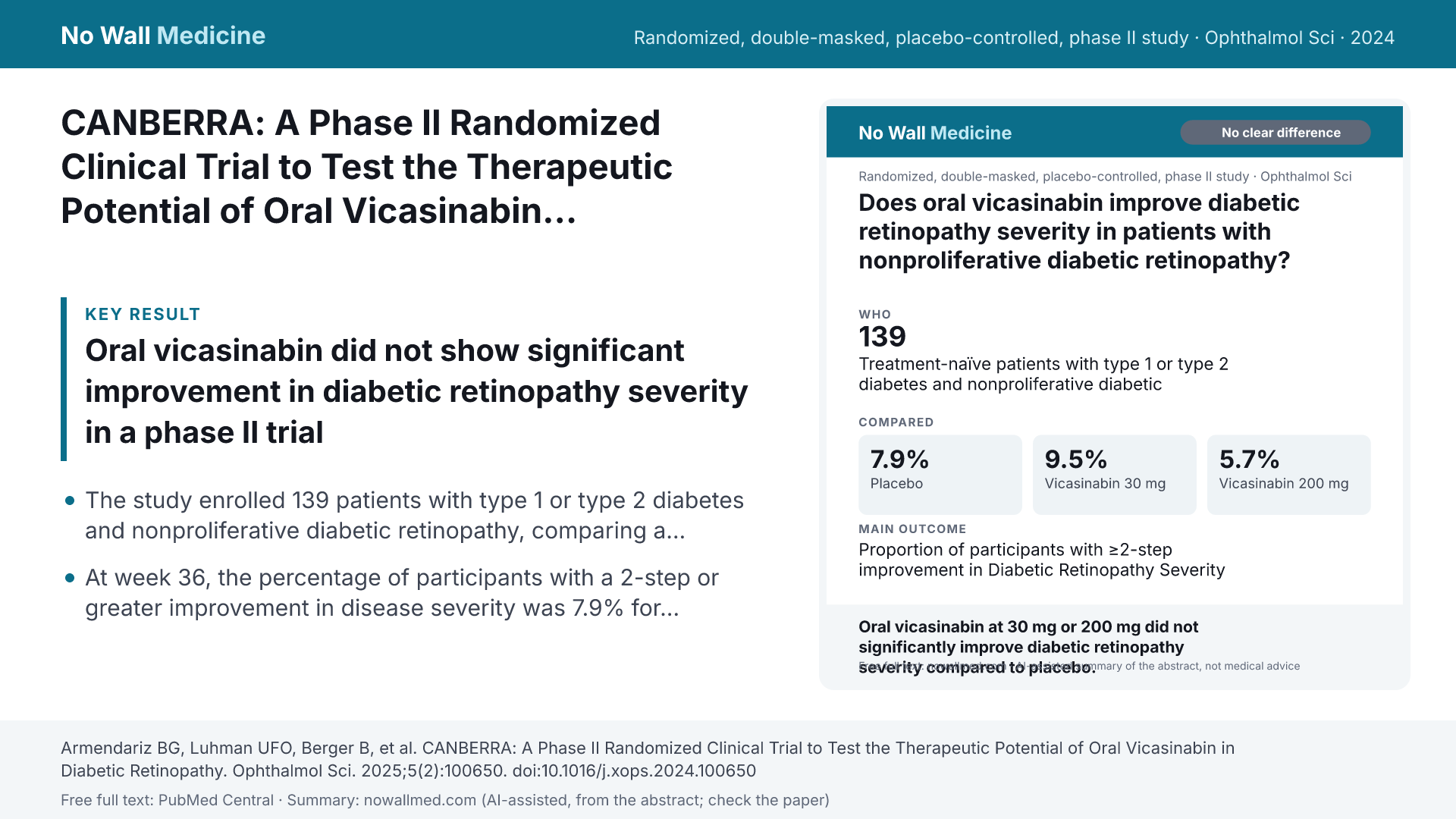
Oral vicasinabin did not show significant improvement in diabetic retinopathy severity in a phase II trial
CANBERRA: A Phase II Randomized Clinical Trial to Test the Therapeutic Potential of Oral Vicasinabin in Diabetic Retinopathy
Randomized, double-masked, placebo-controlled, phase II studyNo clear difference
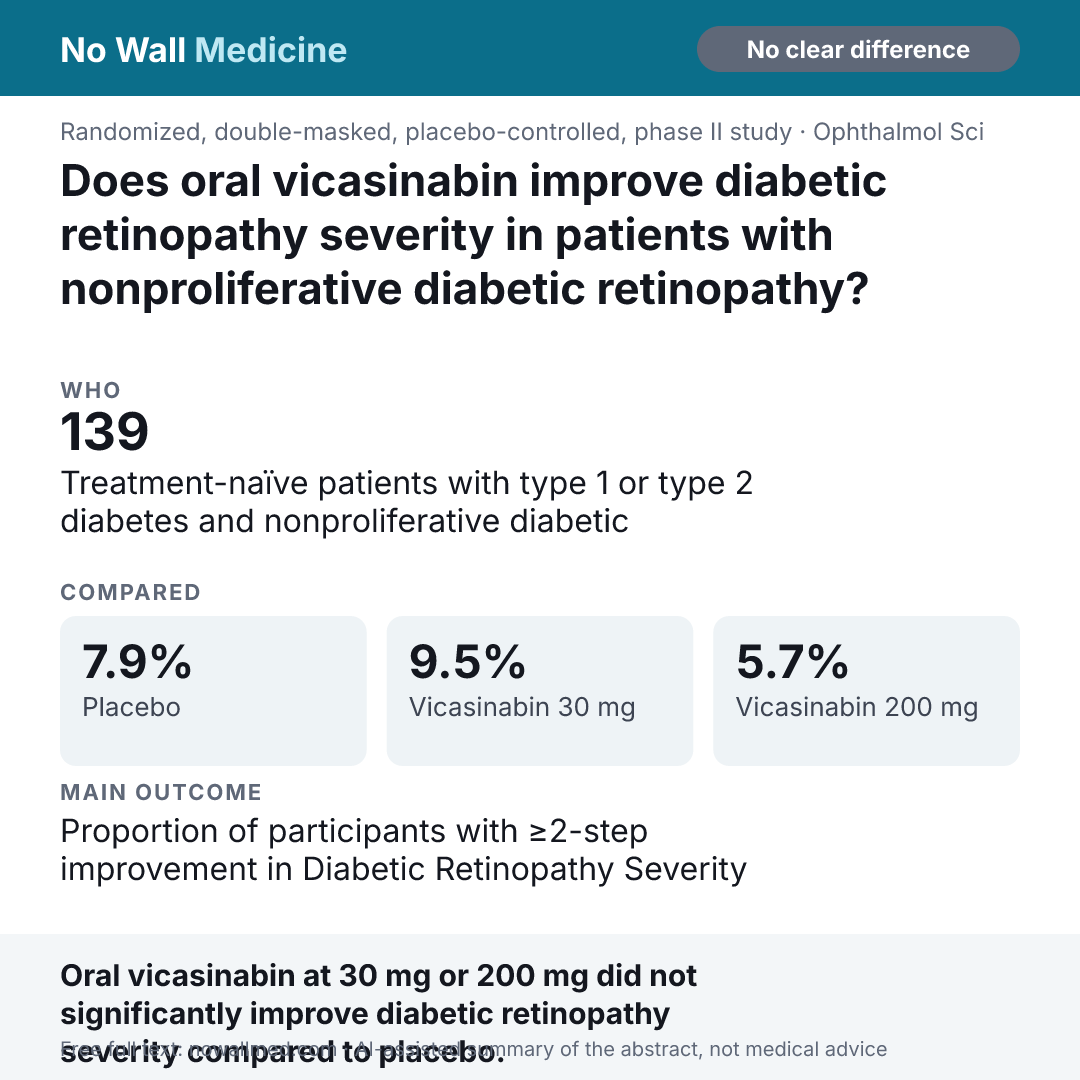
Does oral vicasinabin improve diabetic retinopathy severity in patients with nonproliferative diabetic retinopathy?
Who
139
Treatment-naïve patients with type 1 or type 2 diabetes and nonproliferative diabetic retinopathy · Global, multicentric
Compared
7.9%Placebo
9.5%Vicasinabin 30 mg
5.7%Vicasinabin 200 mg
Main outcome
Proportion of participants with ≥2-step improvement in Diabetic Retinopathy Severity Scale
Bottom line: Oral vicasinabin at 30 mg or 200 mg did not significantly improve diabetic retinopathy severity compared to placebo.
Ophthalmol Sci · 2024-11-08 · Save PNG
Clinical question: Does oral vicasinabin improve diabetic retinopathy severity in patients with nonproliferative diabetic retinopathy?
Why it matters: Current treatments for nonproliferative diabetic retinopathy are invasive and often not used until the disease has progressed, creating a need for early noninvasive options.
Key points
- The study enrolled 139 patients with type 1 or type 2 diabetes and nonproliferative diabetic retinopathy, comparing a placebo to 30 mg or 200 mg of vicasinabin.
- At week 36, the percentage of participants with a 2-step or greater improvement in disease severity was 7.9% for placebo, 9.5% for 30 mg, and 5.7% for 200 mg.
- Vicasinabin was associated with favorable safety profiles and did not induce changes in kidney function, cardiovascular parameters, or glycemic control.
Headline and key points written with AI from the paper’s abstract, with every number checked against it. Read the paper before relying on them.
Was this summary helpful?
Headline, design, result, key points, caveat and citation as plain text.
Cite this article
Armendariz BG, Luhman UFO, Berger B, et al. CANBERRA: A Phase II Randomized Clinical Trial to Test the Therapeutic Potential of Oral Vicasinabin in Diabetic Retinopathy. Ophthalmol Sci. 2025;5(2):100650. doi:10.1016/j.xops.2024.100650
Spotted a mistake? Suggest a correction