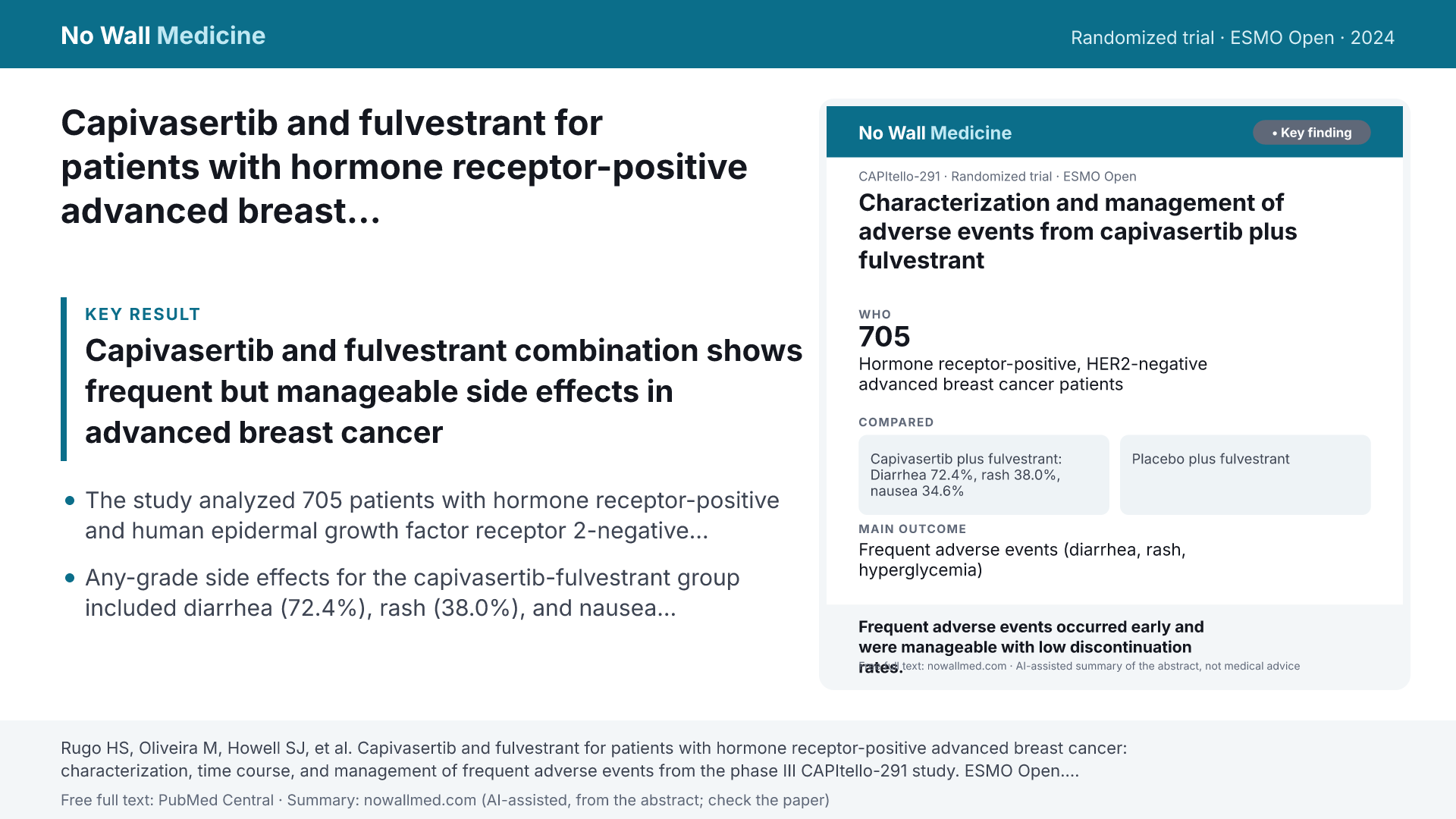
Capivasertib and fulvestrant combination shows frequent but manageable side effects in advanced breast cancer
Capivasertib and fulvestrant for patients with hormone receptor-positive advanced breast cancer: characterization, time course, and management of frequent adverse events from the phase III CAPItello-291 study
Why it matters: The specific profile, timing, and management of side effects associated with combining capivasertib and fulvestrant were not fully characterized.
Key points
- The study analyzed 705 patients with hormone receptor-positive and human epidermal growth factor receptor 2-negative advanced breast cancer randomized to receive capivasertib plus fulvestrant or a placebo plus fulvestrant.
- Any-grade side effects for the capivasertib-fulvestrant group included diarrhea (72.4%), rash (38.0%), and nausea (34.6%), while grade 3 or higher events included rash (12.1%), diarrhea (9.3%), and hyperglycemia (2.3%).
- Side effects such as diarrhea, rash, and high blood sugar typically occurred early after starting treatment and were managed with dose changes or supportive medications.
Headline and key points written with AI from the paper’s abstract, with every number checked against it. Read the paper before relying on them.
Was this summary helpful?
Subject terms
Headline, design, result, key points, caveat and citation as plain text.
Cite this article
Rugo HS, Oliveira M, Howell SJ, et al. Capivasertib and fulvestrant for patients with hormone receptor-positive advanced breast cancer: characterization, time course, and management of frequent adverse events from the phase III CAPItello-291 study. ESMO Open. 2024;9(9):103697. doi:10.1016/j.esmoop.2024.103697
Spotted a mistake? Suggest a correction