Preeclampsia linked to subclinical heart dysfunction in women postpartum
Cardiac Structure and Function in Women After Preeclampsia: A Systematic Review and Meta-Analysis
Meta-analysis of 45 studiesHarm found
Cardiac structure in women after preeclampsia
Who
8991
Women with a history of preeclampsia
Compared
10.85Preeclampsia (95% CI: 6.30-15.39)
Normotensive controls
Main outcome
Left ventricular mass index
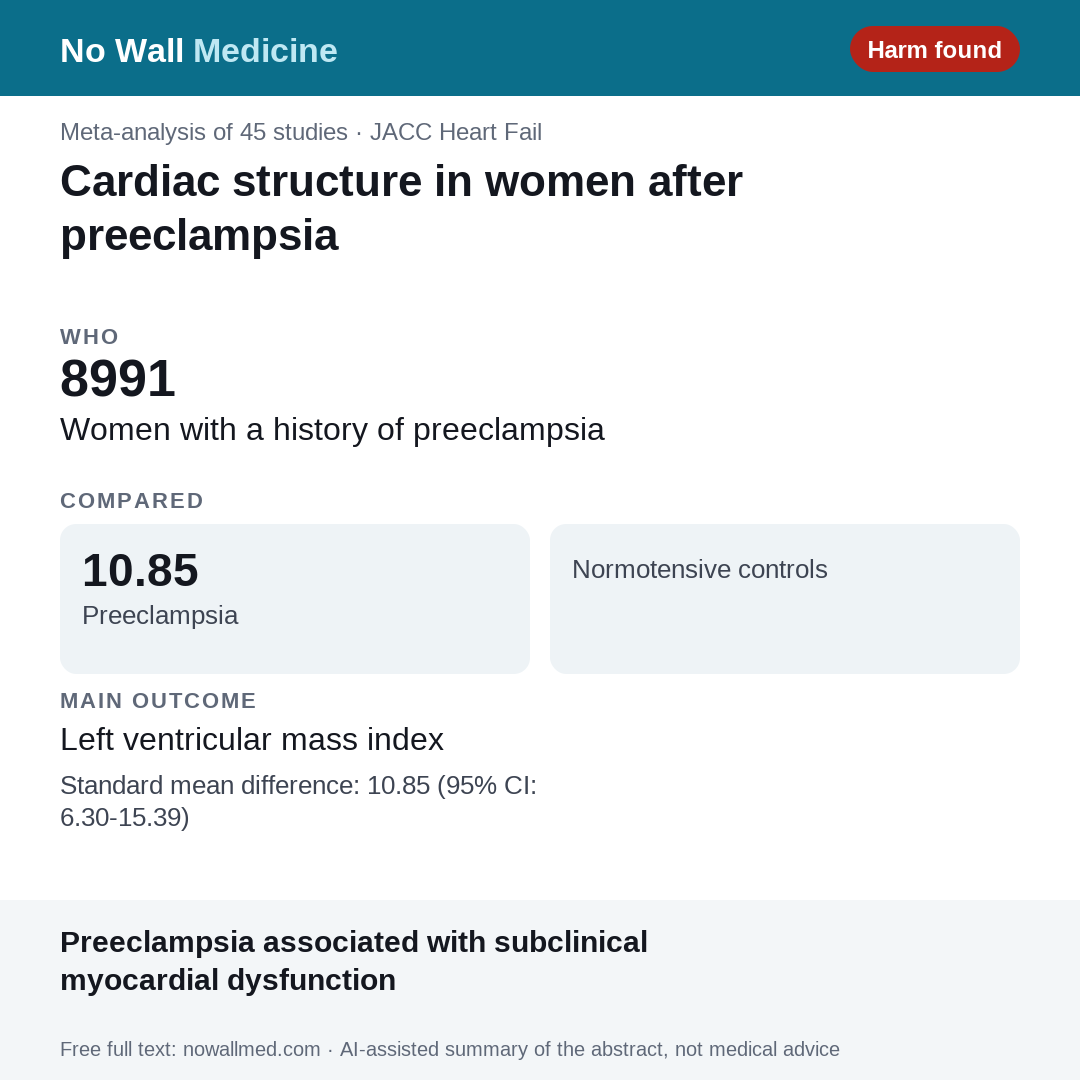
Result: Standard mean difference: 10.85 (95% CI: 6.30-15.39)
Bottom line: Preeclampsia associated with subclinical myocardial dysfunction
Limitation: Evidence for persistent LVMI elevation not robust
JACC Heart Fail · 2026-10-22Download image
Why it matters: Doctors lack guidelines for monitoring heart failure risk in women after preeclampsia
Key points
- Researchers studied 8,991 women, including 2,288 with a history of preeclampsia, using heart ultrasound tests.
- Women with preeclampsia had higher left ventricular mass index and reduced heart function.
- Heart function impairment persisted up to 10 years postpartum in some measures.
Limitation the authors note: Evidence for persistent left ventricular mass index elevation beyond 6 months postpartum was not robust
Headline and key points written with AI from the paper’s abstract, with every number checked against it. Read the paper before relying on them.
Spotted a mistake? Suggest a correction