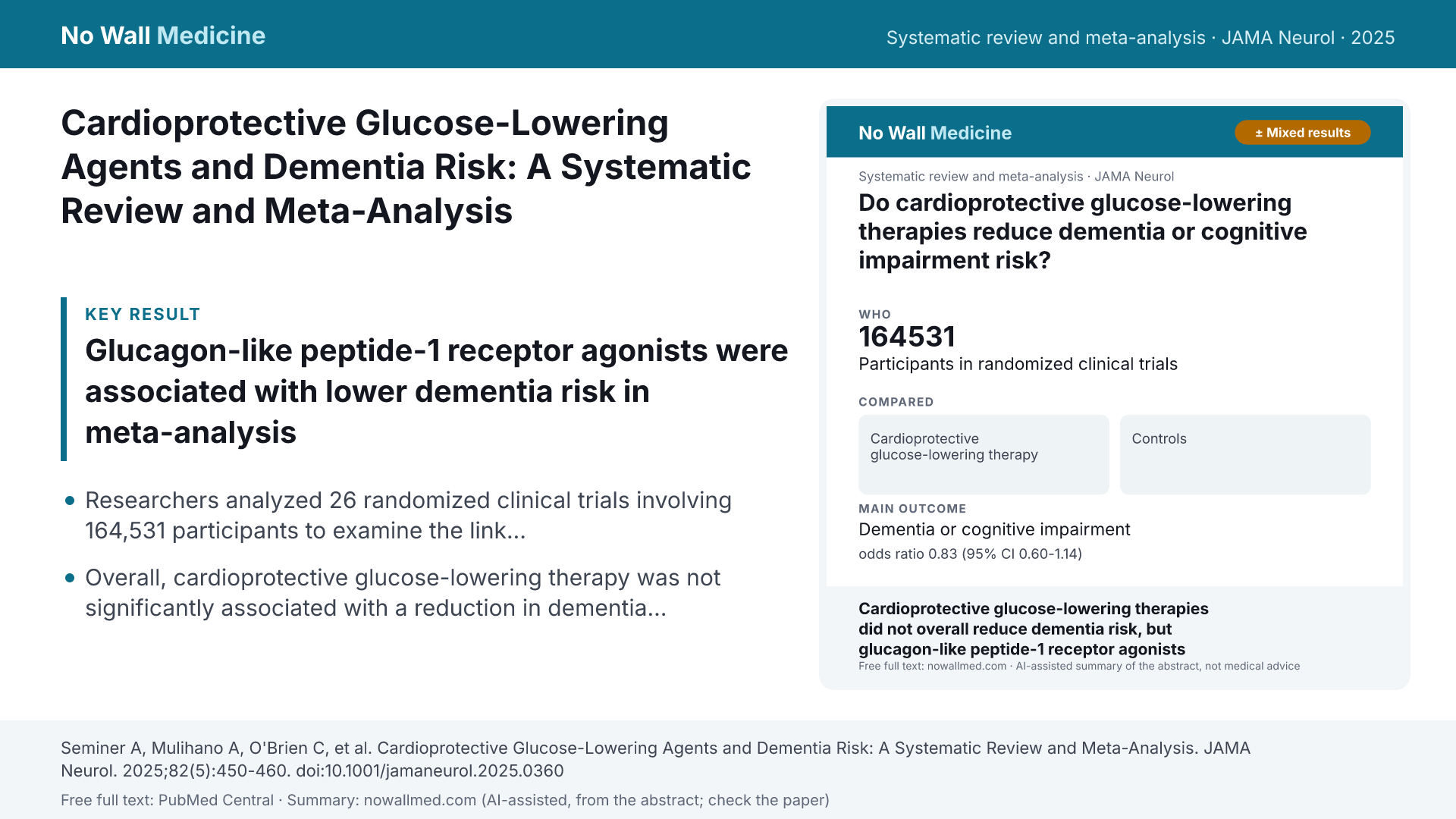
Glucagon-like peptide-1 receptor agonists were associated with lower dementia risk in meta-analysis
Cardioprotective Glucose-Lowering Agents and Dementia Risk: A Systematic Review and Meta-Analysis
Systematic review and meta-analysisMixed results
Do cardioprotective glucose-lowering therapies reduce dementia or cognitive impairment risk?
Who
164531
Participants in randomized clinical trials
Compared
Cardioprotective glucose-lowering therapy
Controls
Main outcome
Dementia or cognitive impairment
Result: odds ratio 0.83 (95% CI 0.60-1.14)
Bottom line: Cardioprotective glucose-lowering therapies did not overall reduce dementia risk, but glucagon-like peptide-1 receptor agonists were associated with a reduction.
JAMA Neurol · 2025-04-07Download image
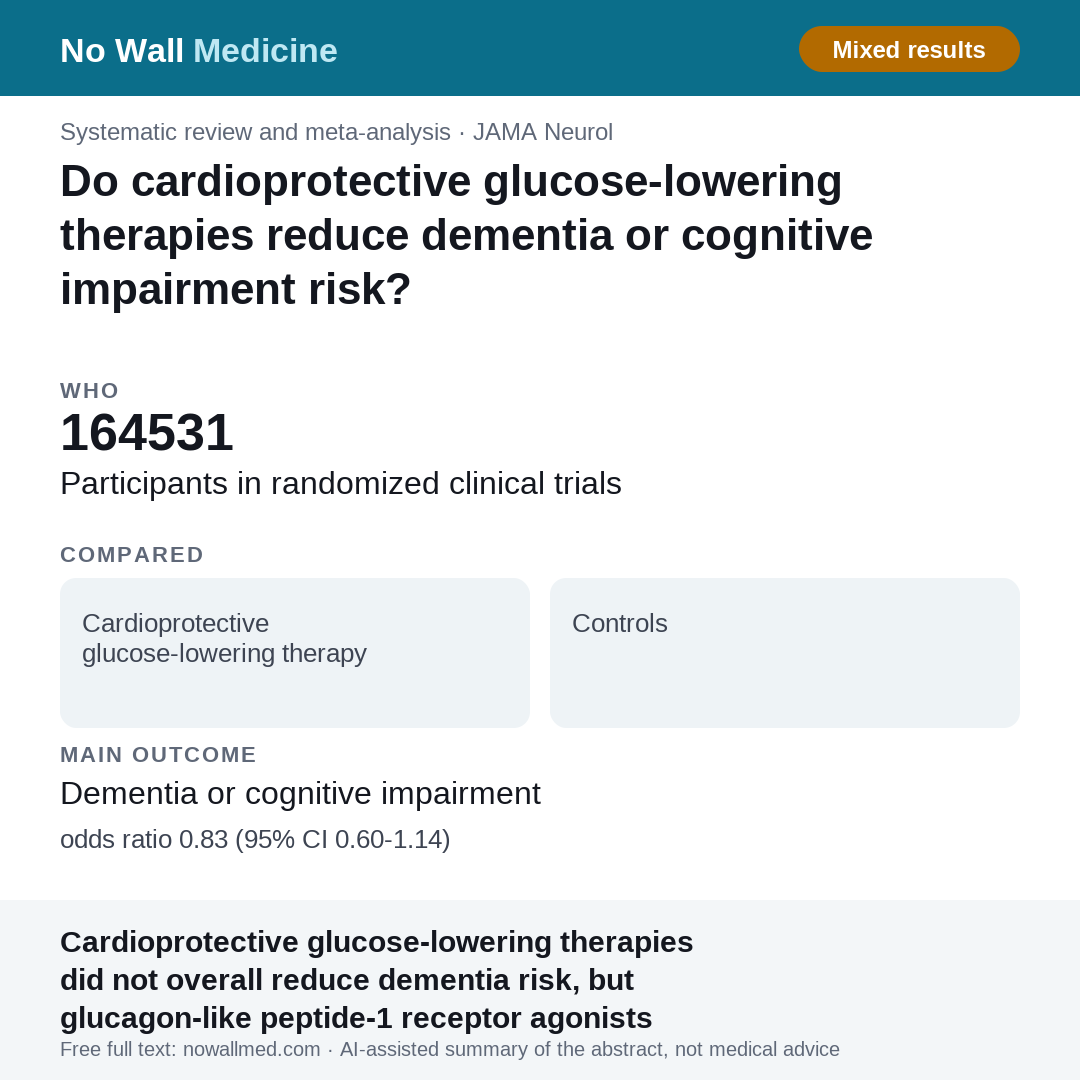
Clinical question: Do cardioprotective glucose-lowering therapies reduce dementia or cognitive impairment risk?
Key points
- Researchers analyzed 26 randomized clinical trials involving 164,531 participants to examine the link between cardioprotective glucose-lowering drugs and dementia.
- Overall, cardioprotective glucose-lowering therapy was not significantly associated with a reduction in dementia or cognitive impairment (odds ratio, 0.83 [95% CI, 0.60-1.14]).
- Glucagon-like peptide-1 receptor agonists were associated with a statistically significant reduction in dementia (odds ratio, 0.55 [95% CI, 0.35-0.86]), while sodium-glucose cotransporter-2 inhibitors were not (odds ratio, 1.20 [95% CI, 0.67-2.17]).
Headline and key points written with AI from the paper’s abstract, with every number checked against it. Read the paper before relying on them.
Was this summary helpful?
Subject terms
Headline, design, result, key points, caveat and citation as plain text.
Cite this article
Seminer A, Mulihano A, O'Brien C, et al. Cardioprotective Glucose-Lowering Agents and Dementia Risk: A Systematic Review and Meta-Analysis. JAMA Neurol. 2025. doi:10.1001/jamaneurol.2025.0360
Spotted a mistake? Suggest a correction