Efpeglenatide was associated with fewer cardiovascular and kidney events in people with type 2 diabetes
Cardiovascular and Renal Outcomes with Efpeglenatide in Type 2 Diabetes
Randomized, placebo-controlled trialBenefit found
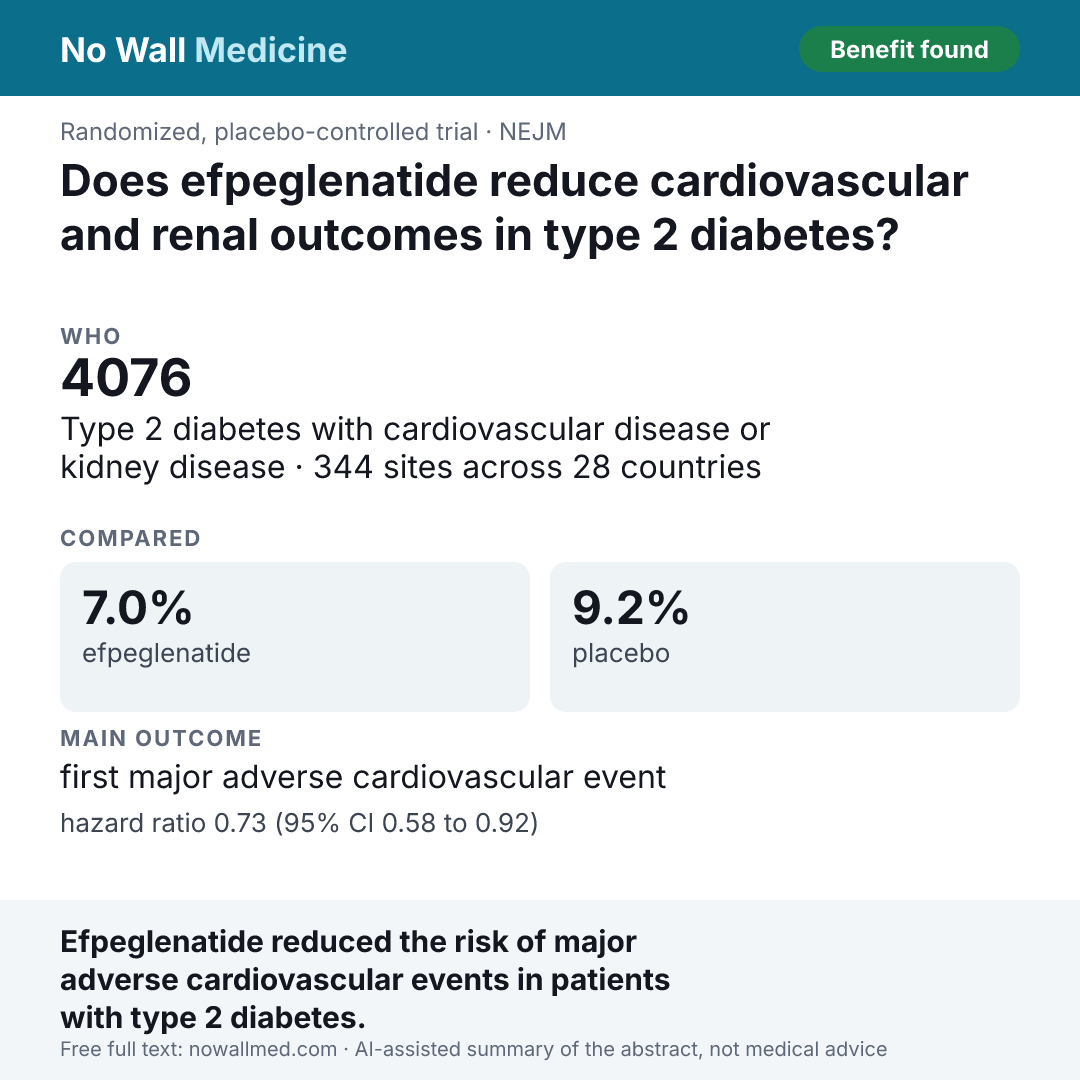
Does efpeglenatide reduce cardiovascular and renal outcomes in type 2 diabetes?
Who
4076
Type 2 diabetes with cardiovascular disease or kidney disease · 344 sites across 28 countries
Compared
7.0%efpeglenatide
9.2%placebo
Main outcome
first major adverse cardiovascular event
Result: hazard ratio 0.73 (95% CI 0.58 to 0.92)
Bottom line: Efpeglenatide reduced the risk of major adverse cardiovascular events in patients with type 2 diabetes.
Funded by: Sanofi
NEJM · 2021-06-28 · Save PNG
Same trial (NCT03496298)
Papers we list that report this registered trial, oldest first. Read a secondary analysis alongside the main results.
- Main results Benefit found
This paper NEJM 2021-06 - Secondary analysis Benefit found
Efpeglenatide effects on cardiovascular and renal outcomes did not differ with or without SGLT2 inhibitor use Circulation 2021-11 - Secondary analysis Benefit found
Higher doses of efpeglenatide were associated with more cardiovascular and kidney benefits in type 2 diabetes Circulation 2023-02
Clinical question: Does efpeglenatide reduce cardiovascular and renal outcomes in type 2 diabetes?
In absolute numbers
efpeglenatide: 7% · placebo: 9.2% → a difference of 2.2 percentage points, so about 46 people would need the treatment for 1 more to benefit (number needed to treat) over the trial’s follow-up.
Worked out by us from the two group results above, not reported by the authors. Check the paper for the exact outcome and timing.
Key points
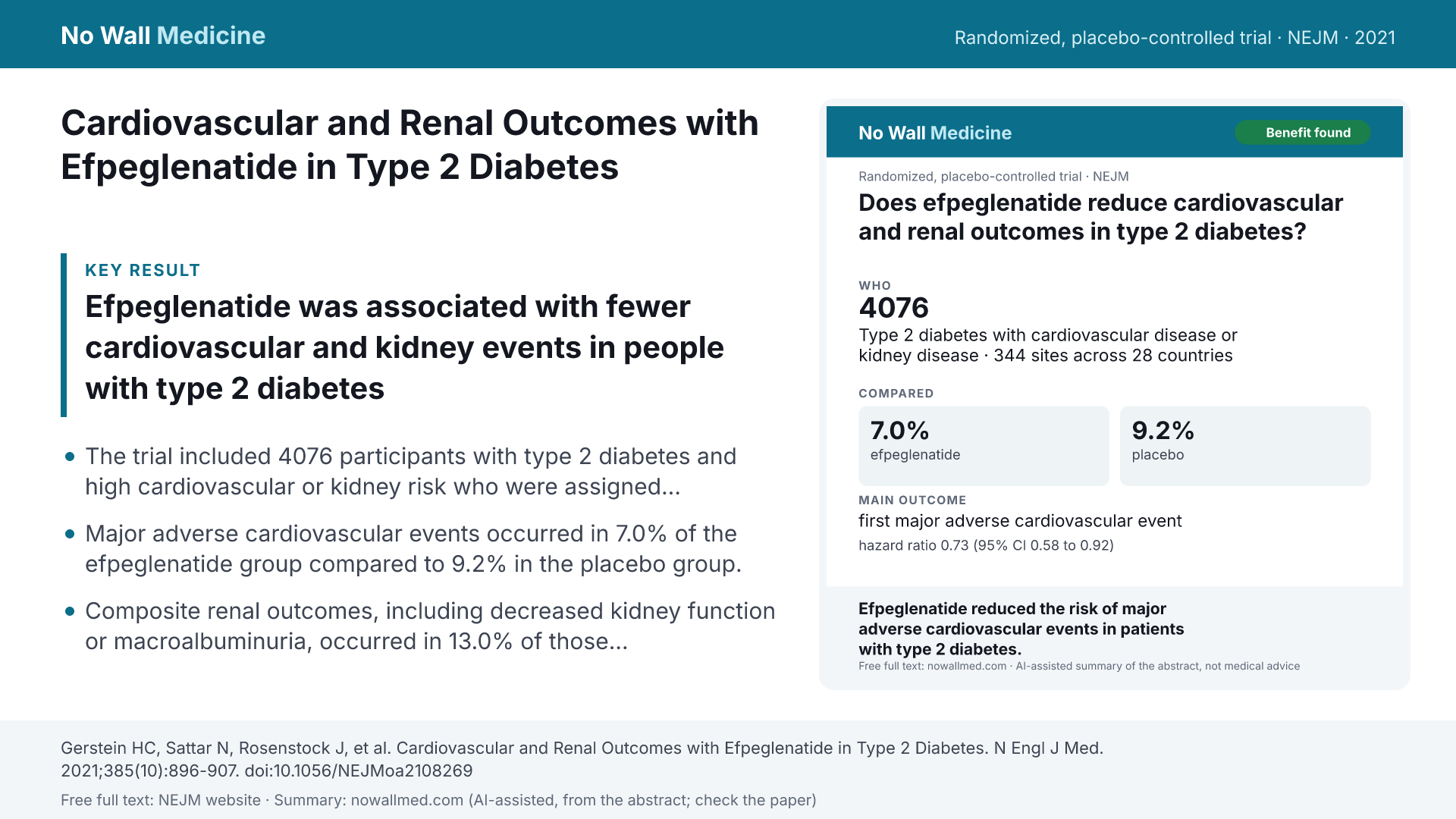
- The trial included 4076 participants with type 2 diabetes and high cardiovascular or kidney risk who were assigned to efpeglenatide or placebo.
- Major adverse cardiovascular events occurred in 7.0% of the efpeglenatide group compared to 9.2% in the placebo group.
- Composite renal outcomes, including decreased kidney function or macroalbuminuria, occurred in 13.0% of those receiving efpeglenatide and 18.4% of those receiving placebo.
Headline and key points written with AI from the paper’s abstract, with every number checked against it. Read the paper before relying on them.
Was this summary helpful?
Subject terms
Headline, design, result, key points, caveat and citation as plain text.
Cite this article
Gerstein HC, Sattar N, Rosenstock J, et al. Cardiovascular and Renal Outcomes with Efpeglenatide in Type 2 Diabetes. N Engl J Med. 2021;385(10):896-907. doi:10.1056/NEJMoa2108269
Spotted a mistake? Suggest a correction