Glucagon-like peptide-1 receptor agonists linked to lower cardiovascular and kidney risks in type 2 diabetes
Cardiovascular, mortality, and kidney outcomes with GLP-1 receptor agonists in patients with type 2 diabetes: a systematic review and meta-analysis of randomised trials
Meta-analysis of eight randomized placebo-controlled trialsBenefit found
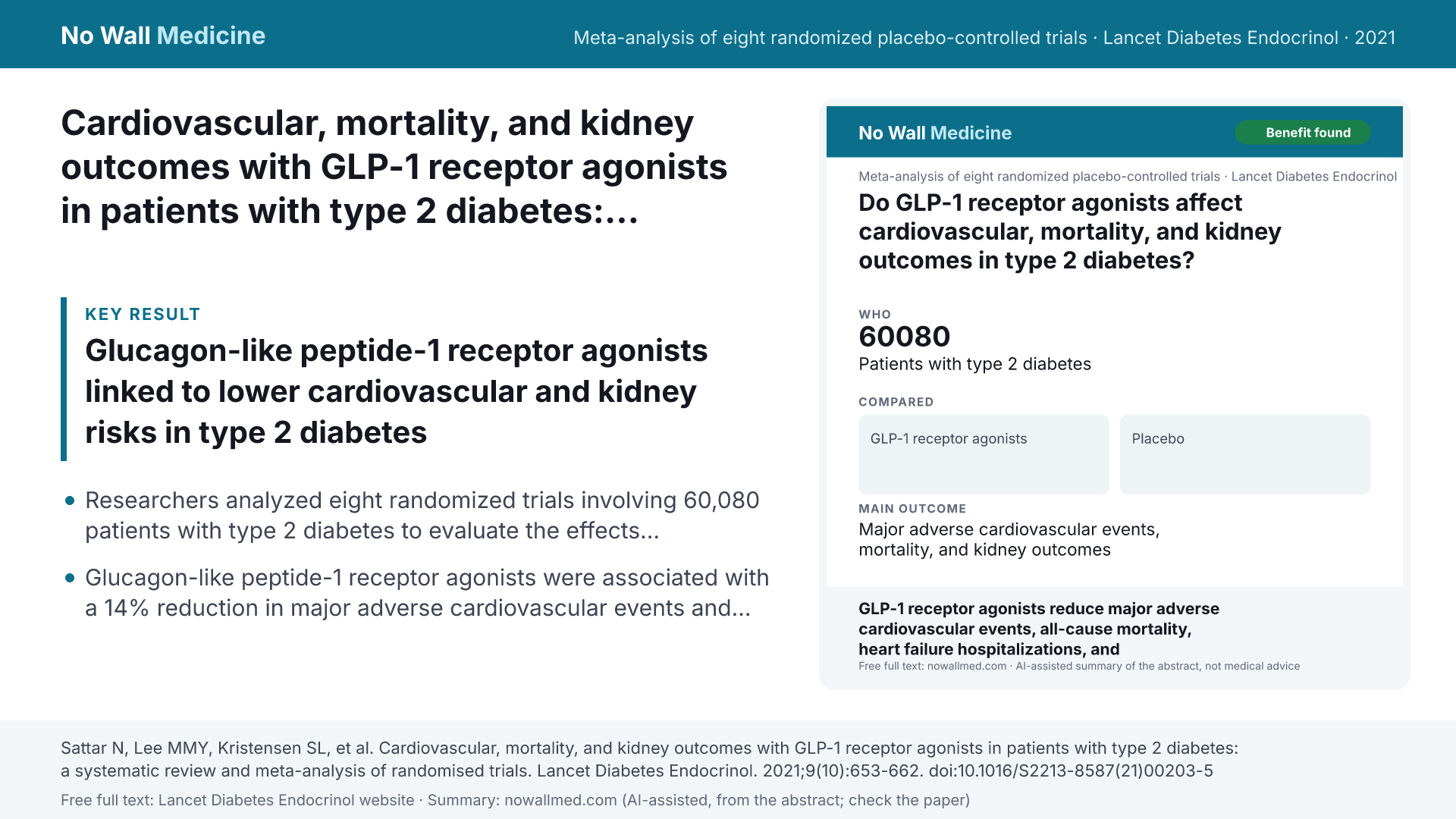
Do GLP-1 receptor agonists affect cardiovascular, mortality, and kidney outcomes in type 2 diabetes?
Who
60080
Patients with type 2 diabetes
Compared
GLP-1 receptor agonists
Placebo
Main outcome
Major adverse cardiovascular events, mortality, and kidney outcomes
Result: hazard ratio 0·86 (95% CI 0·80-0·93)
Bottom line: GLP-1 receptor agonists reduce major adverse cardiovascular events, all-cause mortality, heart failure hospitalizations, and composite kidney outcomes.
Limitation: Sensitivity analysis showed results changed when removing the trial restricted to acute coronary syndrome patients.
Lancet Diabetes Endocrinol · 2021-08-20Download image
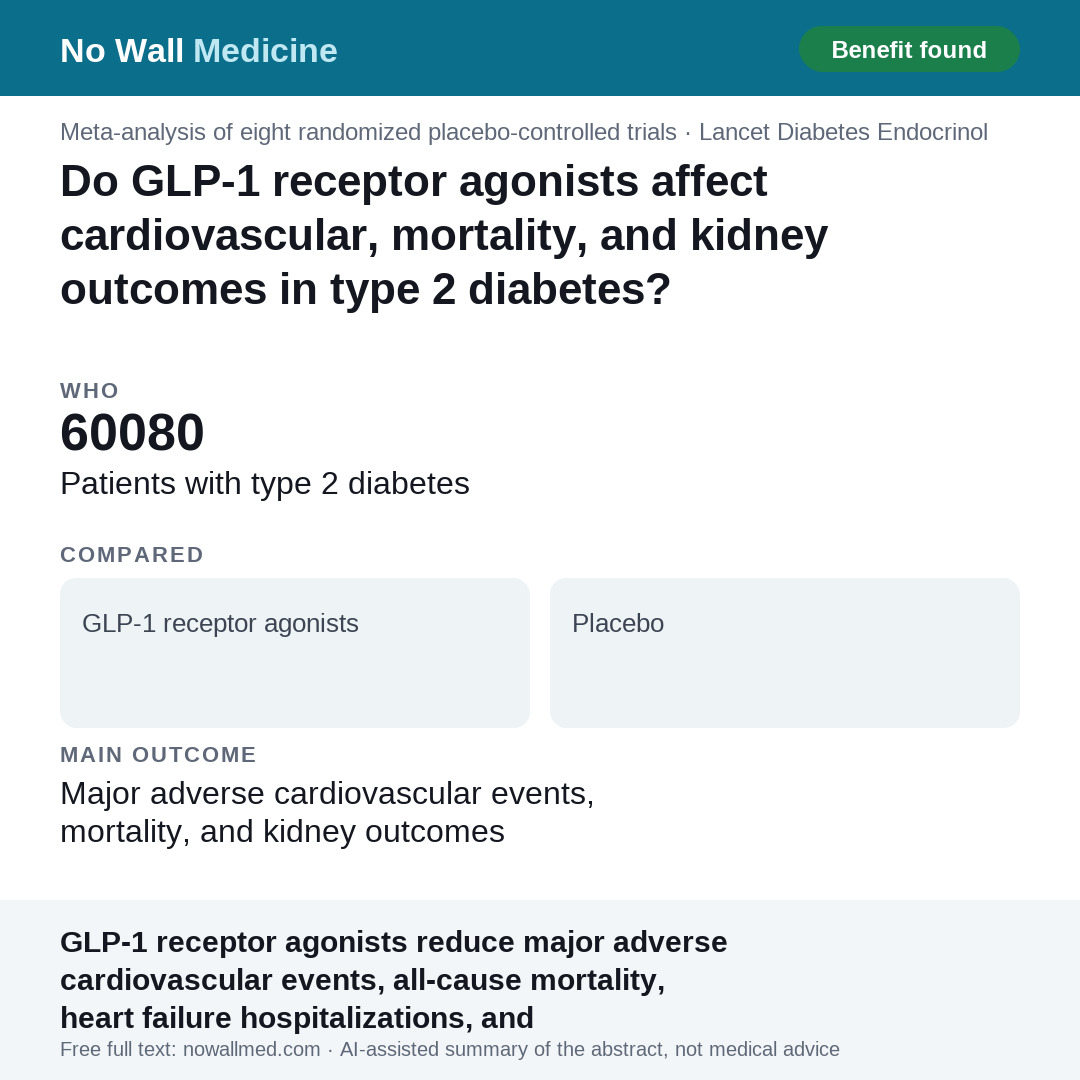
Clinical question: Do GLP-1 receptor agonists affect cardiovascular, mortality, and kidney outcomes in type 2 diabetes?
Why it matters: It was uncertain if the benefits of glucagon-like peptide-1 receptor agonists extend to kidney outcomes or to medications based on exendin-4.
Key points
- Researchers analyzed eight randomized trials involving 60,080 patients with type 2 diabetes to evaluate the effects of glucagon-like peptide-1 receptor agonists.
- Glucagon-like peptide-1 receptor agonists were associated with a 14% reduction in major adverse cardiovascular events and a 21% reduction in composite kidney outcomes.
- The treatment was also associated with a 12% reduction in all-cause mortality and an 11% reduction in hospital admissions for heart failure.
Headline and key points written with AI from the paper’s abstract, with every number checked against it. Read the paper before relying on them.
Was this summary helpful?
Subject terms
Cite this article
Sattar N, Lee MMY, Kristensen SL, et al. Cardiovascular, mortality, and kidney outcomes with GLP-1 receptor agonists in patients with type 2 diabetes: a systematic review and meta-analysis of randomised trials. Lancet Diabetes Endocrinol. 2021. doi:10.1016/S2213-8587(21)00203-5
Spotted a mistake? Suggest a correction