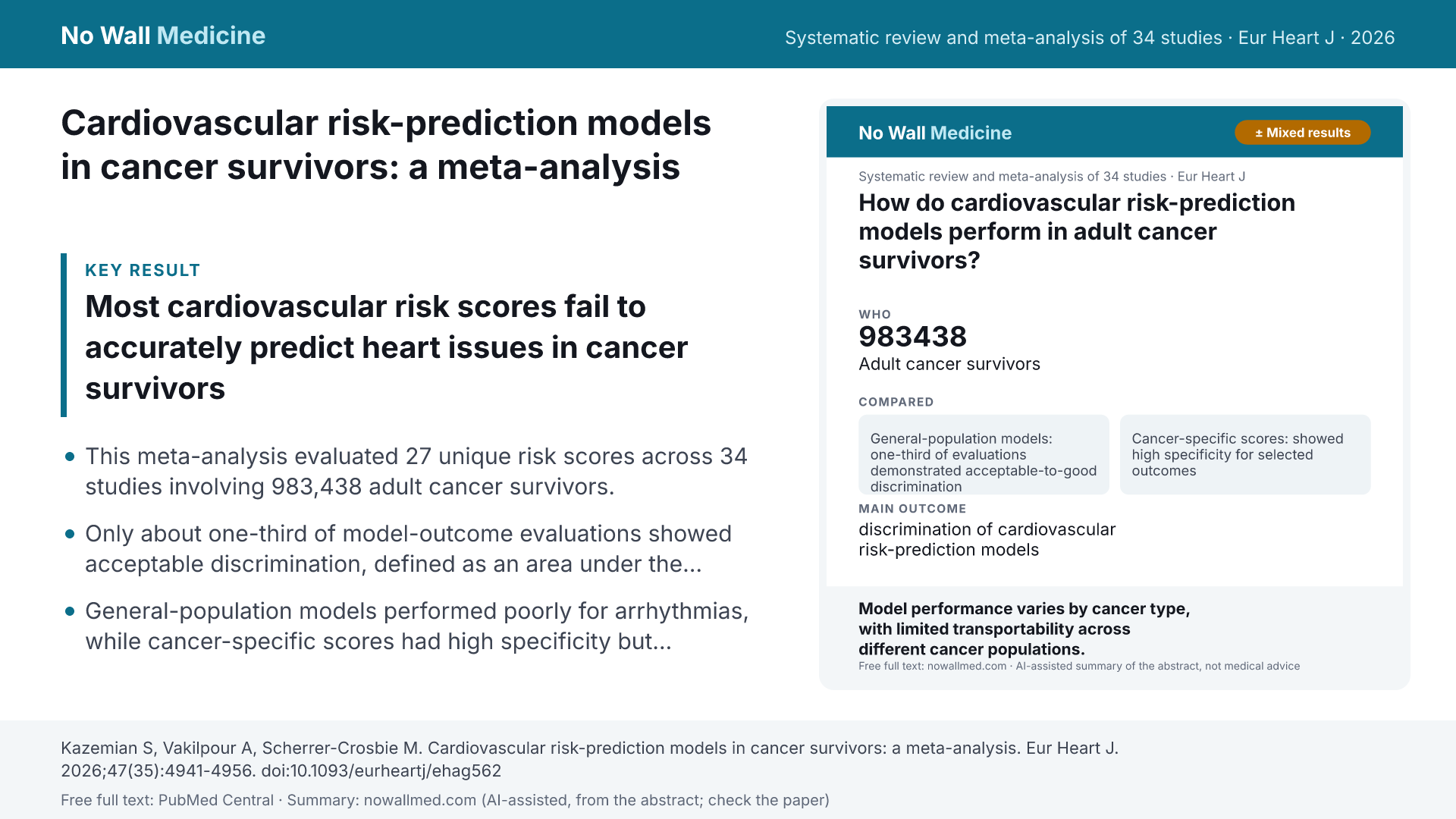
Most cardiovascular risk scores fail to accurately predict heart issues in cancer survivors
Cardiovascular risk-prediction models in cancer survivors: a meta-analysis
Systematic review and meta-analysis of 34 studiesMixed results
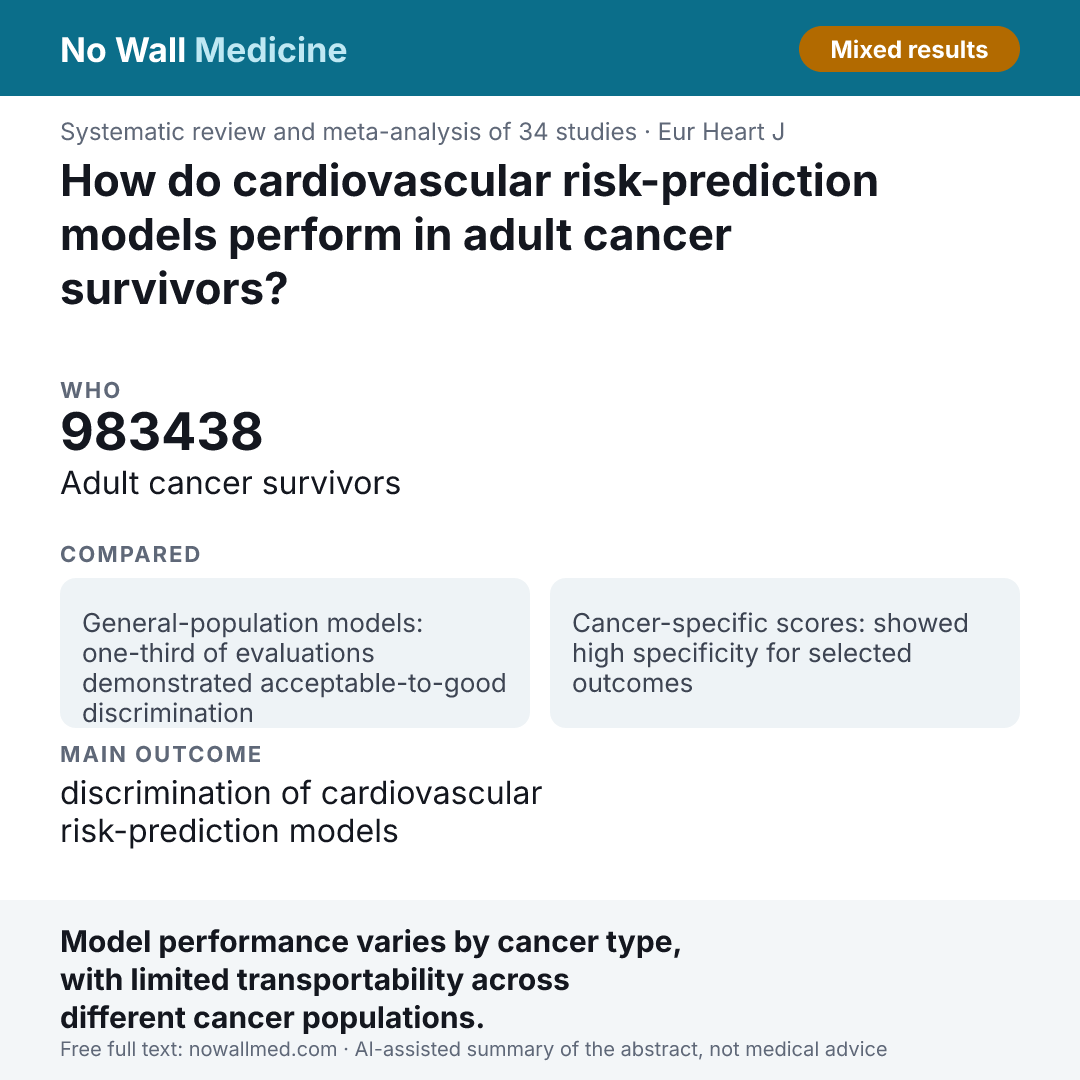
How do cardiovascular risk-prediction models perform in adult cancer survivors?
Who
983438
Adult cancer survivors
Compared
General-population models: one-third of evaluations demonstrated acceptable-to-good discrimination
Cancer-specific scores: showed high specificity for selected outcomes
Main outcome
discrimination of cardiovascular risk-prediction models
Bottom line: Model performance varies by cancer type, with limited transportability across different cancer populations.
Limitation: Performance was substantially poorer in survivors of haematologic malignancies.
Eur Heart J · 2026-07-28 · Save PNG
Clinical question: How do cardiovascular risk-prediction models perform in adult cancer survivors?
Why it matters: Clinicians lack validated tools to accurately predict cardiovascular risk in cancer survivors, as existing models show inconsistent performance across different cancer types.
Key points
- This meta-analysis evaluated 27 unique risk scores across 34 studies involving 983,438 adult cancer survivors.
- Only about one-third of model-outcome evaluations showed acceptable discrimination, defined as an area under the curve of 0.70 or higher.
- General-population models performed poorly for arrhythmias, while cancer-specific scores had high specificity but limited sensitivity for ruling out risk.
Limitation the authors note: Model performance varied by cancer type, with substantially poorer performance in survivors of haematologic malignancies, indicating limited transportability.
Headline and key points written with AI from the paper’s abstract, with every number checked against it. Read the paper before relying on them.
Was this summary helpful?
Subject terms
Headline, design, result, key points, caveat and citation as plain text.
Cite this article
Kazemian S, Vakilpour A, Scherrer-Crosbie M. Cardiovascular risk-prediction models in cancer survivors: a meta-analysis. Eur Heart J. 2026;47(35):4941-4956. doi:10.1093/eurheartj/ehag562
Spotted a mistake? Suggest a correction