Cardiovascular Risk Prediction Scores in Type 1 Diabetes: A Systematic Review and Meta-Analysis
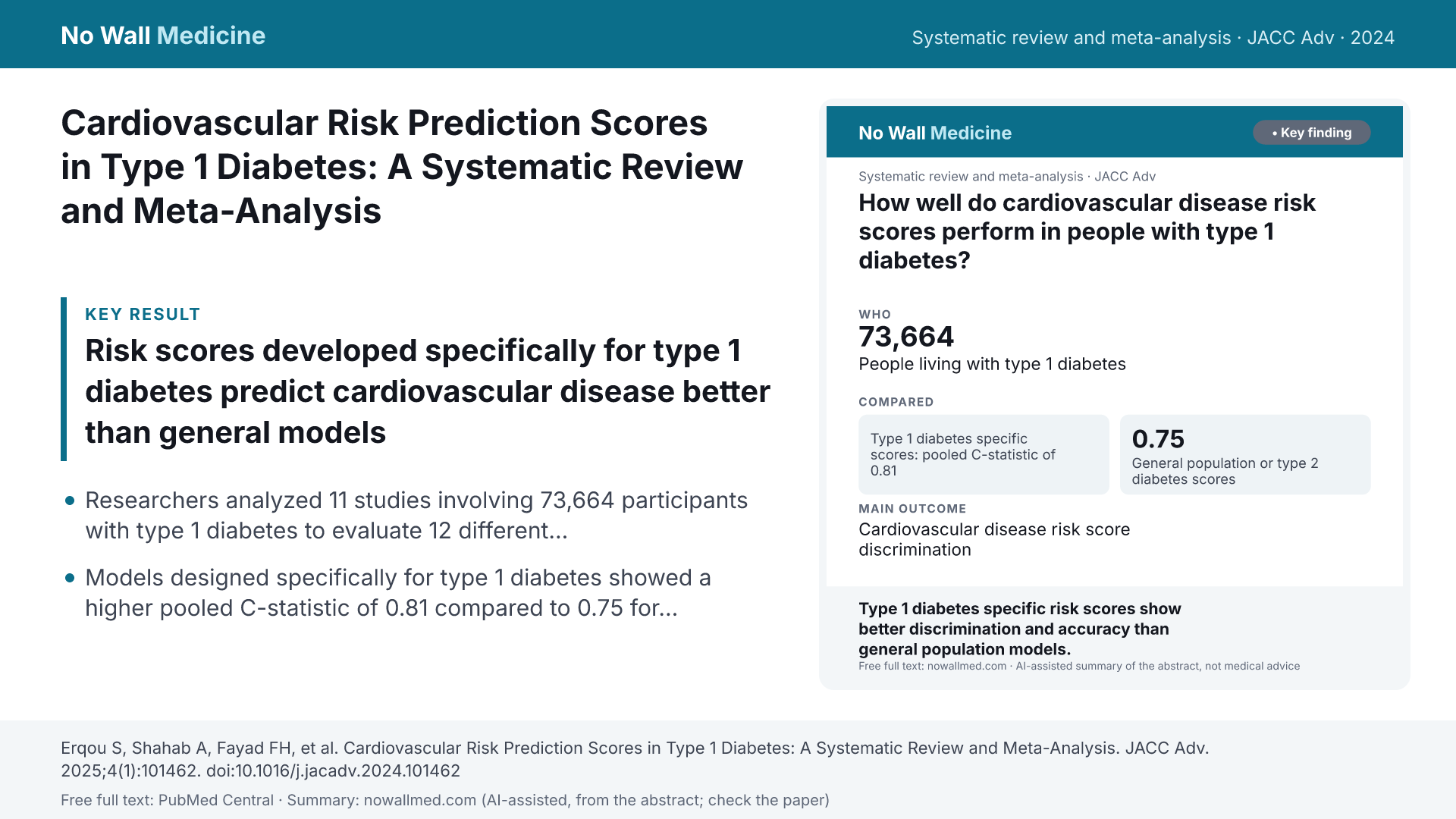
Key result: Risk scores developed specifically for type 1 diabetes predict cardiovascular disease better than general models
Systematic review and meta-analysisKey finding
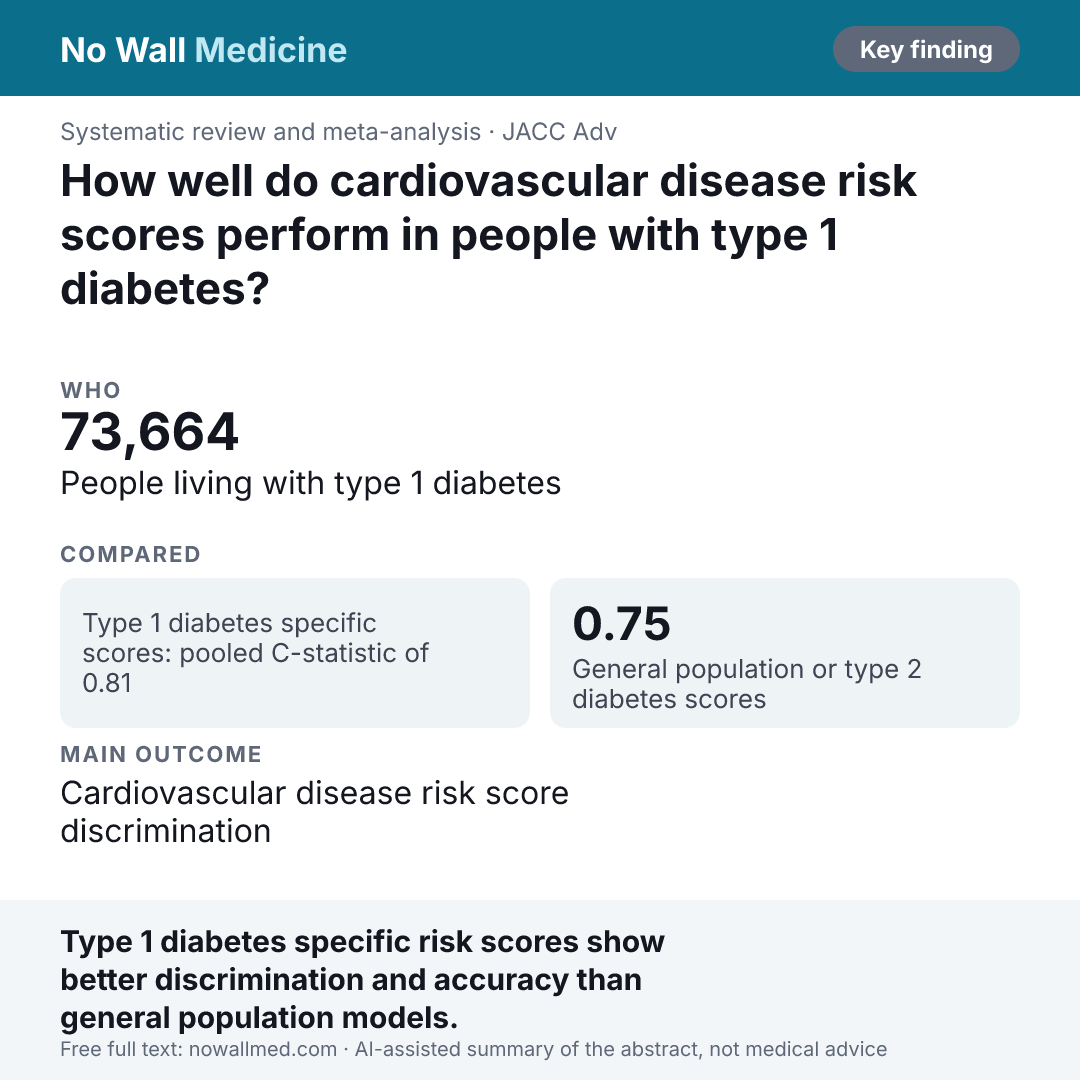
How well do cardiovascular disease risk scores perform in people with type 1 diabetes?
Who
73,664
People living with type 1 diabetes
Compared
Type 1 diabetes specific scores: pooled C-statistic of 0.81
0.75General population or type 2 diabetes scores
Main outcome
Cardiovascular disease risk score discrimination
Result: pooled C-statistic of 0.81 vs 0.75
Bottom line: Type 1 diabetes specific risk scores show better discrimination and accuracy than general population models.
JACC Adv · 2024-12-17 · Save PNG
Key points
- Researchers analyzed 11 studies involving 73,664 participants with type 1 diabetes to evaluate 12 different cardiovascular disease risk prediction models.
- Models designed specifically for type 1 diabetes showed a higher pooled C-statistic of 0.81 compared to 0.75 for general population or type 2 diabetes models.
- Most risk scores demonstrated moderate to excellent discrimination with C-statistic values ranging from 0.73-0.85.
Discussion prompts
- Would these patients look like yours? Who was left out?
- Is the main outcome one that matters to patients?
- Is the difference large enough to change what you do?
Cite: Erqou S, Shahab A, Fayad FH, et al. Cardiovascular Risk Prediction Scores in Type 1 Diabetes: A Systematic Review and Meta-Analysis. JACC Adv. 2025;4(1):101462. doi:10.1016/j.jacadv.2024.101462
Free full text: PubMed Central · Summary and visual abstract: nowallmed.com/a/cardiovascular-risk-prediction-scores-in-type-1-diabetes-a-systematic-1gp4twm/ (AI-assisted from the abstract; check the paper before relying on it).