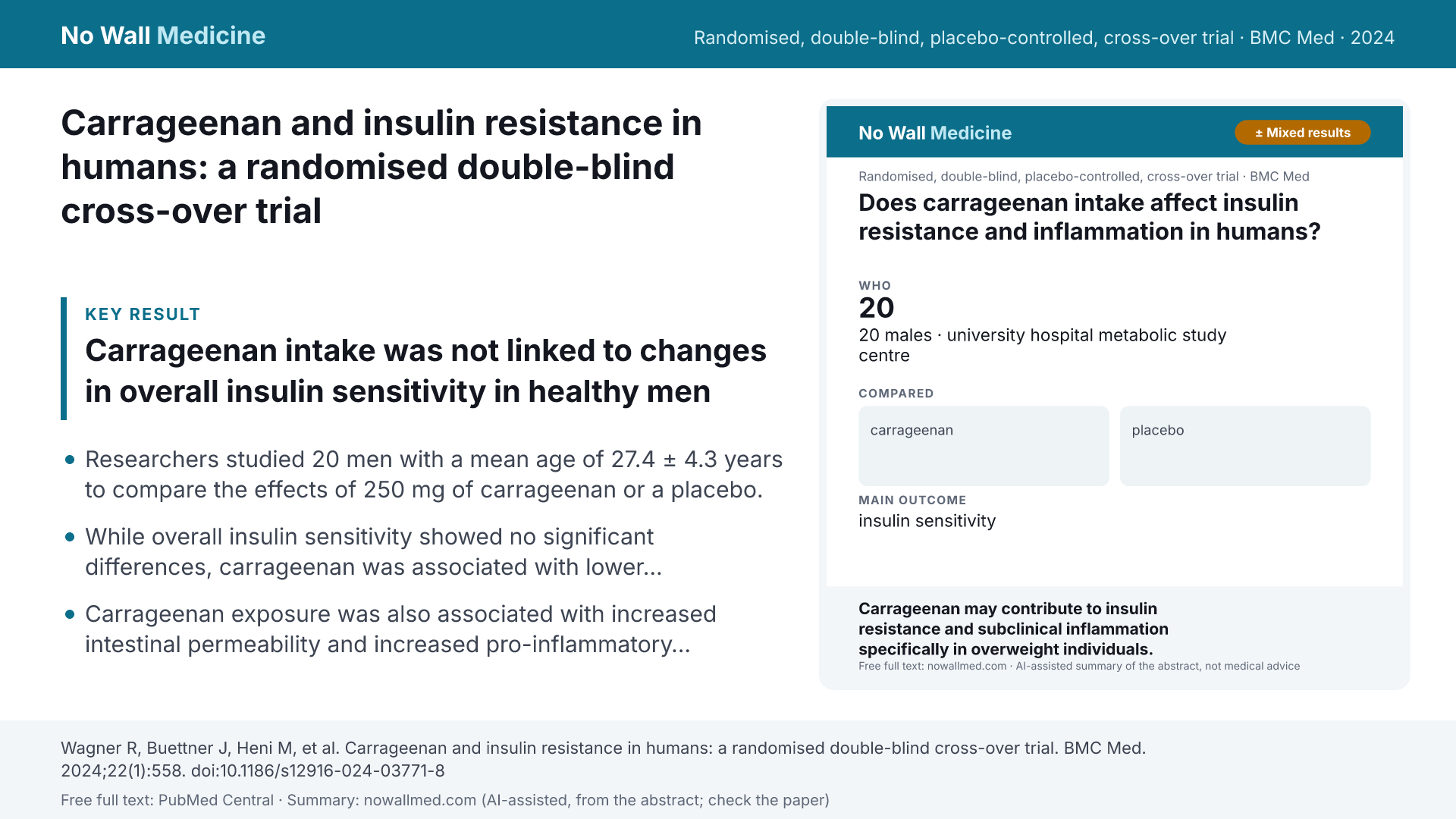
Carrageenan intake was not linked to changes in overall insulin sensitivity in healthy men
Carrageenan and insulin resistance in humans: a randomised double-blind cross-over trial
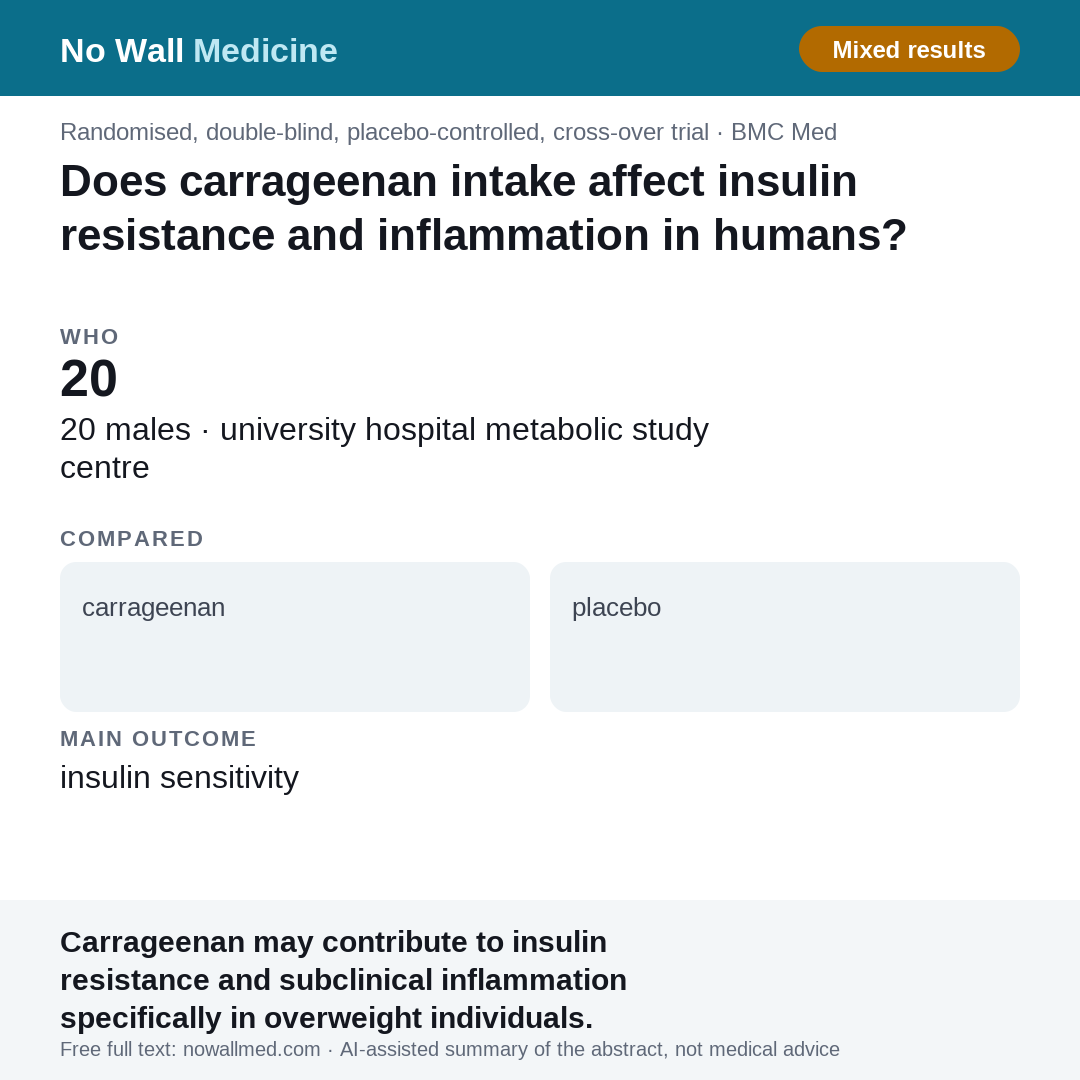
Randomised, double-blind, placebo-controlled, cross-over trialMixed results
Does carrageenan intake affect insulin resistance and inflammation in humans?
Who
20
20 males · university hospital metabolic study centre
Compared
carrageenan
placebo
Main outcome
insulin sensitivity
Bottom line: Carrageenan may contribute to insulin resistance and subclinical inflammation specifically in overweight individuals.
Limitation: Further investigation into the long-term health impacts is warranted.
BMC Med · 2024-11-26Download image
Clinical question: Does carrageenan intake affect insulin resistance and inflammation in humans?
Why it matters: It is not well understood how carrageenan, a common food additive that affects animals, impacts insulin sensitivity and inflammation in humans.
Key points
- Researchers studied 20 men with a mean age of 27.4 ± 4.3 years to compare the effects of 250 mg of carrageenan or a placebo.
- While overall insulin sensitivity showed no significant differences, carrageenan was associated with lower insulin sensitivity and higher inflammation markers in overweight participants.
- Carrageenan exposure was also associated with increased intestinal permeability and increased pro-inflammatory cytokine release from immune cells.
Headline and key points written with AI from the paper’s abstract, with every number checked against it. Read the paper before relying on them.
Was this summary helpful?
Subject terms
Cite this article
Wagner R, Buettner J, Heni M, et al. Carrageenan and insulin resistance in humans: a randomised double-blind cross-over trial. BMC Med. 2024. doi:10.1186/s12916-024-03771-8
Spotted a mistake? Suggest a correction