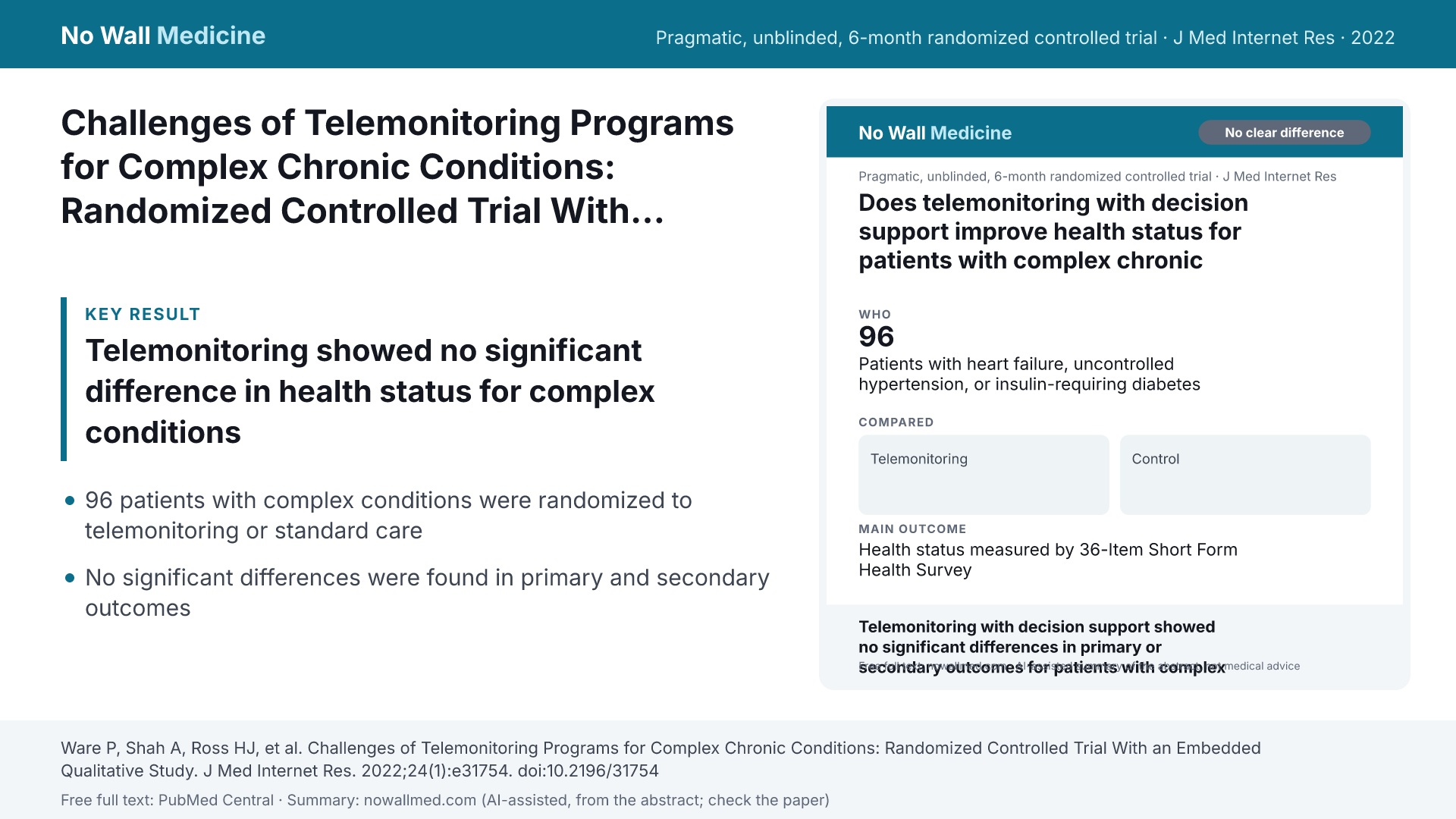
Challenges of Telemonitoring Programs for Complex Chronic Conditions: Randomized Controlled Trial With an Embedded Qualitative Study
Key result: Telemonitoring showed no significant difference in health status for complex conditions
Key points
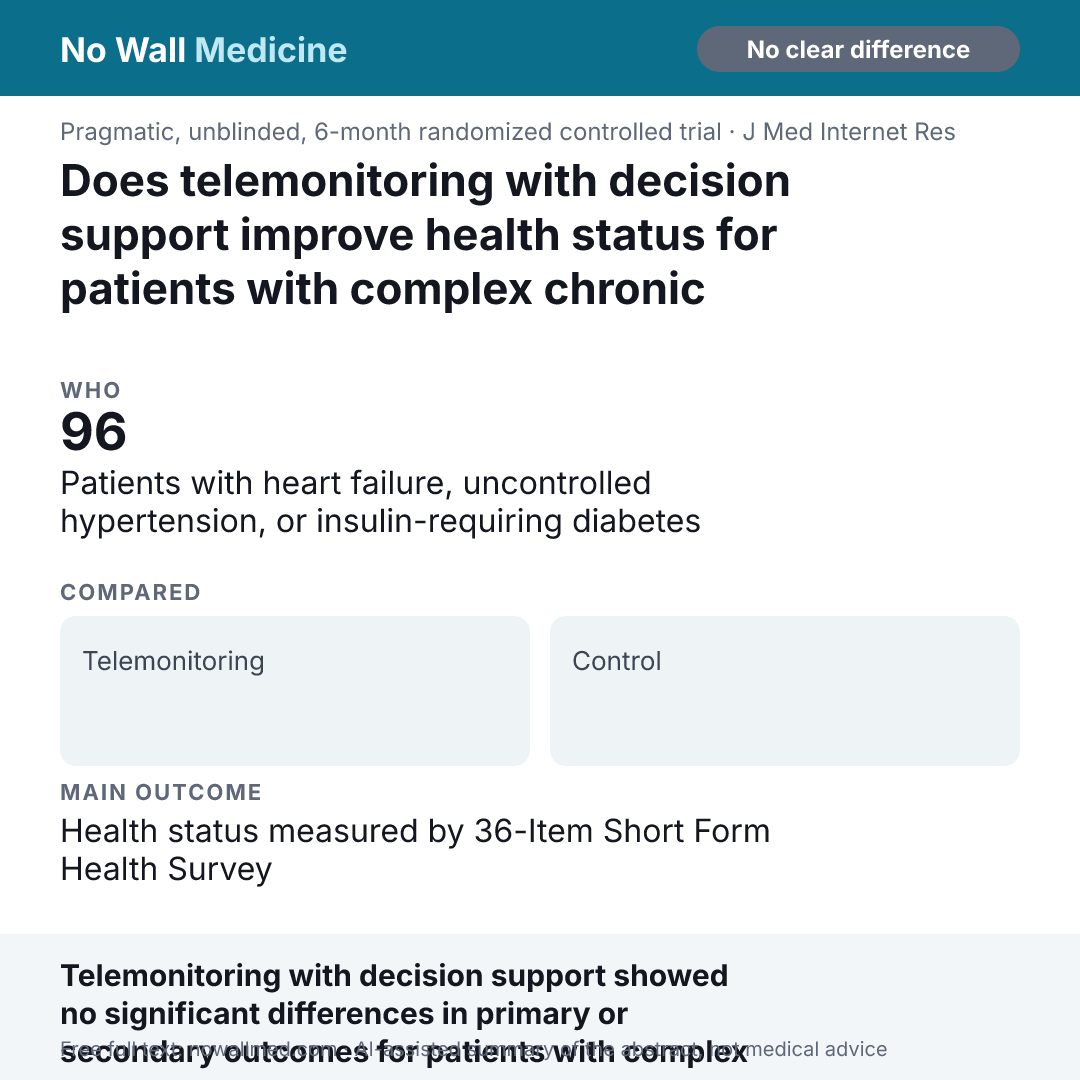
- 96 patients with complex conditions were randomized to telemonitoring or standard care.
- No significant differences were found in primary and secondary outcomes.
- Patients with heart failure showed improvements in self-care maintenance and physical quality of life.
Why it matters: Little research exists on telemonitoring for people with complex chronic conditions
Limitation the authors note: Recruitment was terminated early due to implementation challenges and the COVID-19 pandemic
Discussion prompts
- Would these patients look like yours? Who was left out?
- Is the main outcome one that matters to patients?
- Is the difference large enough to change what you do?
Cite: Ware P, Shah A, Ross HJ, et al. Challenges of Telemonitoring Programs for Complex Chronic Conditions: Randomized Controlled Trial With an Embedded Qualitative Study. J Med Internet Res. 2022;24(1):e31754. doi:10.2196/31754
Free full text: PubMed Central · Summary and visual abstract: nowallmed.com/a/challenges-of-telemonitoring-programs-for-complex-chronic-conditions-76jxan/ (AI-assisted from the abstract; check the paper before relying on it).