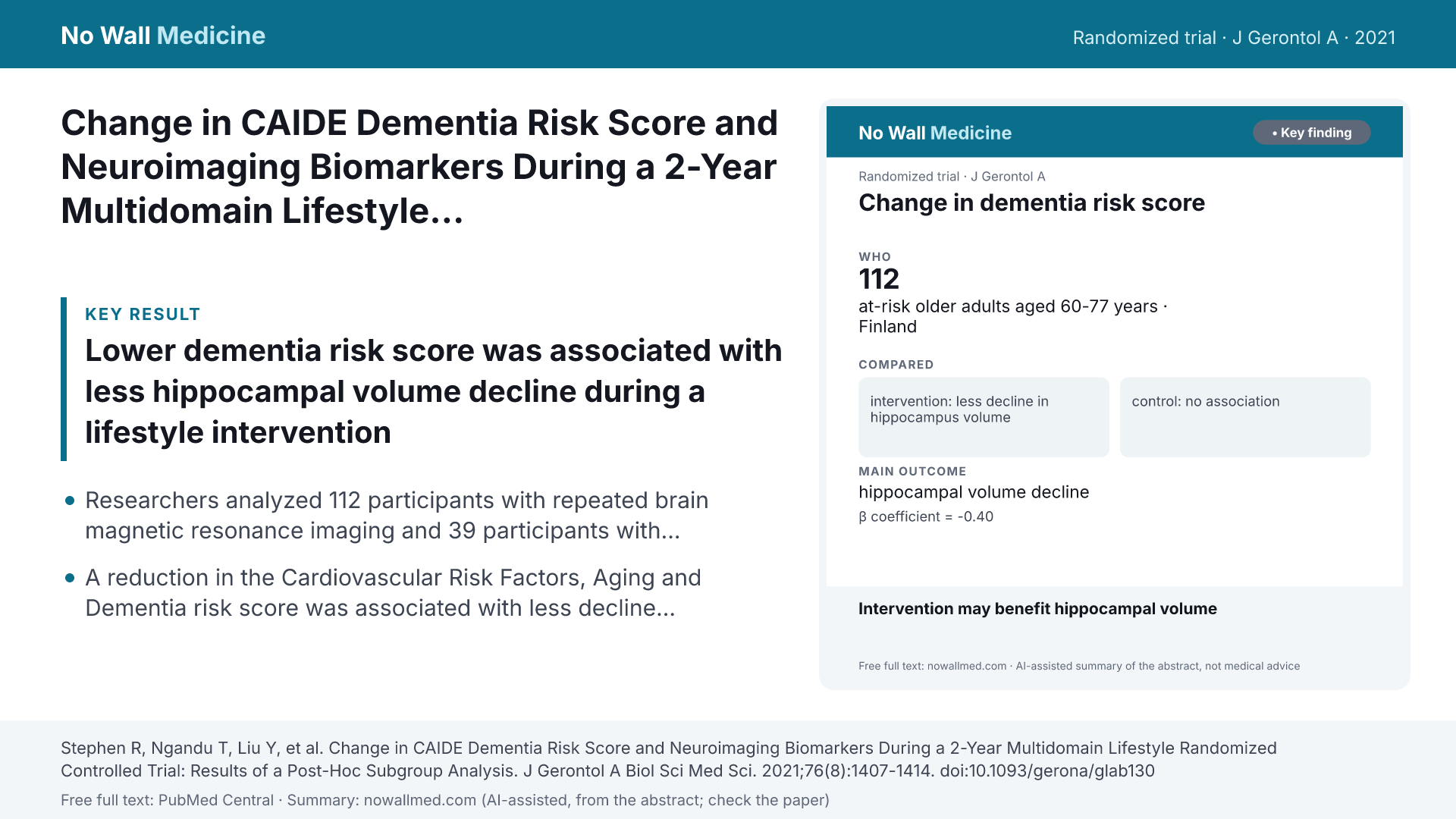
Lower dementia risk score was associated with less hippocampal volume decline during a lifestyle intervention
Change in CAIDE Dementia Risk Score and Neuroimaging Biomarkers During a 2-Year Multidomain Lifestyle Randomized Controlled Trial: Results of a Post-Hoc Subgroup Analysis
Secondary analysis of a trialKey finding
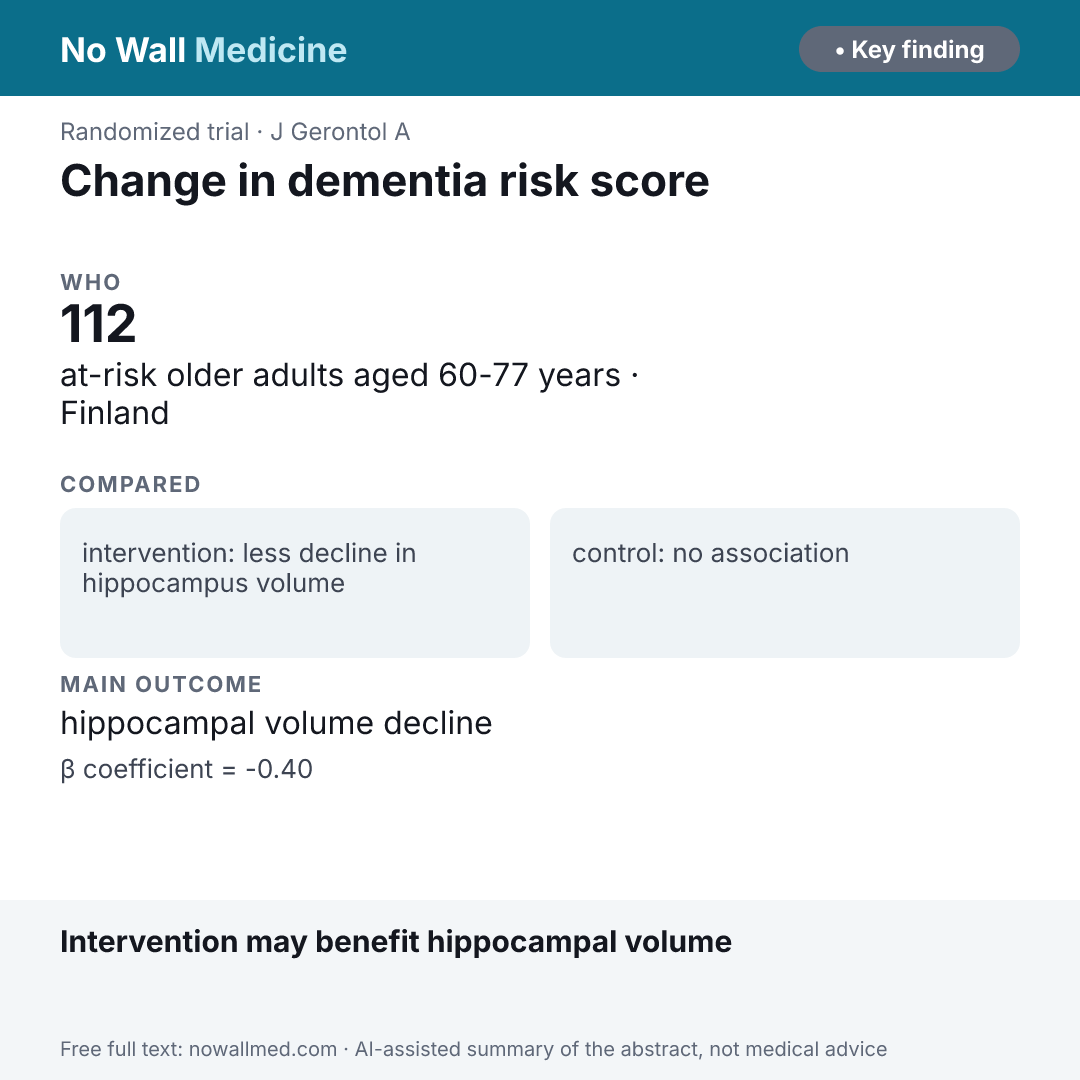
Change in dementia risk score
Who
112
at-risk older adults aged 60-77 years · Finland
Compared
intervention: less decline in hippocampus volume
control: no association
Main outcome
hippocampal volume decline
Result: β coefficient = -0.40
Bottom line: Intervention may benefit hippocampal volume
Limitation: requires further testing
J Gerontol A · 2021-05-11 · Save PNG
Key points
- Researchers analyzed 112 participants with repeated brain magnetic resonance imaging and 39 participants with repeated Pittsburgh Compound B-positron emission tomography scans during a 2-year lifestyle intervention.
- A reduction in the Cardiovascular Risk Factors, Aging and Dementia risk score was associated with less decline in hippocampus volume in the intervention group, but not the control group.
- Associations between changes in the risk score and other brain imaging measures, such as total gray matter or white matter lesion volumes, were not significant.
Headline and key points written with AI from the paper’s abstract, with every number checked against it. Read the paper before relying on them.
Was this summary helpful?
Subject terms
Headline, design, result, key points, caveat and citation as plain text.
Cite this article
Stephen R, Ngandu T, Liu Y, et al. Change in CAIDE Dementia Risk Score and Neuroimaging Biomarkers During a 2-Year Multidomain Lifestyle Randomized Controlled Trial: Results of a Post-Hoc Subgroup Analysis. J Gerontol A Biol Sci Med Sci. 2021;76(8):1407-1414. doi:10.1093/gerona/glab130
Spotted a mistake? Suggest a correction