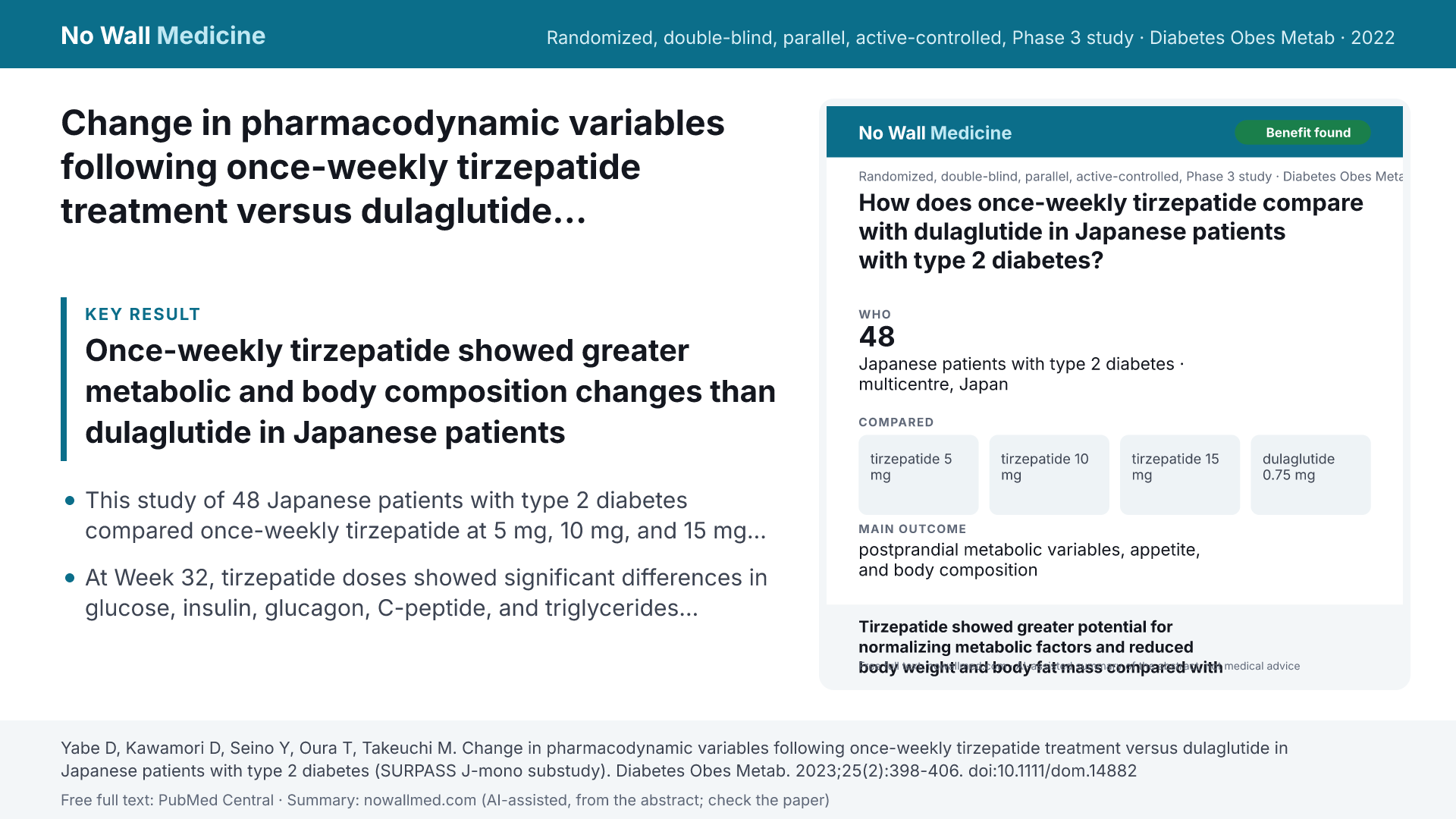
Change in pharmacodynamic variables following once-weekly tirzepatide treatment versus dulaglutide in Japanese patients with type 2 diabetes (SURPASS J-mono substudy)
Key result: Once-weekly tirzepatide showed greater metabolic and body composition changes than dulaglutide in Japanese patients
Randomized, double-blind, parallel, active-controlled, Phase 3 studyBenefit found
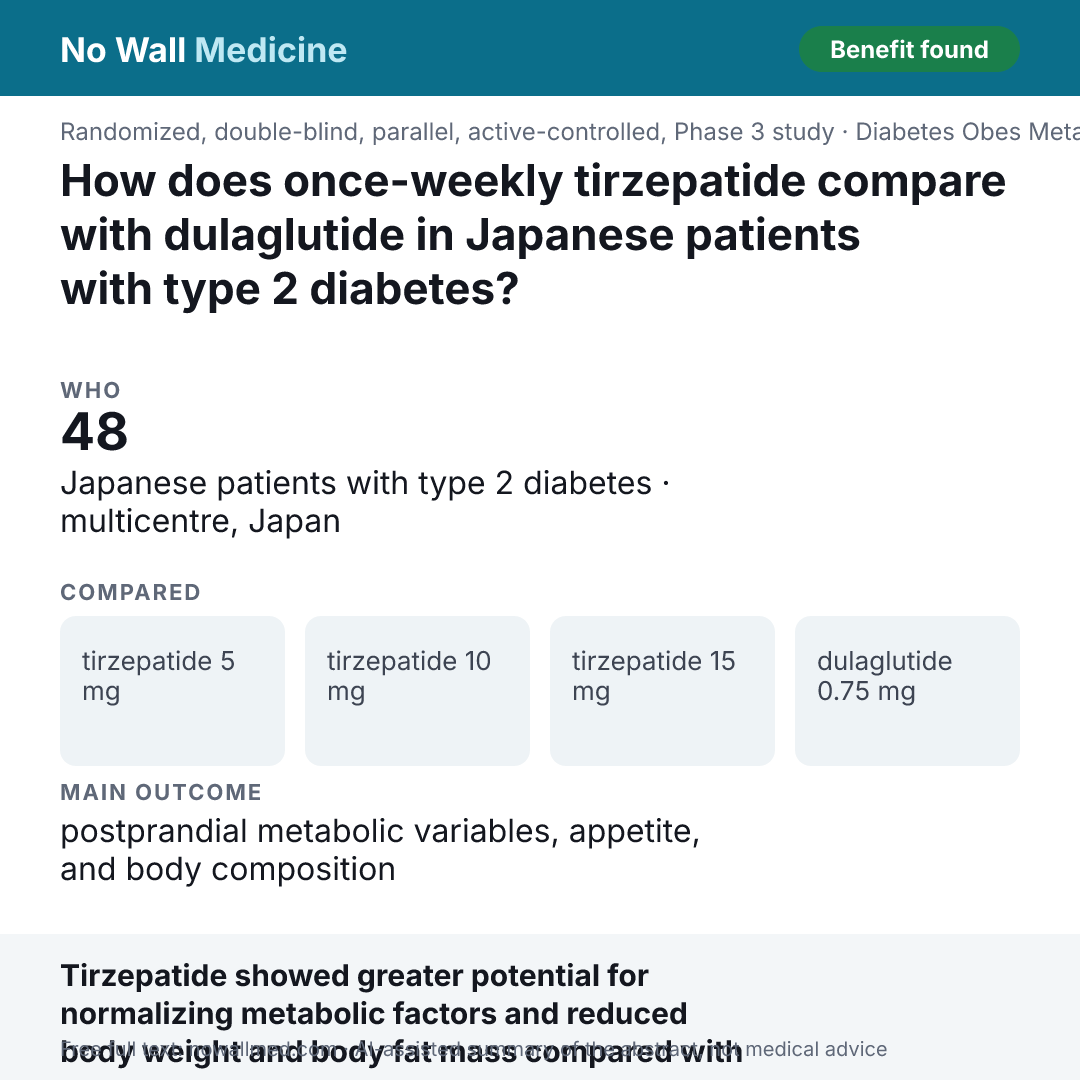
How does once-weekly tirzepatide compare with dulaglutide in Japanese patients with type 2 diabetes?
Who
48
Japanese patients with type 2 diabetes · multicentre, Japan
Compared
tirzepatide 5 mg
tirzepatide 10 mg
tirzepatide 15 mg
dulaglutide 0.75 mg
Main outcome
postprandial metabolic variables, appetite, and body composition
Bottom line: Tirzepatide showed greater potential for normalizing metabolic factors and reduced body weight and body fat mass compared with dulaglutide.
Diabetes Obes Metab · 2022-11-02 · Save PNG
Key points
- This study of 48 Japanese patients with type 2 diabetes compared once-weekly tirzepatide at 5 mg, 10 mg, and 15 mg to dulaglutide 0.75 mg.
- At Week 32, tirzepatide doses showed significant differences in glucose, insulin, glucagon, C-peptide, and triglycerides after a meal compared to dulaglutide, except for triglycerides at 10 mg.
- By Week 52, tirzepatide 10 mg and 15 mg resulted in a significant reduction in body weight, and all doses resulted in a significant reduction in body fat mass.
Discussion prompts
- Would these patients look like yours? Who was left out?
- Is the main outcome one that matters to patients?
- Is the difference large enough to change what you do?
Cite: Yabe D, Kawamori D, Seino Y, Oura T, Takeuchi M. Change in pharmacodynamic variables following once-weekly tirzepatide treatment versus dulaglutide in Japanese patients with type 2 diabetes (SURPASS J-mono substudy). Diabetes Obes Metab. 2023;25(2):398-406. doi:10.1111/dom.14882
Free full text: PubMed Central · Summary and visual abstract: nowallmed.com/a/change-in-pharmacodynamic-variables-following-once-weekly-tirzepatide-ck8z5m/ (AI-assisted from the abstract; check the paper before relying on it).