Cell therapies changed several inflammatory and remodeling biomarkers in patients with ischemic heart failure
Changes in Circulating Biomarkers in Patients With Ischemic Heart Failure After Treatment With Autologous Mesenchymal Stromal Cells and c-Kit-Positive Cardiac Cells, Alone or in Combination: Results From the Cardiovascular Cell Therapy Research Network CONCERT-HF Clinical Trial
Randomized, double-blind, placebo-controlled trialBenefit found
How do cell therapies affect circulating biomarkers in ischemic heart failure patients?
Who
96
Patients with ischemic heart failure · Multicenter
Compared
Cell therapy
Placebo
Main outcome
Changes in circulating plasma biomarkers
Result: PDGF-BB reduction in MSCs group versus placebo at day 30 (estimate, -157.98 [95% CI, -286.04 to -29.91])
Bottom line: Cell therapies induce selective, time-dependent modulation of inflammatory and matrix remodeling biomarkers in ischemic heart failure.
J Am Heart Assoc · 2026-04-20Download image
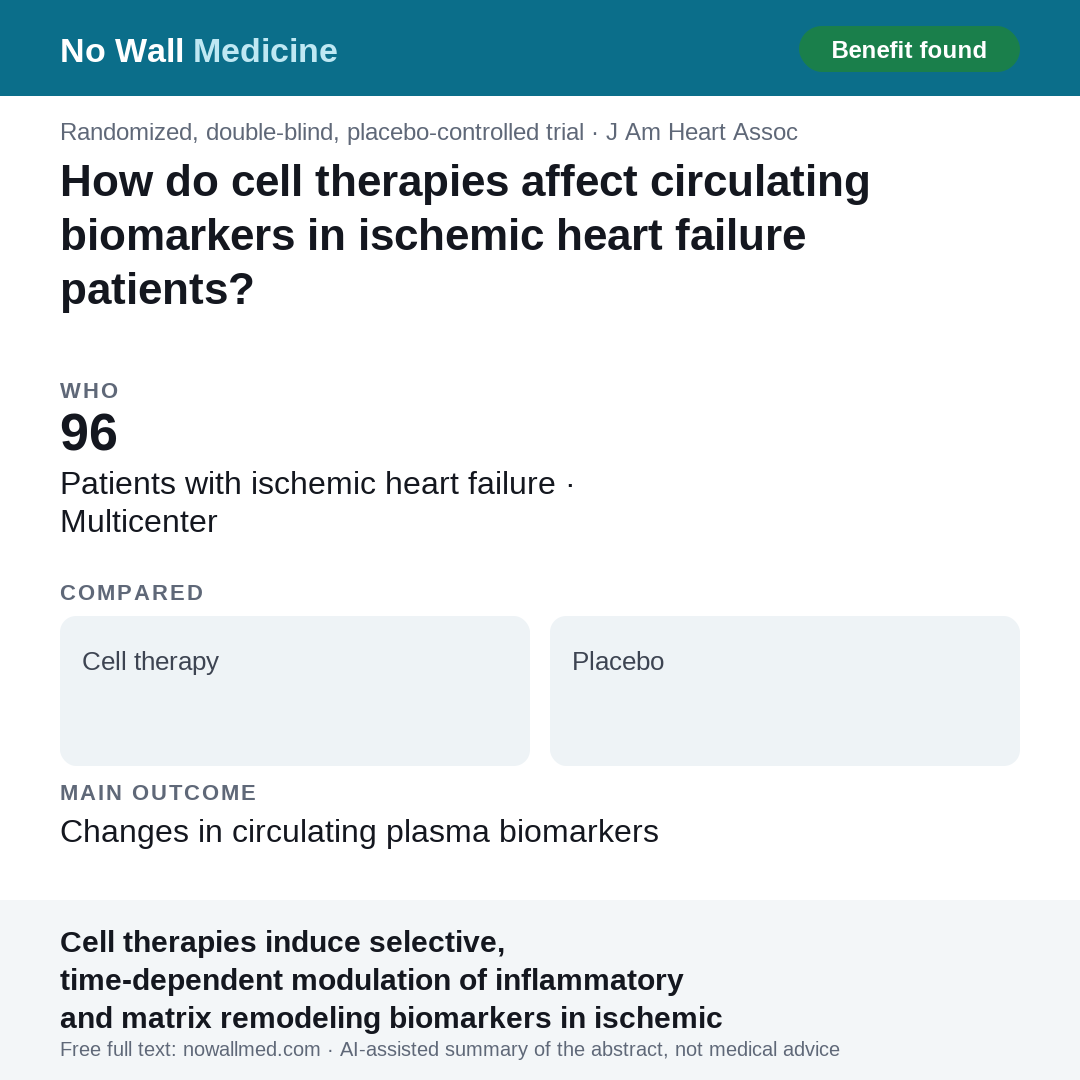
Clinical question: How do cell therapies affect circulating biomarkers in ischemic heart failure patients?
Why it matters: The biological mechanisms behind how mesenchymal stromal cells and cardiac progenitor cells benefit patients with ischemic heart failure are not fully understood.
Key points
- Researchers analyzed 96 patients in a randomized, double-blind trial to measure changes in plasma biomarkers after treatment with mesenchymal stromal cells, cardiac progenitor cells, or both.
- Cell therapy caused significant reductions in several markers, including PDGF-BB, PTX3, TNF-alpha, and GDF-15, with PDGF-BB showing the most consistent treatment effect.
- Greater increases in the biomarker PDGF-BB at day 180 were linked to smaller improvements in heart failure quality of life scores.
Headline and key points written with AI from the paper’s abstract, with every number checked against it. Read the paper before relying on them.
Topics
Spotted a mistake? Suggest a correction